Too Much Oil in a Push Mower: What It Means and What to Do
The short answer
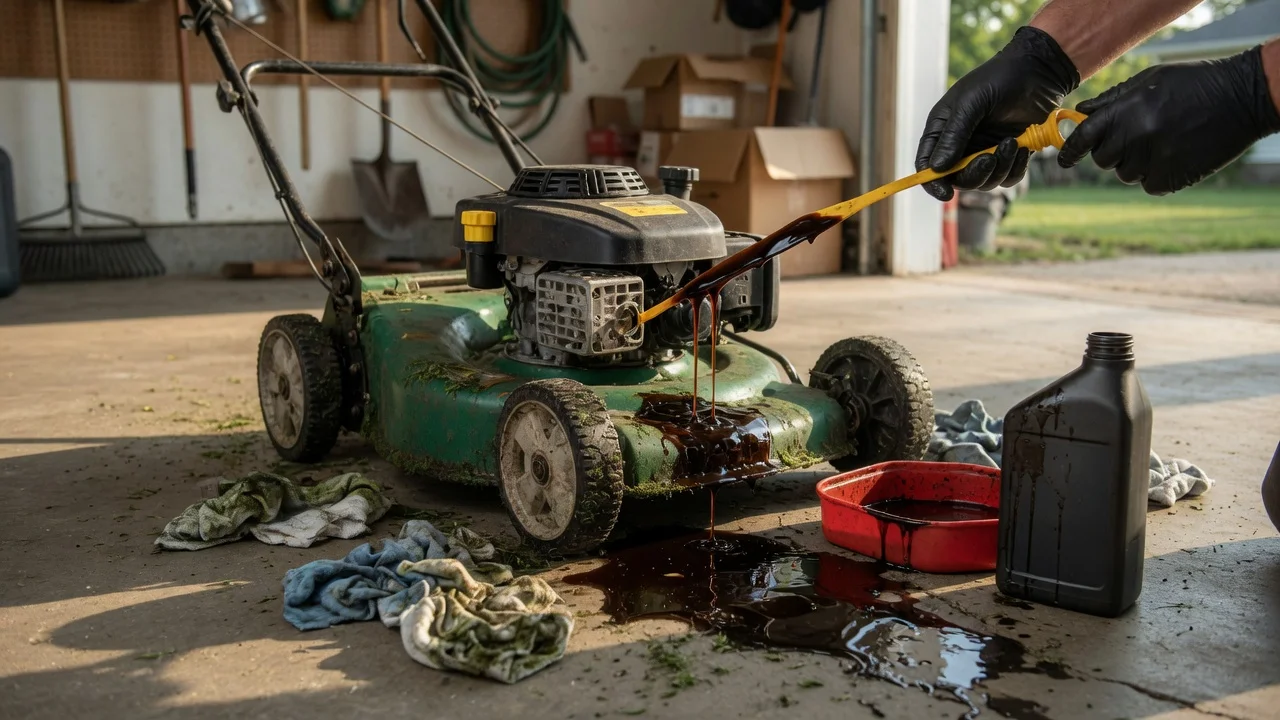
Yes, too much oil in a push mower is a problem, and the fix is to remove the excess before running the engine again. A slight overfill is usually less serious than a large one, but any oil level above the full mark on the dipstick should be brought back into range. Running a small engine with an overfilled crankcase can push oil where it does not belong and make the engine smoke, run poorly or fail to start.
This guidance applies to typical walk-behind mowers with a four-stroke engine, which has a separate oil reservoir called the crankcase. It does not apply to two-stroke mowers, where oil is mixed into the fuel rather than held in a crankcase, so 'too much oil' there means an incorrect fuel-oil mix, which is a different issue.
Why excess oil causes trouble
The crankcase is designed to hold a set volume of oil with some air space above it. When the level is too high, the spinning crankshaft and connecting rod can churn the oil, whipping air into it. Aerated, foamy oil lubricates less effectively.
Extra oil also raises pressure inside the crankcase. That pressure and oil mist can be forced out through the breather, a vent that relieves crankcase pressure, and into the air filter or carburetor intake. Oil can also be pushed past the piston rings into the combustion chamber, where it burns.
Common signs of an overfilled mower
Oil level visibly above the full mark on the dipstick; White or blue-gray smoke from the exhaust, especially after starting; An oil-soaked air filter; Hard starting, rough running or stalling; Oil seeping from seals, gaskets or the breather area; A fouled spark plug coated with oily deposits
These symptoms can have other causes, so confirm the oil level first before assuming overfill is the reason.
How to remove the extra oil
Work with the engine off and cool, and on level ground. Disconnecting the spark plug wire prevents accidental starting. The common methods are:
Use an oil extractor or a clean siphon pump through the oil fill tube to draw out small amounts at a time. If the mower has a drain plug, loosen it carefully over a drain pan and let out only a little oil, then retighten it. Tip the mower to drain oil from the fill opening, but only in the direction the owner's manual allows; on many mowers the air filter and carburetor side must stay facing up to keep oil and fuel out of the intake. If you have drained too much, add small amounts of the specified oil and recheck.
After each adjustment, wipe the dipstick, reinsert it and read the level. Dipstick procedures vary by engine: some are meant to be screwed fully in for a reading, while others should rest on the fill tube without threading in. Reading it the wrong way can make a correct level look high or low, which is a frequent reason for accidental overfilling.
If you already ran the engine overfilled
Correct the oil level first. Then inspect the air filter; if it is saturated with oil, clean or replace it according to the manufacturer's instructions. Check the spark plug and clean or replace it if it is oil-fouled. Some smoke may continue briefly after the level is corrected as residual oil burns off. Smoke that persists, heavy oil leakage, or knocking noises warrant inspection by a small-engine technician.
What this guide cannot specify
No model-specific data was available for this guide, so it does not state oil capacities, oil grades, dipstick methods or tipping directions for any particular mower or engine brand. These vary by engine manufacturer and model, so the owner's manual or the label on the engine is the authority for your machine. It also cannot say how much overfill a given engine tolerates before damage occurs; the safest approach is to keep the level within the marked range.