Too Much Oil in the Engine: Is It Harmful and What Should You Do?
The short answer
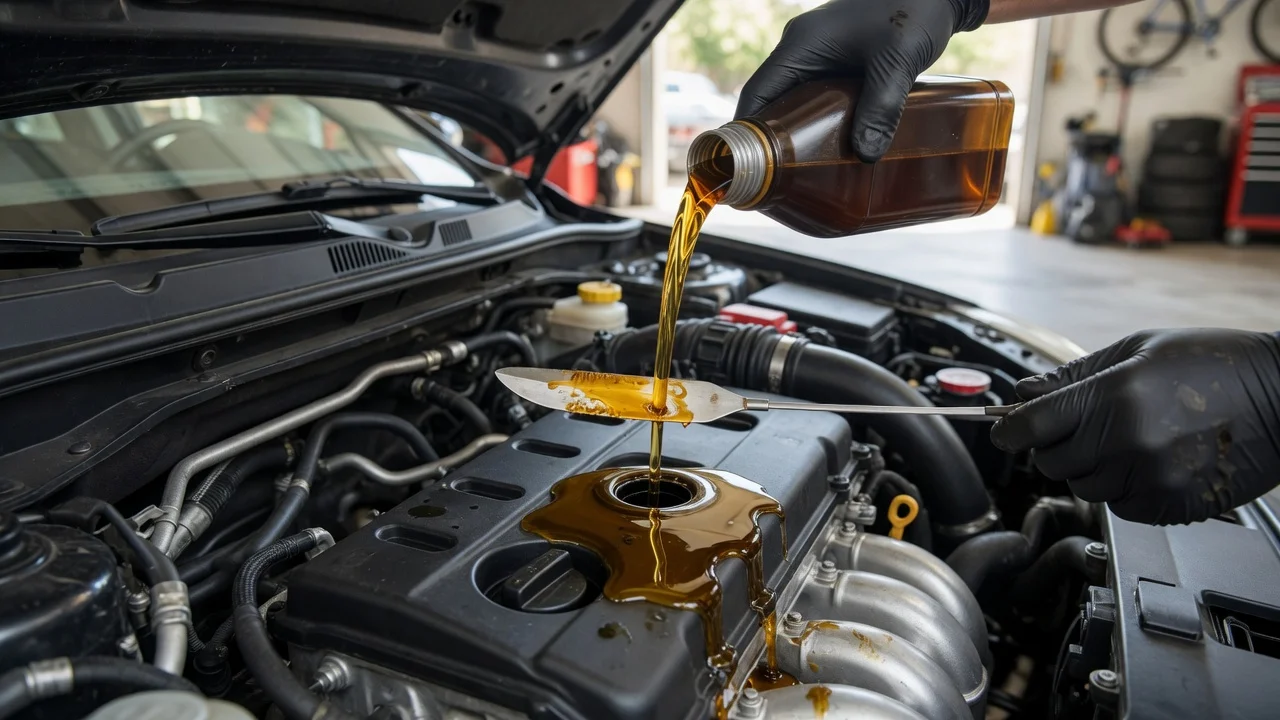
Overfilling an engine with oil is a real problem, but how serious it is depends on how far above the full mark the level sits. A level only slightly above the maximum mark is usually not an immediate emergency, though it is still worth correcting. A clearly excessive overfill should be fixed before the car is driven any meaningful distance, because it can affect lubrication, put stress on seals, and harm emissions components.
How much overfill a given engine can tolerate is not universal. It varies by engine design, crankcase layout and oil capacity, so the owner's manual or the manufacturer's service information for your specific model year and powertrain is the authority on the acceptable range. No vehicle-specific tolerance figures were supplied for this guide, so none are given here.
Why excess oil causes trouble
An engine's oil sump is designed to hold oil at a level that stays clear of the rotating crankshaft. When the level is too high, the spinning crankshaft and connecting rods can whip into the oil and churn air into it. Aerated, foamy oil does not lubricate or maintain pressure as well as solid liquid oil, which can reduce protection for bearings and other moving parts.
Excess oil can also raise pressure inside the crankcase. That added pressure can push oil past gaskets and seals, leading to leaks. Oil may also be drawn into the positive crankcase ventilation (PCV) system, which routes crankcase gases back into the intake to be burned. Oil that ends up in the combustion chambers can foul spark plugs and, over time, may damage the catalytic converter, the exhaust component that cleans up emissions.
Signs the engine may be overfilled
Dipstick or electronic oil-level reading above the maximum mark; Bluish or white smoke from the exhaust; A burning-oil smell; New oil leaks around seals or gaskets; An oil pressure warning light or rough engine running
These symptoms are not exclusive to overfilling; several can also point to other faults. A correct level check is the first step in narrowing down the cause.
What to do about it
Start by confirming the level is genuinely high. Park on level ground, switch the engine off and allow time for the oil to drain back into the sump before reading the dipstick, following the procedure in the owner's manual. Some newer vehicles have no dipstick and report oil level through the instrument cluster or infotainment screen; on those, use the measurement method the manufacturer specifies.
If the level is too high, remove the excess rather than driving it off. Common approaches are loosening the drain plug briefly to let a small amount out, or using a fluid extractor through the dipstick tube where the engine design allows it. Remove a little at a time, then recheck until the level falls within the marked range. If you are not comfortable doing this, a workshop can correct it quickly.
When the level rises without adding oil
If the oil level climbs even though no oil has been added, the cause is not overfilling. Fuel or coolant mixing into the oil can raise the reading, and both situations call for diagnosis by a mechanic rather than simply draining the surplus.