Exhaust Pipe Expanders: Choosing and Using a Pipe-Fitting Tool
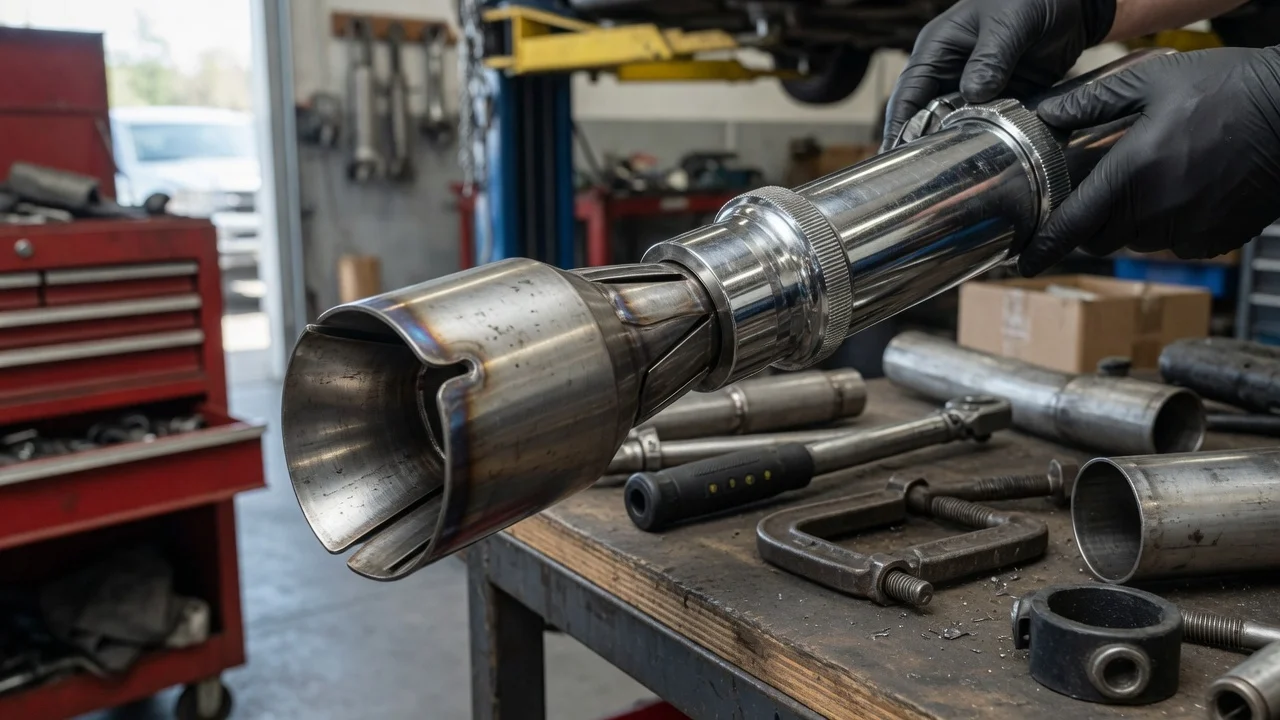
What an exhaust pipe expander does
An exhaust pipe expander is a hand or powered tool that enlarges the end of a steel exhaust tube so another pipe of the same nominal size can slip inside it. This creates a slip-fit repair joint without cutting out and welding in a new section. The tool matters most when rust, deformation, or a previous clamp has reduced the opening and a replacement pipe or adapter no longer slides in easily.
Most automotive expanders are designed for thin-wall exhaust tubing, not for structural pipe or heavy-walled plumbing. They work by forcing segmented jaws outward from inside the pipe. The repaired area relies on the surrounding tube remaining sound; if the pipe end is deeply corroded, cracked, or already split, expanding it is not a reliable repair.
Manual expanders versus hydraulic expanders
A manual expander uses a threaded drive. A bolt is turned with a wrench or ratchet, and the tapered screw pushes the jaws outward. These tools are compact enough for under-car access and give direct feel for how much the pipe is moving. They require more physical effort, particularly on larger tubing or when the pipe has work-hardened from heat and clamping.
A hydraulic expander uses a pump to drive the jaws. The hydraulic type reduces hand effort and can expand larger or thicker tubing more quickly. The trade-off is weight, cost, and usually a larger body that is harder to position in tight exhaust tunnels. For occasional home repair, a manual expander is typically the more practical choice; a hydraulic set becomes more useful for frequent work across many sizes.
Choosing the right size range
Select an expander that covers the outside diameter of the pipe you need to repair. Exhaust tubing is commonly measured by its outside diameter, with frequent passenger-car sizes around 1-1/2 to 2-1/2 inches. A kit with interchangeable jaw sets and a combined working range is useful because it can handle many vehicles, but each jaw set has a limited range. Trying to expand far beyond the jaw's designed maximum can distort the pipe or damage the tool.
Check the stated range against the actual pipe rather than relying on memory of the vehicle's factory size. Aftermarket systems, rust repair sections, and adapters may differ slightly from original tubing. A digital caliper or a size gauge gives a more reliable measurement than measuring across a distorted pipe mouth.
Using the tool without splitting the pipe
Clean the pipe end and remove loose scale so the jaws seat evenly. Apply light lubricant to the expander's drive threads, not to the jaw faces. Insert the jaws fully so the expansion begins beyond the damaged lip. Expand in small increments, checking fit after each pass. Rotate the tool slightly between passes to reduce visible jaw marks and uneven stretching. Stop once the mating pipe fits with light resistance; the clamp supplies final compression.
Exhaust pipe is thin and expands unevenly if forced too quickly. Work the tool around the circumference and avoid leaving the jaws in one position while applying final pressure. A split along a corroded seam or a cracked flare is usually a sign that the pipe was too weak to expand. In that case, cutting back to sound metal or replacing the section is safer than continuing to enlarge the damaged end.
Practical limits to remember
An expander opens and rounds an existing tube; it is not a substitute for a proper flaring tool and will not create a gas-tight flare on its own. The finished joint still needs a suitable exhaust clamp or band. Expanding stainless exhaust can be more difficult than mild steel because stainless work-hardens and resists stretching more. Some stainless alloys may crack before accepting the same amount of expansion.
The depth of the repair is also limited. The tool can only expand the end section that the jaws reach, so a mid-pipe diameter that has collapsed or been crushed cannot be restored from the outside with a standard expander. For that type of damage, the supported repair path is replacing the affected section.