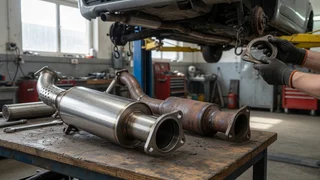
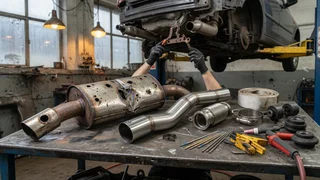
Oil dripping from the exhaust pipe

Oil dripping from the exhaust pipe is a striking sight that usually raises immediate concern about engine health. In most cases, the liquid is not engine oil but condensation mixed with soot, or unburned fuel carrying carbon deposits. True lubricating oil at the tailpipe is less common and points to a different failure path. Distinguishing the fluid by feel, smell, and location helps a driver decide whether the observation is a normal cold-start byproduct or a reason for closer mechanical inspection.
Essential answer
The essential answer is that oil dripping from the exhaust pipe is often misidentified. On a cold start, water vapor condenses inside the exhaust system and exits as black-tinged droplets, especially before the muffler and piping reach operating temperature. This mixture can feel slick and look dark because it picks up loose carbon from the exhaust walls. If the drips are watery, disappear as the engine warms, and have little petroleum odor, the likely explanation is normal condensation rather than lubricant loss.
When the fluid is genuinely engine oil, the scope changes. Oil can travel into the exhaust stream through worn valve guides, damaged turbocharger seals, or failed piston rings, but by the time it reaches the tailpipe it has usually been burned into blue-gray smoke and heavy carbon deposits. Liquid oil surviving the entire hot exhaust path is rare and suggests an unusual collection point or a leaking external component dripping onto the pipe. Manufacturer-dependent designs require vehicle-specific confirmation before blaming any single part.