Choosing a Replacement Exhaust Pipe
Start with the section you actually need
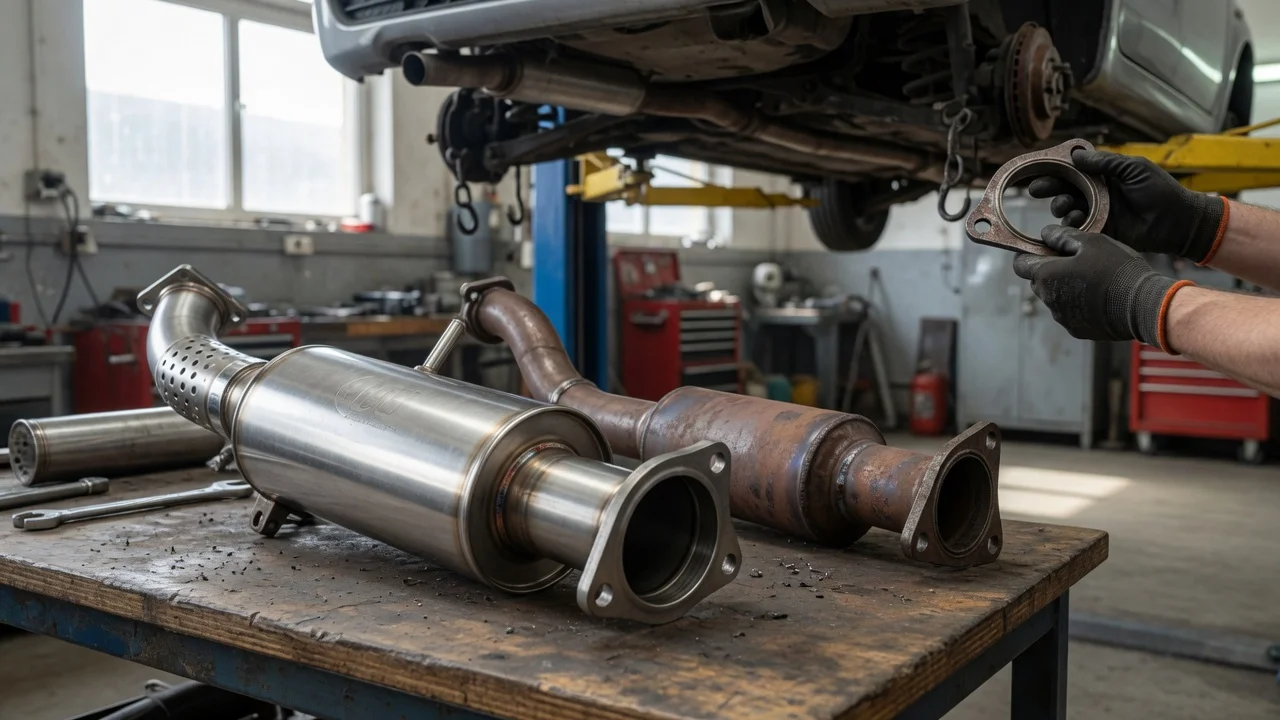
An exhaust pipe is not one universal part. The immediate decision is which section has failed or needs replacement. On most cars and light trucks, the visible portions are the intermediate pipe and the tailpipe, while the catalytic converter and muffler are separate components joined to those pipes. Replacing only the damaged pipe section is usually the lowest-cost repair when the flanges, hangers and surrounding components are still usable.
The condition that materially changes the answer is corrosion. If the pipe failure is accompanied by heavily rusted flanges, a soft or blowing muffler, or broken hangers, a direct-fit single pipe may still bolt on but the repair may be incomplete or short-lived. In that case, a matched pipe section with new connecting hardware is worth considering.
Confirm fitment before buying
Fitment should be checked against the exact model year, engine, drivetrain and body style. Two vehicles with the same nameplate can use different pipe lengths or routing because of wheelbase, axle design or powertrain packaging. Buyers should also compare the pipe shape and bracket count with the original part while the vehicle is safely raised, because an apparently correct catalog match can still differ on vehicles built mid-year or sold in different markets.
The practical checks before committing are the pipe inlet and outlet diameter, overall length, bend pattern, hanger positions and flange type. Repairs made with clamps usually need an overlap or expanded end, so the replacement pipe must be sized for that joint. Vehicles using a gasket and spring bolts at the flange should receive the correct gasket rather than sealant alone.
Match the part number or verified catalog fitment to the specific model year and powertrain. Compare the old pipe's length, routing, hanger count and flange placement before ordering. Identify whether the connection is a bolt-on flange, a slip fit or a lap-joint clamp. Check whether a gasket, clamp, spring or rubber isolator is sold separately and must be replaced at the same time. Assess the surrounding sections for internal rust, holes or collapsed hangers that could defeat a partial repair.
Pipe types and the fitment trade-off
There are two broad replacement styles: direct-fit pipes shaped for one application and universal pipes that are cut or bent during installation. A direct-fit part is the safer choice for a driveway repair because it should align with the existing hangers and flanges. Its limitation is that it only suits the applications listed by the seller.
A universal pipe can cover many vehicles at a lower advertised price, but the installed result depends on cutting, flaring or bending to fit. This raises the labor burden and the chance of a poor seal or contact with the body or suspension. Universal pipe is best treated as material for a custom repair by someone with the equipment to work it.
Option, Best use, Main limitation; Direct-fit replacement, Stock repair on a known vehicle, Limited to the stated applications and usually costs more upfront; Universal straight or pre-bent pipe, Custom or simplified exhaust routing, Needs cutting, fitting and extra joints that can leak if done poorly
Material matters more than finish
Aluminized steel is the common replacement material. It resists external rust better than plain steel at a moderate price. Stainless steel costs more but is the stronger choice where road salt and moisture are frequent, especially if the buyer intends to keep the vehicle for several more years. The material choice should follow the local climate and intended ownership period rather than the visible appearance alone.
Wall thickness is rarely the primary decision factor, but a very thin universal pipe can dent easily and transmit more resonance. Where an original pipe has failed, the replacement should at least match the original wall thickness. If the advertised wall thickness is not stated, ask the seller rather than assuming it is equivalent.
Total cost should include the forgotten parts
An advertised pipe price is not the completed repair cost. A bolt-on replacement may need a gasket, flange hardware, rubber isolators and, on some vehicles, replacement heat shields or clamp sleeves. Taxes, shipping and disposal of the old part are additional. Where cutting or welding is required, labor can exceed the pipe price.
Stated prices should not be treated as final. The supplied information does not include an established market range, date, currency or completed-transaction evidence for replacement exhaust pipes, so a specific dollar estimate would be invented. Buyers should obtain a quote that lists the pipe, all joining parts, labor and any disposal charge before authorizing work.
Which option fits your priority
For a stock vehicle kept near its original configuration, a direct-fit pipe matched to the exact model is the most predictable option. Choose it when the goal is to restore function without custom work and the surrounding hangers and flanges are sound.
For a vehicle with a modified or simplified exhaust, the priorities shift toward what can be made to fit. A universal pipe is more appropriate when a qualified installer will cut and fit it, and when the buyer accepts that the final seal quality depends on that work.
For a long-kept vehicle in a wet or salted climate, stainless steel direct-fit pipe can be the better conditional recommendation because material durability may outweigh the lower upfront cost of aluminized steel. The decision should be rechecked if the replacement will outlast the remaining vehicle structure or if the vehicle is near the end of its planned ownership.
Checks that protect the decision
Before buying, verify whether the replacement includes every required joint part or whether those are separate line items. Confirm the pipe routing matches the original while the old part is still in place, and note the number and location of hangers. If the failure was caused by contact, inspect the adjacent underbody and suspension area for damage that would repeat on the new pipe.
These checks should be completed against the actual vehicle and the seller's fitment notes. The supplied information does not include model-specific pipe dimensions or cross-reference data, so exact lengths, diameters and part numbers are not stated here.