Exhaust Pipe Repair: Patching, Welding, and Section Repair
Direct answer
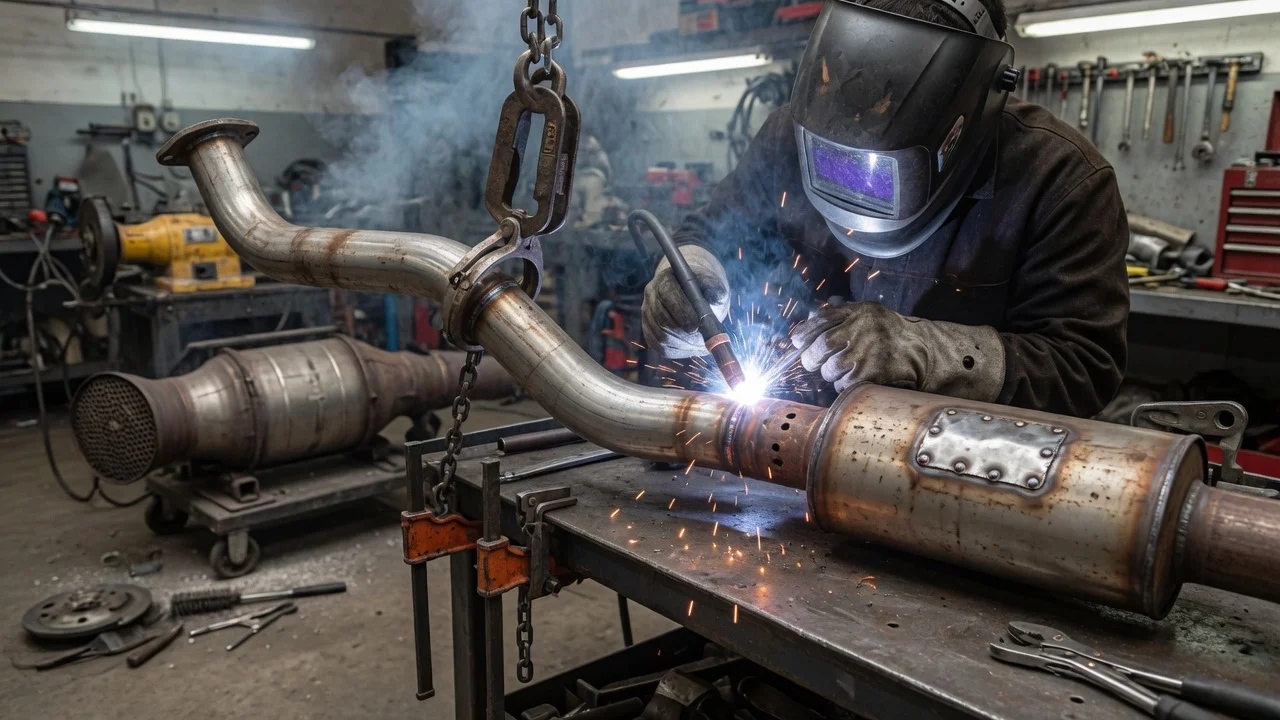
Exhaust pipe repair can range from a temporary patch for a small pinhole or split to cutting out and welding in a replacement section for structural rot or collision damage. The appropriate method depends mainly on the size and location of the damage, the thickness of the surrounding pipe, and whether the affected component is a straight pipe section, a flex section, a flange, or part of a converter or muffler assembly. Patching compounds and exhaust tape can slow a small leak, but welded section repair is the more durable option where the remaining metal is sound enough to accept a weld.
When exhaust pipe repair may be suitable
Repair is usually realistic for an isolated leak, a cracked hanger weld, a damaged flange gasket, or a limited rusted area with solid metal around it. The pipe must still have enough wall thickness to support a patch or a welded joint. If a pipe is corroded across a broad area, crushed, or cracking at multiple points, patching one spot may only move the failure to the next weak section rather than solve the problem.
Recognizing symptoms that point to the pipe
Common signs include a louder or raspier exhaust note, a ticking or puffing sound under load, a sulfur-like smell, and visible soot or water staining around a joint. Exhaust odor inside the cabin is a more serious sign because it may indicate that gases are entering the passenger area rather than escaping underneath the vehicle. That condition should be treated as urgent and the vehicle should not be run with occupants in an enclosed space until the source has been found and corrected.
Locating the leak
With the engine cold and the vehicle safely supported, a visual inspection often reveals black carbon marks, rust streaks, or damaged hangers. A flexible inspection camera can help view areas hidden by heat shields. Listening at different points along the system while the engine idles can also narrow the area, but exhaust components become hot quickly, so contact should be avoided.
If no obvious hole is visible, a leak can sometimes be found by briefly blocking the tailpipe outlet and listening for an increase in escaping air at the leak, but this depends on the engine and exhaust layout and is not possible on every vehicle. Any blocked-tailpipe check should be brief because of backpressure and heat risk.
Patch repair
Small pinholes and short splits can sometimes be covered with an exhaust repair paste or a repair bandage. These products generally require cleaning the metal back to a sound surface so the patch can adhere and survive exhaust heat. The best results are usually obtained on small holes with solid surrounding metal, not on heavy rust scale or flexible sections.
A patch is best understood as a short-term repair or a way to keep a vehicle serviceable until the damaged section can be replaced. It is not a reliable substitute for welding where a long joint is cracked, a hanger has torn away, or the pipe wall is thin across the repair area.
Welded section repair
For a damaged straight section, the common approach is to cut out the affected length and weld in a replacement piece of the correct diameter and material. Exhaust tubing is frequently mild steel or stainless steel, and the replacement should be compatible with the existing pipe and welding process. A butt joint on a straight run is easier to weld cleanly than a repair at a tight bend, a flex joint, or the body of a muffler or converter.
The joints should be accessible with the vehicle supported safely and all nearby wiring, brake lines, and fuel lines protected from heat and sparks. Components that cannot be moved far enough may limit access, which is why some repairs are better handled with the exhaust system removed from the vehicle.
Flanges, gaskets, and hangers
Not every exhaust leak is in the pipe wall. A flange leak may require a replacement gasket, fresh fasteners, or correction of a distorted flange face. Broken hangers can allow movement that eventually cracks a pipe or flex section, so the hanger problem should be corrected at the same time as the pipe damage.
When repair should stop and replacement should be considered
Replacement is generally the better path when the pipe has extensive rust, multiple holes, damage at a crimped or stepped connection, or a failed flex section where there is no suitable rigid repair point. It is also the safer choice when a catalytic converter or muffler has structural damage, because welding on the body of those components can be difficult and may not restore their required sealing or mounting characteristics.
Post-repair checks
After any repaired joint, the system should be inspected for alignment and clearance before the vehicle is lowered. The repaired area should not contact the floor, driveshaft, suspension, or heat shields through the full range of suspension movement, and hangers should support the system without preload. A final run can reveal remaining leaks at idle and under load, but all hot components should be allowed to cool before any further contact.
Evidence gaps
No model-year, platform, or engine-specific specifications are supplied with this brief, so diameters, pipe materials, replacement part numbers, torque values, and emissions-related requirements are not stated. Those details must be confirmed from the applicable vehicle service information for the exact model, year, powertrain, and market.