EV Charging Station Layout for Shared Residential Parking
The Short Answer
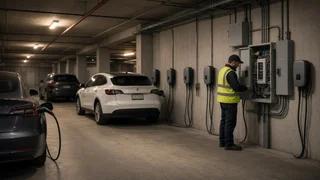
A good layout for EV charging in shared residential parking places chargers where cables can reach the vehicle's charge port without crossing walkways, keeps equipment protected from vehicle impact, and sizes the electrical system for both current demand and likely growth. In apartment buildings, condominiums and other multi-unit properties, the layout is shaped less by the charger hardware than by three things: how parking spaces are assigned, how much electrical capacity the building has available, and how usage will be shared and paid for. These factors vary by property, local electrical code, utility rules and any homeowners association or lease terms, so a site-specific assessment by a licensed electrician is the practical starting point.
How Shared Parking Differs From a Private Garage
In a single-family home, one owner controls the electrical panel, the parking space and the charger. In shared residential parking, those elements are usually separated. The electrical service may belong to the building, the parking space may be assigned to one resident or open to all, and the charger may need to track who uses it. A layout plan therefore has to answer ownership and access questions alongside physical placement.
Electrical supply: chargers often draw from a common building service rather than an individual unit's panel, which affects metering and capacity. Space assignment: assigned spaces favor one charger per space, while unassigned spaces favor a shared cluster with access rules. Cost recovery: shared chargers typically need some way to measure and bill usage, often through networked equipment or separate metering. Decision-making: installation may require approval from a landlord, property manager or association board.
Charging Levels Relevant to Residential Layouts
In the US, residential charging generally falls into two categories. Level 1 uses a standard 120-volt outlet and adds range slowly, which can still suit residents who drive short distances and park for long periods. Level 2 uses a 240-volt circuit (or 208 volts in many commercial and multi-unit buildings) and charges substantially faster, making it the common choice for shared residential parking. DC fast charging is rarely practical for residential sites because of its high power demand and equipment cost. The level chosen influences circuit sizing, conduit, and how many chargers the existing service can support.
Common Layout Patterns
Most shared residential installations use one or a combination of the following arrangements. The right choice depends on the parking geometry, where electrical rooms and panels are located, and whether spaces are assigned.
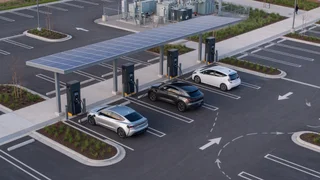
Wall-mounted at the head of stalls: works well in garages where spaces face a wall; keeps equipment out of drive aisles and shortens cable runs. Shared pedestal between two spaces: a single post with one or two connectors can serve adjacent stalls, reducing trenching and hardware. Centralized charging cluster: a group of chargers in one area serving multiple residents on a schedule or first-come basis; suits unassigned parking. Distributed per-space chargers: one charger for each assigned space; simplest for billing but usually the most demanding on wiring and capacity.
Placement Considerations
Charge port locations differ across vehicle makes and models, with some at the front, some at the rear, and some on either side. A charger positioned so its cable can reach common port locations whether a car is parked nose-in or backed in reduces the chance that a resident must park awkwardly or stretch a cable across a walkway. Cable management, such as retractors or holsters, helps keep cords off the ground where they can be driven over or create tripping hazards.
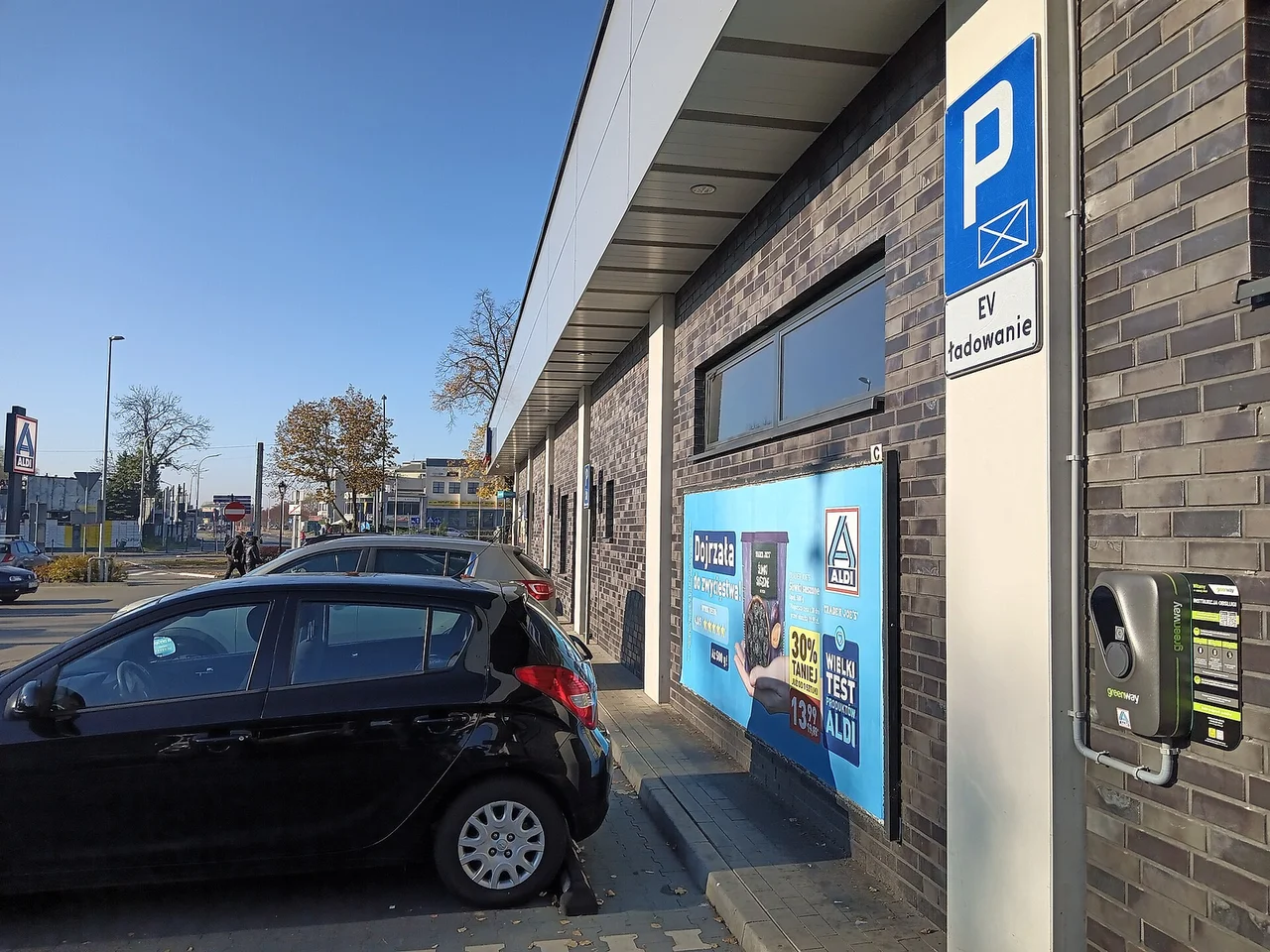
Impact protection: bollards or wheel stops help prevent vehicles from striking pedestals or wall units. Walkways and egress: cables and equipment should not obstruct pedestrian paths, doors or emergency exits. Outdoor exposure: equipment in surface lots needs suitable weather ratings and attention to drainage and snow clearing. Lighting and visibility: well-lit charging areas improve safety and make connectors easier to use at night. Signage and markings: clear signs indicate which spaces are for charging and any time limits or access rules. Network connectivity: networked chargers may need reliable cellular or Wi-Fi coverage, which can be weak in underground garages.
Electrical Capacity and Load Management
Electrical capacity is often the limiting factor in shared residential parking. Electrical codes generally treat EV charging as a continuous load, which affects how circuits and service capacity are calculated. When a building cannot support every charger running at full power simultaneously, load management offers an alternative to costly service upgrades. Load management systems share available power among connected vehicles, either by dividing it evenly, rotating it, or adjusting it based on overall building demand. This can allow more charging spaces on the same electrical service, though each vehicle may charge more slowly during busy periods. Whether this approach is permitted and how it must be configured depends on local code and the equipment's certification.
Planning for Future Growth
Many properties install a small number of chargers at first while preparing additional spaces for later. Installing conduit, panel capacity or wiring to future charging locations during initial construction, often called make-ready infrastructure, is generally less disruptive than opening walls, floors or pavement a second time. Some jurisdictions have building codes that require a share of new residential parking to be EV-capable or EV-ready; the specific requirements vary by location and should be confirmed locally.
Accessibility
Shared charging areas should consider residents with disabilities, including space for a mobility device beside the vehicle, an accessible route to the charger, and controls and connectors within reach. Federal accessibility standards and any state or local requirements may apply to some installations, and the applicable rules depend on the type of property and how the parking is provided. Because this guide does not have source evidence on specific dimensions or ratios, those details should be confirmed with the current standards or an accessibility consultant.
Access, Scheduling and Billing
How a shared charger is used affects where it should go. A cluster of shared chargers works best with rules that prevent fully charged vehicles from occupying spaces, such as time limits, reservations or idle fees. Networked chargers can authenticate users, record energy use and bill residents, while non-networked chargers are simpler but require another method of cost recovery, such as a flat fee or separate submetering. These choices should be settled before final placement, since they can determine whether each space needs its own charger or whether a shared group is more efficient.
Questions to Settle Before Installation
How much spare capacity does the building's electrical service have, and where are the panels located? Are parking spaces assigned, unassigned, or a mix? Who owns, maintains and pays for the equipment and electricity? Will load management be needed to serve the planned number of spaces? What approvals are required from the landlord, property manager or association? Does the local utility offer programs or require notification for new EV loads? What local code, permitting and accessibility requirements apply?
Gaps in This Guide
This overview relies on general principles rather than confirmed project data. It does not provide installation costs, specific clearance dimensions, required numbers of accessible spaces, utility incentive amounts or equipment recommendations, because no verified evidence for those details was available. Some US states have right-to-charge laws that affect what renters and condominium owners may request, but the terms differ by state and should be checked locally. For any specific property, a licensed electrician, the local permitting office and the serving utility are the appropriate sources for binding requirements.