Car battery post repair mold
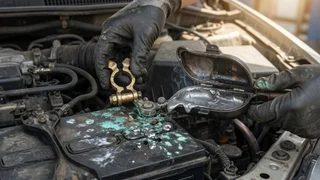
A damaged or corroded battery post can mimic a dead battery by preventing clean current flow from the battery to the rest of the vehicle. When a repair involves reshaping or filling that post, owners sometimes encounter a molding compound used to restore the tapered terminal. The goal is to recreate a round or slightly tapered surface that lets the cable clamp seat firmly with minimal voltage drop at the battery terminals. This overview explains what a battery post repair mold is and how to tell whether the repair relates to the post itself, the clamp, or a weak electrical connection.
Essential answer
A battery post repair mold is a small forming aid used around a worn, corroded, or partially melted lead terminal. The mold is placed over the cleaned post while a compatible repair material, often a low-melting lead alloy or a specialty conductive compound, is formed into a new terminal shape. The purpose is to restore the clamp’s grip, reduce resistance, and protect the exposed connection from further corrosion. Without a solid post, even a healthy battery can show low system voltage during cranking because the current path is compromised.
The repair approach is most relevant when the post is tapered, pitted, or so reduced that the cable clamp no longer tightens securely. A mold does not repair an internal battery cell failure. If the battery case, plate condition, or charging output is the actual problem, reshaping the post will not correct it. The repair is therefore a mechanical and electrical connection fix, not a battery capacity restoration.
Diagnosing a problem
A weak starter response or visible green-white residue on the battery terminals points first to connection resistance. Begin by checking whether the clamp is fully seated and whether the post wobbles or has deep pitting. Measure voltage across the post and clamp while the engine cranks; a noticeable voltage drop indicates heat-producing resistance at the repair area. Compare that with charging output at fast idle. If charging output is normal but the starter side shows a drop, the post or cable end is a likely contributor.
A powdery deposit on the post can be neutralized and removed, but a post that has lost too much lead may physically accept a mold poorly. A loose or undersized clamp can also overheat and melt the post surface over time. Before forming a repair, confirm the replacement clamp matches the repaired terminal diameter and the vehicle’s battery type. If the cable is stiff, swollen, or hot after cranking, internal strands may be the problem. Persistent heat at the terminal calls for stopping use and inspecting both the repair material and the charging system.