Car Battery Post Repair Mold: What It Does, When It Works and When to Replace the Battery
The short answer
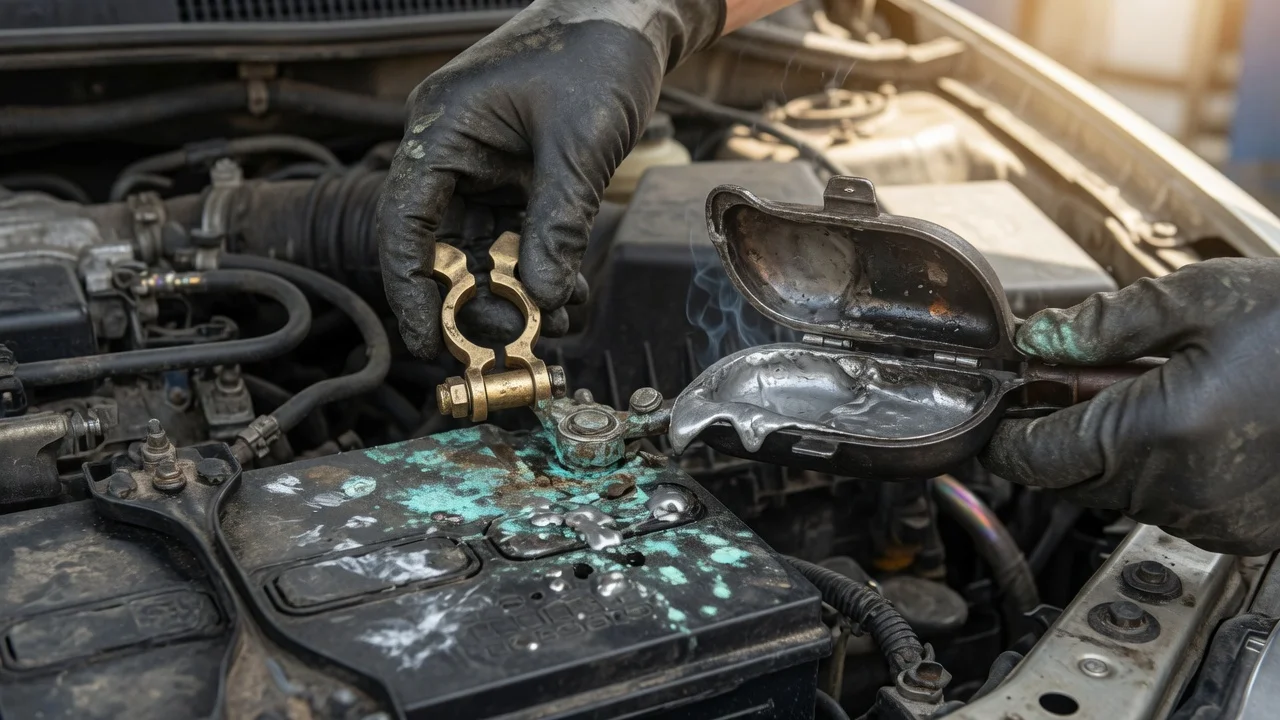
A battery post repair mold is a small two-piece form, usually metal, that clamps around a worn, undersized or partly broken lead terminal post on a lead-acid battery. Molten lead is poured or melted into the cavity, and once it cools the mold is removed, leaving a rebuilt post of the correct shape for a standard terminal clamp to grip.
It can be a workable fix when only the exposed top of the post is worn, deformed or eaten away by corrosion. It is not a fix for a post that is loose in the case, cracked where it enters the case, or leaking electrolyte. In those cases the damage is inside or at the seal, and the battery should be replaced.
Which batteries a post repair mold suits
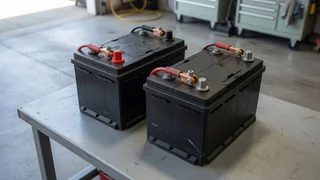
Repair molds are made for lead top posts, the tapered round posts found on many conventional flooded and AGM (absorbent glass mat) starter batteries. Several qualifications change whether one is relevant to your vehicle:
Post size and polarity: on standard top-post batteries the positive post is larger in diameter than the negative, so a mold must match the post being rebuilt. Many molds include both sizes, but check before buying. Side-terminal batteries: these use threaded inserts rather than tapered posts, so a top-post mold does not apply. Other post styles: some batteries in certain markets, along with marine and heavy-duty types, use different post sizes or stud terminals. A mold for one standard will not form the correct shape for another. Lithium 12-volt batteries: some vehicles, including certain hybrids, EVs and performance models depending on model year and market, use lithium auxiliary batteries. Molten-lead repair is not appropriate for these. Battery maker guidance: no manufacturer-specific guidance was supplied for this article. Some battery makers may treat heat repair of a post as voiding the warranty, so check the warranty terms first.
How the repair works
The general method is consistent across common molds, though individual kits differ and their instructions take priority.
Disconnect the battery, negative cable first, and remove it from the vehicle. Clean the post down to bright lead so new metal can fuse with the existing post rather than sitting on corrosion. Clamp the mold squarely around the post so the rebuilt shape is centred and upright. Add lead, typically from scrap battery terminals, lead wire or solder suited to the purpose, and melt it into the mold with a torch or a high-wattage soldering tool. Let it cool fully before removing the mold, then trim any flash so the clamp seats properly.
Lead melts at roughly 327 °C (621 °F). The practical difficulty is getting the new lead to fuse with the old post without overheating the plastic case and seal around the base of the post.
Safety considerations
This repair combines an open heat source, molten metal and a battery, and each carries its own risk.
Hydrogen gas: lead-acid batteries can release hydrogen, especially during or shortly after charging. Hydrogen is explosive, so work in a well-ventilated area and keep flames and sparks away from the vents. Sulphuric acid: electrolyte can burn skin and eyes. Wear eye protection and acid-resistant gloves, and have water and a neutralising agent such as baking soda solution nearby. Lead exposure: avoid breathing fumes from heated lead, wash your hands afterwards, and keep lead scrap away from children and food areas. Case damage: too much heat at the base of the post can soften or crack the case or break the post seal, causing a leak that cannot be repaired.
What could explain the symptom, and what to check next
People usually look for a post repair mold after noticing a loose clamp, a post that has been worn down or melted, or electrical symptoms such as a slow or no-crank start, clicking, flickering lights or intermittent power loss. A damaged post is only one possible cause, so confirm it before repairing anything. The checks below apply to the 12-volt starter battery connection, not to high-voltage hybrid or EV traction batteries, which need a qualified technician.
Check | What you observe | What it suggests; Visual inspection of post and clamp | White, green or bluish crust on the post or clamp | Corrosion raising resistance. Cleaning and a clamp check may solve it without rebuilding the post. Clamp tightness | Clamp turns or lifts off by hand once tightened | The post may be worn undersized, or the clamp may be stretched or cracked. Compare against a new clamp before blaming the post. Post shape | Top of the post is flattened, melted, gouged or shortened | Surface damage that a repair mold is designed to address, if the base is sound. Post movement | Post wobbles, rotates or moves up and down in the case | Internal connection or seal damage. Replace the battery; a mold will not fix this. Base of the post and case | Cracks, wetness, acid residue or white deposits around the seal | Possible electrolyte leak. Stop using the battery and replace it. Case condition | Swelling, bulging or distortion | Internal damage or overcharging. Stop using the battery and have the charging system checked. Voltage drop during cranking | A noticeably lower reading measured from cable to clamp than directly on the post | Poor connection between clamp and post, pointing to corrosion, a loose clamp or a damaged post.
If the connection checks out but the symptoms continue, the battery may be weak, or the cause may lie in the starter, cables, ground straps or charging system. A battery and charging system test, which many parts retailers and workshops offer, can separate these causes. No pass or fail thresholds were supplied for this article, so use the tester's or vehicle maker's specifications.
Warning lights or stored fault codes for battery voltage or charging are evidence to investigate, not proof that the battery or post has failed. A poor terminal connection can cause low-voltage messages and codes in other modules. Fix the connection and recheck before replacing parts.
When to stop and get professional help
The post or clamp gets hot, smokes or smells of burning during use or charging. There is a rotten-egg smell near the battery, which can indicate overcharging or internal failure. Acid is leaking, or the case is cracked or swollen. The post moves in the case. The vehicle uses a lithium 12-volt battery, or the fault involves a hybrid or EV high-voltage system. The battery sits in an awkward location such as under a seat or in the boot with venting hoses, where removal and refitting procedures vary by model.
Mold repair, clamp replacement or new battery?
These are editorial judgments, not test findings. If the battery is otherwise healthy and only the exposed post is worn, a repair mold is a reasonable low-cost option for someone comfortable working safely with heat and lead. If the post is fine but the clamp is cracked or stretched, replacing the cable terminal is simpler and avoids heating the battery at all. If the post is loose, leaking or cracked at the base, or the battery is old or failing a load test, replacement is the sounder choice.
Bolt-on or clamp-on post repair adapters are also sold as a no-heat alternative. No evidence was supplied on how they compare with molded repairs for durability or resistance, so any judgment between the two would be unsupported here.
Information gaps
No product test data, specific mold dimensions, battery manufacturer statements or vehicle-specific procedures were provided for this guide. Post dimensions, battery chemistry and removal steps vary by vehicle, model year and market. Confirm them against the battery label, the owner's manual or service information, and the instructions supplied with any mold.