Driving an AWD Car Without the Rear Driveshaft
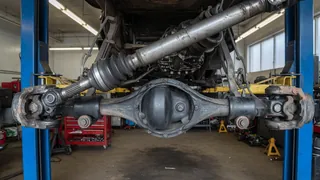
Removing the rear driveshaft from an all-wheel-drive vehicle raises immediate questions about whether the car can still move safely and what happens to the transfer case, transmission, and traction systems. The answer depends heavily on the drive configuration and the design of the center differential or transfer unit. In many cases the vehicle will roll under front-axle power, but that does not mean the drivetrain is operating as intended. Owners considering this change usually face a failed rear differential, damaged driveshaft, or binding in the rear axle, and they want a temporary path back to the road.
Essential answer
In most part-time or automatic all-wheel-drive systems, the vehicle may move without the rear driveshaft installed, but only when the transfer case can direct torque to the front axle without relying on the missing rear output. The front wheels can pull the vehicle, so the car is not necessarily immobilized. However, a driveshaft removal changes how the transfer case, viscous coupling, or electronically controlled clutch distributes power, and some units may continue trying to send torque to a rear output that is no longer connected.
The practical qualification is that short-distance movement in a controlled area is different from normal driving. Without the rear driveshaft, the rear differential and axle shafts simply rotate with the wheels if the vehicle is towed or driven, but they receive no torque from the transfer case. Traction, handling, and stability-control behavior can change because the rear wheels are no longer powered. The vehicle may also set drivetrain fault codes, display warning lights, or enter a reduced-power or limp mode depending on how the control module interprets the missing driveline component.