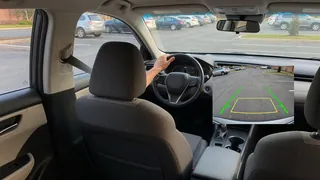
Backup camera with dynamic parking lines
Choosing a backup camera with dynamic parking lines changes how you judge clearance, vehicle dimensions, and maneuvering space before shifting into reverse. Fixed guides can help align a bumper, but active lines that bend with steering input show where the rear path is actually heading. This becomes useful in tight stalls, driveways, and areas where posted signs or local rules leave limited room. The display overlay is a driver aid, not a replacement for checking mirrors and available clearance. Understanding how the system builds its trajectory helps you use the curved guidance instead of guessing from a static grid.
Essential answer
A backup camera with dynamic parking lines projects bendable guidelines over the rearward video feed. The bending path is normally driven by steering-angle data from the vehicle, so the lines curve left or right as the wheel turns. That distinction matters: plain backup camera parking lines show a fixed corridor behind the bumper, while dynamic or active parking lines predict a turning arc. For a driver trying to enter a narrow space, the moving overlay gives a better sense of whether the rear quarter will clear an obstacle during the maneuver.
The value is clearest when backing while turning. Straight-line guides may suggest enough room, but a swinging rear end can travel outside that static boundary. Active parking lines follow the intended curve and help relate the trajectory to objects, curbs, or stall markings. The information is guidance rather than a measured clearance claim. Drivers still need to judge slopes, trailer movement, or changes in steering angle, since the displayed path may update slightly after the wheels turn and the camera processes the new position.