Why Does Sunlight Make Some Car Screens Hard to See?
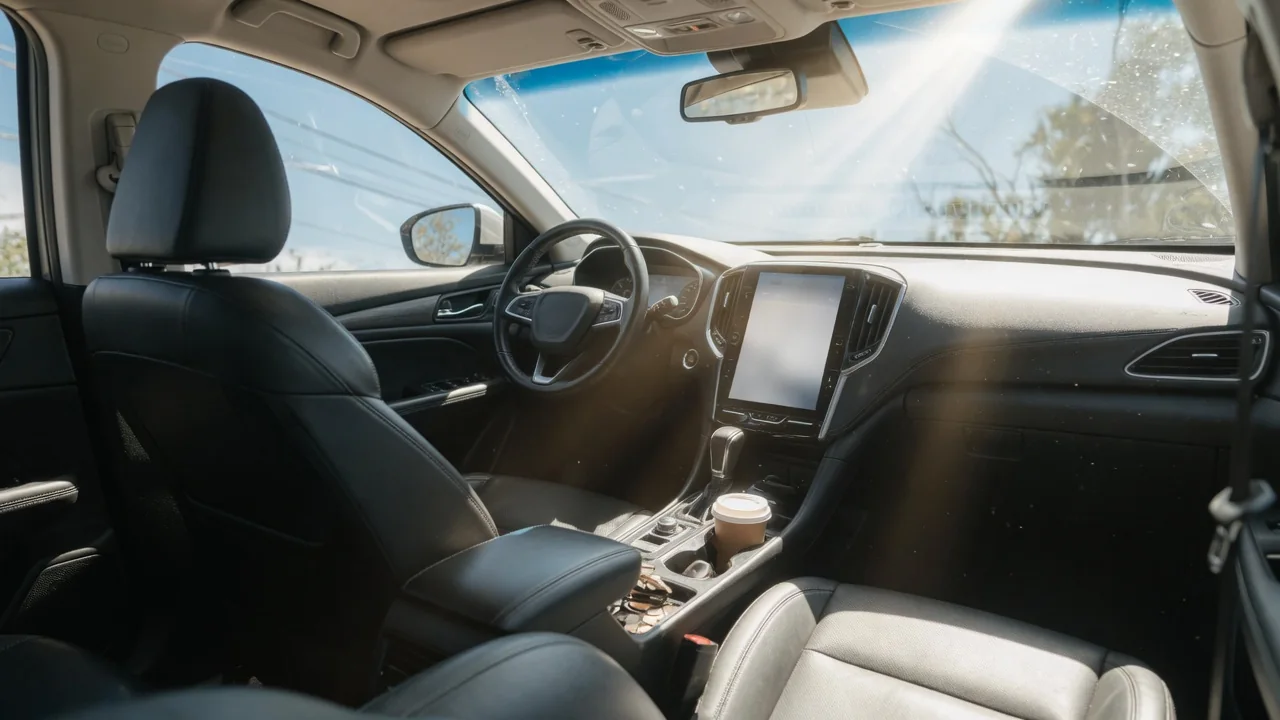
A dashboard screen that looks crisp at night can turn into a gray, mirror-like panel on a sunny afternoon. This sun glare car display problem is not usually a defect. It comes from three interacting factors: light bouncing off the screen surface, the limited brightness of the display compared with direct sunlight, and where the screen sits relative to the windows and the driver's eyes. Understanding each one explains why some car screens are harder to see than others.
Reflections
Every display in a car sits behind a protective cover, usually glass or plastic, and that surface reflects part of the light that hits it. When sunlight or a bright sky lands on a glossy cover at the right angle, it bounces straight toward the driver as a specular reflection. The reflected light adds to the light the screen produces, and because it carries no image information, it washes out the picture. Dark areas of the display, such as black backgrounds in a map or menu, suffer most, since they are supposed to emit little light and the reflection fills them in. The result is lower contrast: the difference between the brightest and darkest parts of the image shrinks, and text or icons blur into a uniform haze.
Surface finish changes how this happens. A glossy, smooth cover keeps colors vivid and sharp when no light hits it, but it produces strong, mirror-like reflections of the sun, the windows, or even a light-colored shirt. A matte or anti-glare finish uses a slightly textured surface to scatter incoming light in many directions, so instead of a sharp bright spot you see a softer, more even sheen. Anti-reflective coatings work differently, using thin layers that reduce how much light reflects at all. Manufacturers balance these options against cost, durability, and image sharpness, which is one reason screens in different vehicles respond differently to the same sun. Fingerprints, dust, and smudges also matter, because they scatter light across the surface and can make even a well-treated screen look cloudy in bright conditions.
Brightness
Direct sunlight is vastly brighter than any car display, so the light the screen emits has to compete with the light reflected off its surface. What drivers perceive as readability depends largely on that ratio, sometimes described as ambient contrast. A display with higher maximum brightness keeps more of its image visible under strong light, while a dimmer one is overwhelmed sooner. This is why screens that seem perfectly adequate on an overcast day can become hard to read when the sun is low and shining directly onto the dashboard.
Most modern vehicles adjust screen brightness automatically using an ambient light sensor, and many also offer separate day and night display modes. These systems help, but they have limits. The sensor measures light at its own location, which may not match the light striking the screen, so the display can stay dimmer than conditions require. Display technology also plays a role. Backlit LCD panels and self-emissive panels such as OLED handle brightness and black levels differently, and their performance in sunlight depends on the specific panel and its implementation rather than the technology label alone.
Heat is another factor. Electronics in a parked or sun-soaked car can get very warm, and some display systems reduce brightness to protect components when temperatures rise. Whether and how a particular vehicle manages this is model-specific, so the owner's manual or the manufacturer is the right source for details about a given system.
Screen placement
Where a screen sits in the cabin often determines how much sunlight reaches it. Traditional instrument clusters are usually recessed under a hood or brow that shades them from overhead light. Many newer center screens are mounted high on the dashboard or stand freely above it, which keeps them closer to the driver's line of sight but exposes them to light coming through the windshield, side windows, sunroof, or rear glass. A screen that sits upright or tilts slightly upward can catch sunlight from above and behind, and as the vehicle turns or the sun moves through the day, the angle of reflection changes. That is why glare can appear suddenly on one stretch of road and vanish on the next.
Viewing angle matters too. Displays are generally designed to look best when viewed head-on, and many LCD panels lose brightness, contrast, or color accuracy when seen from an angle. A center screen facing the middle of the car may be viewed obliquely by the driver, which compounds any washout from sunlight. Screens canted toward the driver can reduce this effect for the driver while making the passenger's view less ideal. Head-up displays, which project information onto the windshield or a separate combiner, face a related challenge: the projected image must compete with the bright scene behind it, so a bright sky or snow can make it harder to read.
Practical implications and limits
For drivers, the useful takeaway is that sunlight readability is shaped mostly by design choices that cannot be changed after purchase, but a few habits can help. Checking the display settings for a manual brightness level, a daytime theme, or a light background option can improve legibility, since dark themes tend to show reflections more. Keeping the screen clean with a soft microfiber cloth helps for the same reason smudges hurt. Because coatings vary, follow the cleaning guidance in the owner's manual and avoid harsh chemicals or abrasive materials that could damage an anti-glare or anti-reflective layer. Sun visors and window shades can block specific angles of light, and voice controls or steering-wheel buttons reduce the need to look closely at a washed-out screen.
Some drivers also notice that polarized sunglasses make certain screens look dim or even black at some angles. Many LCD displays emit polarized light, and when the polarization of the lenses and the screen are misaligned, much of that light is blocked. Tilting the head slightly or trying non-polarized lenses can show whether this is the cause. Aftermarket anti-glare screen protectors may reduce reflections, but they can also soften image sharpness, affect touch response, or interfere with nearby sensors, so fit and compatibility matter.
There are limits to what any of these steps can achieve. No consumer display can fully overcome direct sun shining on it at a bad angle. Persistent dimness in all conditions, flickering, or a screen that never adjusts its brightness is a different matter from ordinary glare and may point to a settings issue or a fault worth having checked by a qualified technician or dealer. When evaluating a vehicle, viewing its screens in bright daylight from the actual driving position gives a more realistic picture than a showroom impression.