How to Deal With Low Sun Glare While Driving
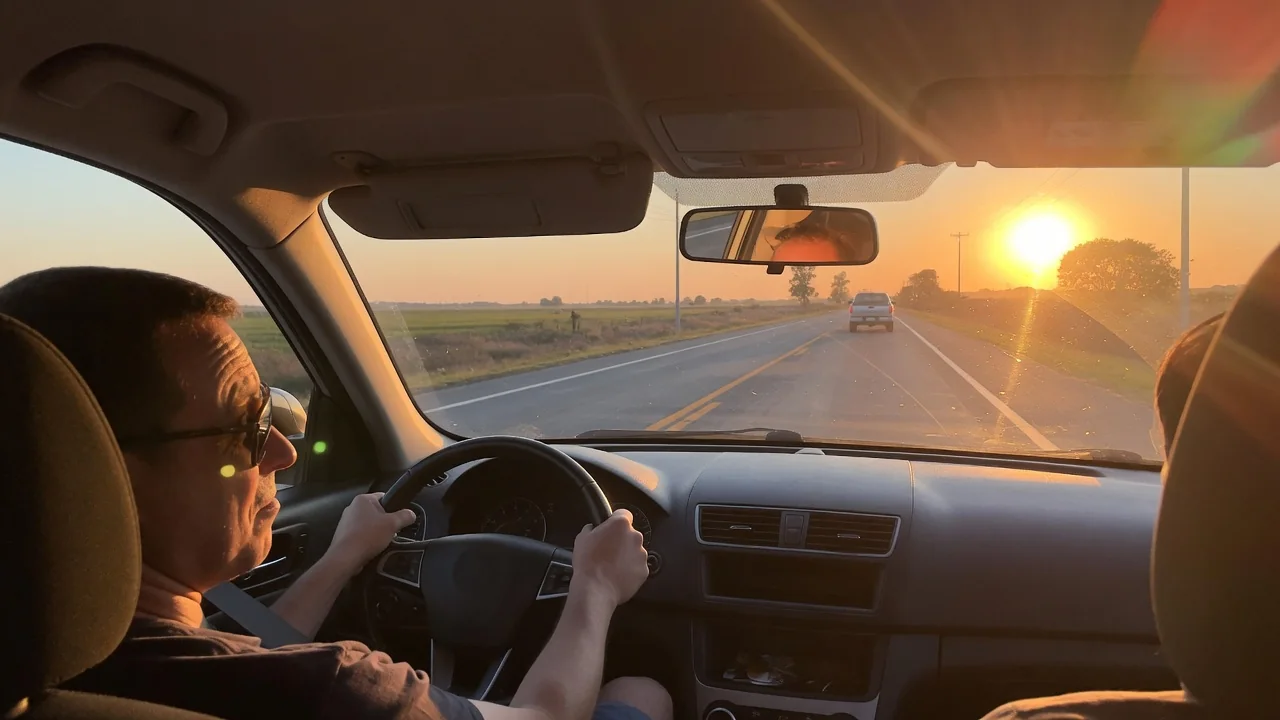
Low sun in the early morning or late afternoon can turn an ordinary commute into a strain, washing out the road, traffic signals, and brake lights ahead. Knowing how to deal with low sun glare while driving comes down to preparation and sensible use of the controls already in the vehicle: clear glass, a properly positioned visor, and a speed that matches what the driver can actually see.
Clean glass
Glare gets dramatically worse when the windshield is dirty, because every particle of dust, film, and dried residue scatters incoming light instead of letting it pass straight through. The inside surface matters as much as the outside. Vinyl and plastic trim release vapors that settle on the glass as a hazy film, and that film is nearly invisible at midday yet turns into a bright, milky sheet when the sun sits low on the horizon. Wiping the interior glass with a clean microfiber cloth and a suitable glass cleaner removes it.
On the outside, worn wiper blades leave streaks and arcs that catch the light, and an empty washer reservoir leaves no way to clear road spray once the sun hits it. Checking the blades for cracked or hardened rubber and keeping washer fluid topped up are simple preparations. Small chips and fine pitting in older windshields also sparkle under low sun, and no amount of cleaning removes that. Drivers can spot it by looking through the glass toward a bright light and noticing a sandblasted glitter across the surface.
Use visor
The sun visor is the most direct control for blocking low sun, yet many drivers flip it down without adjusting it. The lower edge should sit just low enough to cover the sun while leaving the road, signals, and mirrors in view. Seat height and posture change how much the visor covers, so a taller or shorter driver in the same vehicle will need a different position. When the road curves and the sun moves to the side, most visors unclip at one end and swing toward the door glass.
Visor designs vary between vehicles. Some slide along their rod or include a pull-out extension to cover the gap near the mirror or the rear of the side window, while others are fixed in length. Many windshields carry a tinted band or dotted pattern along the top edge that softens light around the mirror mount. Polarized sunglasses kept within reach complement the visor by cutting reflected glare from wet pavement and hoods, though they can make some instrument screens or head-up displays harder to read, depending on the vehicle.
Reduce speed when needed
When glare hides what lies ahead, the distance a driver can see shrinks, and speed should shrink with it. A vehicle traveling at the posted limit covers a lot of ground in the seconds it takes to recognize a stopped car, a pedestrian, or a cyclist emerging from the brightness. Easing off the accelerator early, rather than braking sharply at the moment vision fails, gives drivers behind time to react, which matters because they are likely dazzled by the same sun.
Following distance deserves the same attention. Brake lights and turn signals on the vehicle ahead can wash out almost completely when the sun shines directly on them, so a longer gap restores the margin that the lost warning removes. Traffic signals facing into the sun can be equally hard to read, and approaching an intersection slowly enough to confirm the color is sensible. Switching on low-beam headlights does not improve the driver's own view, but it lights the taillights as well and makes the vehicle easier for dazzled road users to pick out.
Everyday Use and Observations
Sun glare is more predictable than most hazards. It appears on eastbound roads shortly after sunrise and westbound roads before sunset, and it lasts longer in fall and winter, when the sun stays low for more of the day. Drivers who notice where it strikes on a regular route can prepare before reaching that stretch by lowering the visor and putting on sunglasses in advance. Sudden exposure is the harder case: cresting a hill, leaving a tunnel, or emerging from tree shade can blind a driver in an instant.
Reflections inside the cabin add to the problem. Papers, light-colored objects, or a glossy protectant on top of the dashboard mirror themselves in the windshield and form a bright veil exactly where the driver needs to look, so a clear, matte dash helps. Sun from behind causes its own trouble through the mirrors. Some rearview mirrors dim automatically, while others have a small tab underneath that tilts the glass to a dimmer setting. A clean rear window also keeps that reflected light from smearing into haze.
Limits and Next Steps
No combination of clean glass, visor, and sunglasses fully solves the moment when the sun sits directly in line with the road. If the view ahead disappears, the safe response is to slow progressively and, if vision does not return, leave the road at a parking lot, rest area, or other spot well clear of traffic and wait a few minutes for the angle to change. Stopping in a travel lane is dangerous because following drivers face the same glare. Adjusting departure time or choosing a shaded route can avoid the worst of it.
Some glare problems point to the vehicle rather than the weather. Interior haze that returns quickly, pitting that glitters across the driver's line of sight, or cracks spreading from a chip are reasons to have the windshield assessed by a glass specialist. A visor that droops or will not hold its position can usually be repaired or replaced, and the owner's manual explains any extension or mirror-dimming features fitted. Drivers who find glare increasingly hard to tolerate, even with good preparation, may also benefit from having their eyesight checked.