How to Protect Interior Trim From Sun Exposure
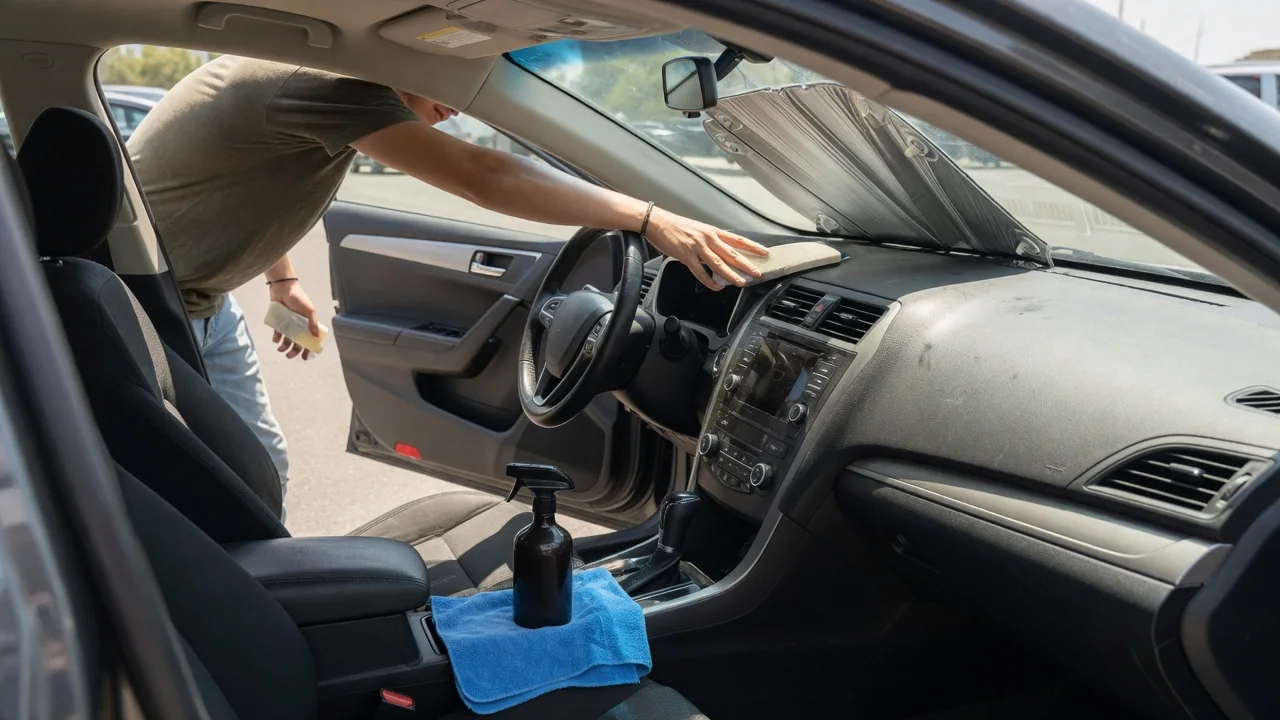
Sunlight is hard on a cabin. Ultraviolet rays and trapped heat fade colors, dry out plastics, and weaken the finishes on dashboards, door panels, and seats. Learning how to protect interior trim from sun exposure comes down to three habits: knowing which surfaces take the most punishment, blocking light when the vehicle is parked, and cleaning and conditioning each material in a way that suits it.
High-exposure surfaces
The dashboard top takes the heaviest load because it sits directly under the windshield, a large, steeply raked pane that admits light for most of the day. The upper door panels, the steering wheel rim, the instrument hood, and the rear parcel shelf or cargo cover follow closely. Seat shoulders and headrests near the side glass also see long exposure, especially on the side of the vehicle that faces south or west in a regular parking spot.
Early signs are easy to spot once you compare exposed and sheltered areas. Look at the trim hidden beneath a sun visor, inside the glovebox edge, or under a floor mat, then compare its color and sheen with the dash top. Chalky gray plastic, a sticky or shiny film on soft-touch coatings, and stiffened upholstery all point to sun wear. Vehicles with panoramic roofs, large rear hatches, or light factory tint expose more of the cabin, so the vulnerable zones differ from one model to the next.
Shade use
Parking out of direct light is the most effective protection because it lowers both ultraviolet exposure and cabin temperature at once. A garage, carport, parking structure, or the shaded side of a building all help. When open pavement is the only choice, consider which way the windshield faces. Pointing the nose away from the afternoon sun shifts the load from the dashboard to the rear glass, which on many vehicles is smaller or more deeply tinted.
A folding or roll-up windshield sunshade is the next line of defense. A snug fit matters, since gaps at the pillars and around the mirror leave bright strips that fade in visible patterns over time. Side window screens and a retractable roof blind, where fitted, protect door trim and seats. Window tint can reduce ultraviolet and heat transmission, but legal limits on darkness vary by state and by window position, so check local rules before choosing a film.
Material care
Clean trim holds up better than dirty trim. Dust, skin oils, sunscreen, and residue from spilled drinks bake onto hot surfaces and can stain or soften coatings. Wiping hard plastics and vinyl with a damp microfiber cloth and a mild interior cleaner removes that film without stripping the finish. Harsh solvents, household degreasers, and abrasive pads are worth avoiding, since they can dull textured plastic and lift the thin coating on soft-touch panels and painted accents.
After cleaning, a protectant with ultraviolet inhibitors adds a sacrificial layer on plastic, vinyl, and rubber. A matte, non-greasy product is the better choice for the dash top, because glossy dressings reflect into the windshield and attract dust. Leather benefits from a dedicated cleaner and conditioner that keeps it supple, while fabric and suede-like materials need products made for textiles. Wood veneer, piano black, and metal-look trim vary widely in finish, so the owner's manual is the right guide for what is safe.
Everyday Use and Observations
Small routines add up over the years a vehicle is in service. Putting the sunshade up for even a short stop, pulling the cargo cover closed, and folding down the visors when parked all cut the hours of direct light on trim. Cracking the windows slightly in a secure location lets some heat escape, though that is a judgment call depending on weather and security. Keeping a microfiber cloth in the door pocket makes it easy to remove dust before it builds up.
Regular observation tells you whether your habits are working. Notice whether the dash top still matches the lower dash in color, whether the steering wheel feels dry or slick, and whether seat bolsters near the glass look lighter than the cushions. Items left on the dashboard, such as phone mounts, papers, or air fresheners, can leave outlines or marks as surrounding trim fades or as adhesives soften in heat. Climate matters too, since a vehicle in a hot, high-sun region ages faster than one parked in mild, overcast conditions.
Limits and Next Steps
Protection slows sun damage but does not reverse it. Faded plastic can sometimes be improved in appearance with a trim restorer, yet the result is cosmetic and tends to wear off. Cracks in a dashboard, peeling soft-touch coating, split leather, and warped panels are structural changes that no cleaner or dressing will fix. Protectants also wear away with heat and wiping, so they need reapplying on the schedule the product label gives rather than being treated as a permanent coating.
When damage has gone beyond what care can address, the realistic options are repair or replacement. Upholstery and trim shops can re-dye or patch leather and vinyl, and a fitted dash cover can hide cracks while shielding what remains. Be cautious around panels that conceal airbags, since covers and repairs in those areas must not interfere with deployment; your manual or a dealer can confirm where they are. For anything beyond routine cleaning, a professional assessment of your specific vehicle is the sensible next step.