Why Does a Key Fob Need a Mechanical Backup Key?
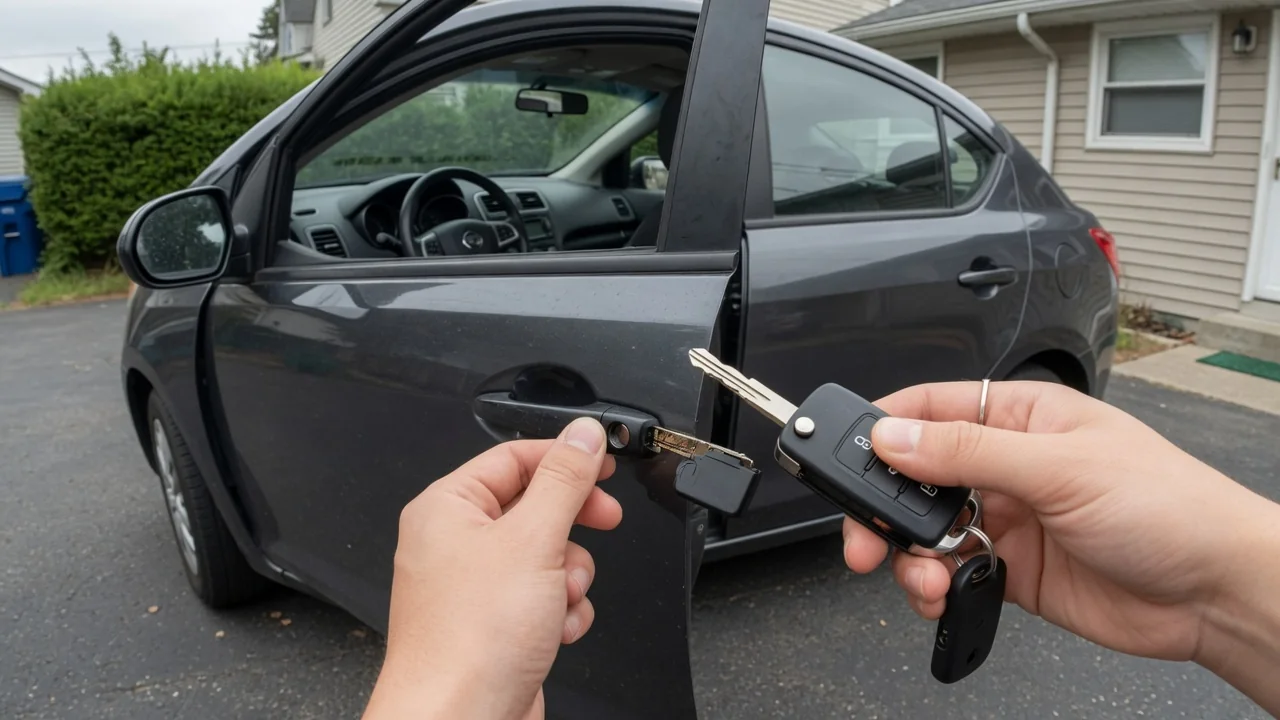
A key fob feels like a complete replacement for the old metal key until its coin cell dies or the car's own battery goes flat. So why does a key fob need a mechanical backup key? Because radio signals, door modules, and electric latches all depend on power, and a simple cut blade gives a driver a way in when that power is missing.
Stored blade
Most proximity fobs and many remote-entry fobs hide a small metal blade inside the housing. It is usually released by a sliding catch or a small button on the back or edge of the case, and it pulls out from one end. On some designs the blade folds out like a pocketknife instead, and on others it sits beneath a removable cover. The blade is cut to match the vehicle's lock cylinder, so it works by purely mechanical means and needs no battery, antenna, or circuit board to turn a lock.
The reasoning is straightforward: the fob's electronics rely on a small coin cell that fades over time, and the fob itself can be damaged by water, a hard drop, or a cracked solder joint. The stored blade has none of those weaknesses. Owners can check their own fob by looking for a seam, a release catch, or a metal tab at one end. Shape, length, and cut style vary by manufacturer, and a few vehicles with card-type or phone-based keys handle emergency entry differently.
Door access
The blade's main job is to open the driver's door when remote unlocking does nothing. That can happen with a dead fob battery, but also when the vehicle's twelve-volt battery is discharged, since the receiver and door lock actuators then have nothing to run on. In that second case even a perfectly healthy fob is useless, and the mechanical cylinder becomes the only route to the cabin and, on many vehicles, to the hood release needed for a jump-start or battery replacement.
Finding the cylinder is not always obvious. Many modern door handles hide it behind a small plastic cap for a cleaner look, often with a slot underneath where the blade tip is used to ease the cover off. Usually only the driver's door has a cylinder, and some vehicles place one on the trunk or tailgate as well. Opening a door this way may trigger the alarm until the car recognizes the fob, so a sounding horn after manual entry is not necessarily a fault.
Vehicle instructions
Because the details differ so much between makes and model years, the owner's manual is the reliable reference. It normally shows how to release the blade, where the lock cylinder sits, how to remove any handle cover without marking the paint, and which direction to turn the key. It is worth reading that section once at home, in daylight, instead of working it out for the first time in a dark parking lot with rain coming down.
The manual also covers what happens after the door is open. On push-button start vehicles, the blade does not start the engine, yet most cars offer a backup method for a weak fob, such as holding it against the start button or placing it in a marked slot or pocket so the immobilizer can read its transponder at very short range. The exact location and sequence are vehicle-specific, so the printed or in-dash instructions should be followed in preference to general advice.
Everyday Use and Observations
In daily driving the blade is rarely touched, which is exactly why it gets forgotten. Early warning signs that it may soon be needed include shrinking remote range, having to press a button several times, or a dashboard message about a low key battery. Cold weather tends to make a weak coin cell behave worse. Replacing the cell promptly usually restores normal operation, though persistent problems after a fresh battery point toward the fob or the vehicle's receiver and deserve proper diagnosis.
A lock cylinder that is never used can stiffen from dirt, moisture, and old lubricant, so the emergency key may refuse to turn on the one day it matters. Trying the blade in the door a couple of times a year keeps the mechanism moving and confirms the key is actually cut correctly, which is not guaranteed on a secondhand car or an aftermarket replacement fob. It also helps to know that a spare fob stored at home has its own blade and its own aging battery.
Limits and Next Steps
The backup key has clear limits. It opens a door, but it normally cannot start a push-button vehicle or bypass the immobilizer, and it may not unlock every door, the fuel flap, or an electrically released trunk. If the car's main battery is flat, getting inside is only the first step; the vehicle still needs charging or a jump-start, performed the way the manufacturer describes. A blade that turns freely without unlocking anything suggests a problem in the lock linkage, not in the key.
When the blade is missing, uncut, or will not turn, forcing it risks snapping it inside the cylinder. A dealer or qualified automotive locksmith can cut a new blade to the vehicle's key code and check the lock itself. If a fob stops working with a fresh battery, or the car fails to recognize it during the backup start method, professional testing can separate a failed fob from a vehicle-side fault. Keeping the blade inside the fob, not in a drawer, ensures it is there when needed.