What Is a Plug-In Hybrid Car?
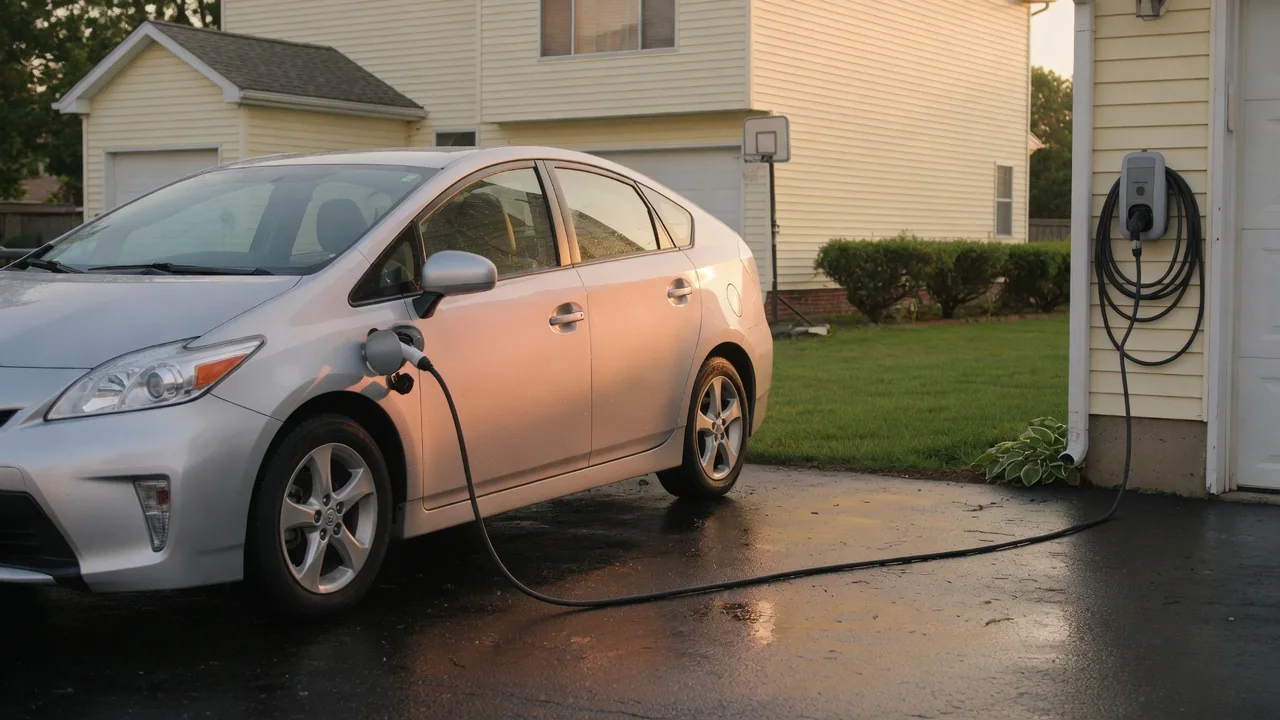
What is a plug in hybrid car? It is a vehicle that pairs a gasoline engine with an electric motor and a battery large enough to be recharged from an outside power source. That combination lets many short trips run on stored electricity while the engine stands ready as backup for longer drives, giving drivers two energy sources in one vehicle.
Charge port
The charge port is the most visible sign that separates a plug-in hybrid from a conventional hybrid. Behind a small door, usually on a fender or rear quarter panel, sits a connector that accepts electricity from a household outlet or a dedicated charging station. A conventional hybrid has no such inlet because its smaller battery is replenished only by the engine and by regenerative braking. On a plug-in model, that external connection is the main way the battery pack gets filled.
Location and connector style vary by manufacturer and model year, so the owner's manual is the best guide to what a particular vehicle accepts. Many plug-in hybrids charge on alternating current at home or at public stations, while fast direct-current charging is less common in this category. Drivers will typically notice an indicator light near the port or a dashboard display showing charging status. Because the fuel filler door remains on the vehicle too, it helps to learn which door is which before the first fill-up.
Electric driving
With a charged battery, a plug-in hybrid can move away from a stop and cruise through town using its electric motor alone. The experience is quiet, with smooth and immediate response because electric motors deliver torque without waiting for engine speed to build. An instrument cluster display usually shows an estimated electric range alongside the fuel range. Regenerative braking recovers some energy when slowing down, feeding it back into the battery and stretching the distance covered before the engine is needed.
Electric range differs widely between models and shifts with conditions. Cold weather, cabin heating, highway speeds, steep grades and heavy loads all draw the battery down faster than gentle driving in mild temperatures. Some vehicles start the engine under hard acceleration or when the heater is demanded, even with charge remaining, while others hold electric operation more firmly. Many offer selectable modes that let the driver prioritize electric driving, save the charge for later, or let the system blend both power sources automatically.
Fuel use
The gasoline engine is the backup that removes the range concern associated with battery-only vehicles. Once the usable charge is depleted, the vehicle continues operating much like a conventional hybrid, with the engine supplying most of the power while the motor assists and regenerative braking recaptures energy. The driver does not need to stop and plug in to keep going; a normal fuel station visit is enough. This transition is typically automatic and may be noticed only as a faint engine sound or a gauge change.
How much fuel a plug-in hybrid actually burns depends heavily on charging habits and trip length. A driver whose daily commute fits within the electric range and who plugs in each night may go long stretches without buying gasoline. Someone who rarely charges is carrying a heavier battery without using its benefit, and fuel consumption may be no better than a regular hybrid's. Because fuel can sit in the tank for extended periods, some vehicles run the engine periodically to keep the fuel and engine systems in good condition.
Everyday Use and Observations
In daily life, ownership tends to settle into a routine of plugging in at home overnight and driving the next day's errands largely on electricity. A standard household outlet can work for many owners, though a higher-powered home charging unit shortens the wait; charging times depend on battery size and the vehicle's onboard charger. Scheduled charging features, where equipped, let the vehicle draw power during off-peak hours, and some models can warm or cool the cabin while still connected.
Behind the wheel, attentive drivers will observe the engine starting and stopping on its own, sometimes at moments that seem unexpected, such as a cold morning or a highway merge. Energy flow screens show whether power is coming from the battery, the engine or both. Cargo space may be slightly reduced in some designs because the battery pack occupies room under the floor or seats. On a road trip, the vehicle simply behaves like a hybrid once the charge is used, with no change to refueling habits.
Limits and Next Steps
A plug-in hybrid is a compromise, and its limits are worth understanding. The electric range is shorter than a fully electric vehicle's, so longer journeys rely on gasoline. Carrying both an engine and a sizable battery adds weight and complexity, and the vehicle still needs engine-related maintenance such as oil changes on the schedule its manufacturer specifies. Without convenient access to charging at home or work, much of the advantage disappears, which makes parking and electrical arrangements a practical part of the decision.
A sensible next step is comparing typical daily mileage against the rated electric range of the models under consideration, using official figures rather than assumptions. Checking whether the home's electrical supply suits the intended charging method, ideally with a qualified electrician, avoids surprises. A test drive that includes both electric and engine operation reveals how each vehicle handles the handoff. Battery warranty terms, available incentives and local charging options all vary by manufacturer and region, so confirming them for the specific vehicle matters before committing.