How to Plan a Trip With an Older Car
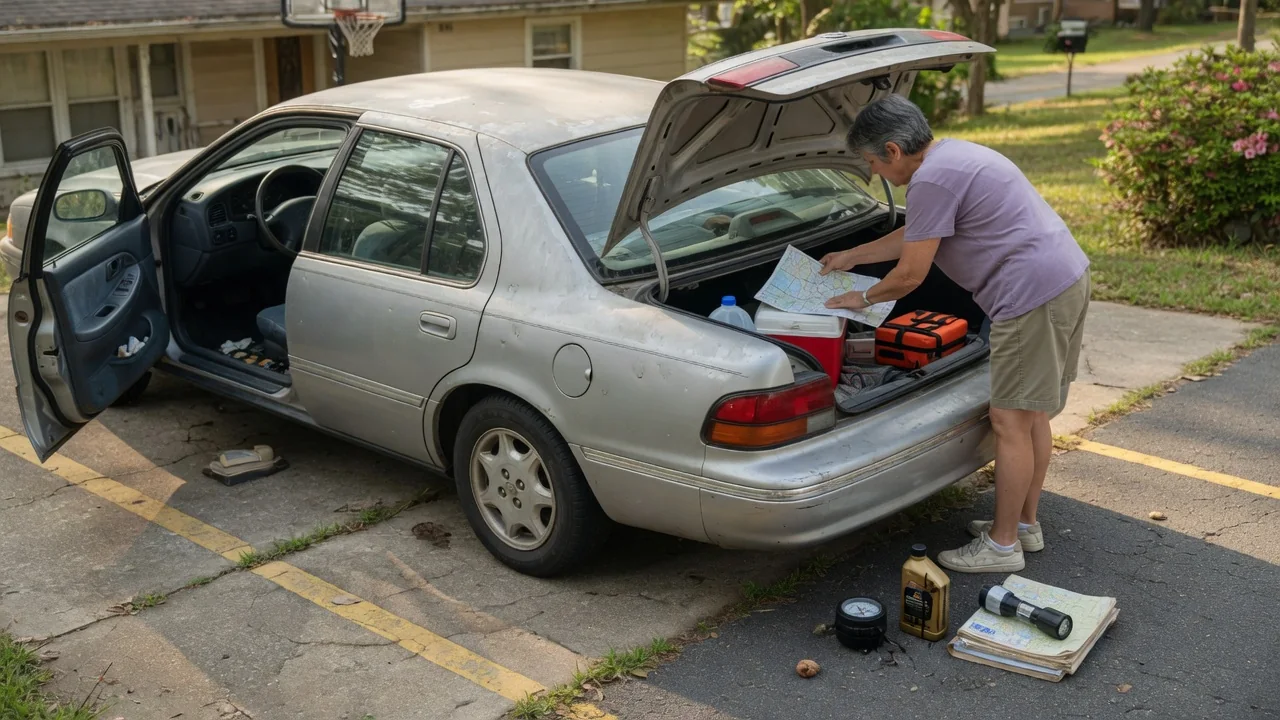
Learning how to plan a trip with an older car starts with honesty about its condition rather than optimism about its record. A vehicle that handles short commutes without complaint can behave differently after hours of sustained highway speed, heat, and load. Good planning pairs a careful look at the car with realistic backup options if something goes wrong.
Inspect known weak points
Every aging vehicle has a history, and that history points to where trouble is most likely. Start with the parts that wear with time as much as mileage: rubber coolant hoses, drive belts, tires, and the battery. Hoses that feel soft, swollen, or crunchy when squeezed on a cold engine deserve attention, as do belts showing cracks or glazing. Tires may have plenty of tread yet still show sidewall cracking from age, which matters more at highway speed and under a full load of passengers and luggage.
Look underneath and around the engine bay for fresh wetness, since a slow oil, coolant, or transmission fluid seep can become a steady leak under sustained load. Check fluid levels and condition, brake pedal feel, and whether all exterior lights work. If the car has a recurring problem, such as a temperature gauge that creeps up in traffic, treat it as unresolved rather than tolerable. Component layout and typical trouble spots differ by make, engine, and model year, so a mechanic familiar with your vehicle can focus the inspection.
Carry contacts
A breakdown far from home is mostly a logistics problem, and the right phone numbers shorten it considerably. Before leaving, confirm what your roadside assistance actually covers, including towing distance limits and whether the plan follows the car or the driver. Keep the number written on paper in the glovebox as well as in your phone, because a dead battery or weak signal can leave a phone useless exactly when the car stops. Your insurance provider's claims line and policy number belong in the same place.
It also helps to note repair shops along the route, particularly ones that work on your make, since parts for older or less common vehicles may not be stocked everywhere. Your regular mechanic's number is worth carrying too; someone who knows the car can often tell a stranded driver whether a symptom is safe to drive on or reason to stop. Share your route and expected arrival with a friend or family member, so someone knows where to start if you go quiet.
Allow time
A schedule with no slack turns a minor problem into a crisis. Build extra hours into each driving day so a slow leak, a soft tire, or a warning light can be dealt with calmly instead of ignored to make a deadline. Regular stops serve the car as well as the driver: a short walk around at each fuel stop lets you look at the tires, glance under the engine for drips, and notice any new smell of hot coolant, oil, or brakes before it grows into something larger.
Timing the drive matters as well. Cooling systems and air conditioning on older vehicles have less margin, so crossing hot regions or climbing long grades in the early morning reduces strain. Arriving before dark is a sensible target, because repair shops and parts counters generally close in the evening and a roadside stop is safer in daylight. If an appointment or event is fixed, consider leaving a day early. The spare day costs little compared with a missed occasion and a rushed, expensive repair in an unfamiliar town.
Everyday Use and Observations
The best evidence about an older car's readiness comes from how it behaves in the weeks before departure. Pay attention during ordinary driving: how quickly it starts, where the temperature gauge settles, whether the brakes pull or pulse, and whether the steering wheel shakes at speed. Check the oil level a few times across several fill-ups to learn how much the engine consumes, since a car that uses a little oil around town may use more over long highway stretches. That baseline tells you what is normal and what is new.
A longer test drive on the highway, ideally an hour or so, reveals things short trips hide, such as a vibration that appears only at speed, a transmission that shifts oddly once hot, or a charging system that struggles with lights and fan running. If a warning light is on, have the stored code read, but treat it as evidence to interpret; a code points toward a system or circuit and does not prove a particular part has failed. Some codes are manufacturer specific, so their meaning should be confirmed for your vehicle.
Limits and Next Steps
Preparation lowers risk without removing it, and some conditions should change the plan entirely. Unresolved overheating, a brake problem, significant structural rust, or a fluid leak that is getting worse are reasons to repair first or leave the car at home. Weigh the cost of preventive work against the car's value and the trip's importance. Renting a vehicle, taking a train, or riding with someone else are legitimate backup options, and choosing one is a planning decision, not a defeat for a car that still serves well locally.
If the car passes its checks, decide in advance what you will do when something does go wrong. Set a rough spending limit for roadside repairs, know how you would get home if the car had to stay behind, and keep enough funds accessible for a tow and a night's lodging. Carry the spare tire in usable condition, the jack and wrench that fit your wheels, and extra oil and coolant of the correct type. For anything beyond basic checks, a professional pre-trip inspection is the sensible next step.