How to Plan a Trip When a Car Has a Small Fuel Tank
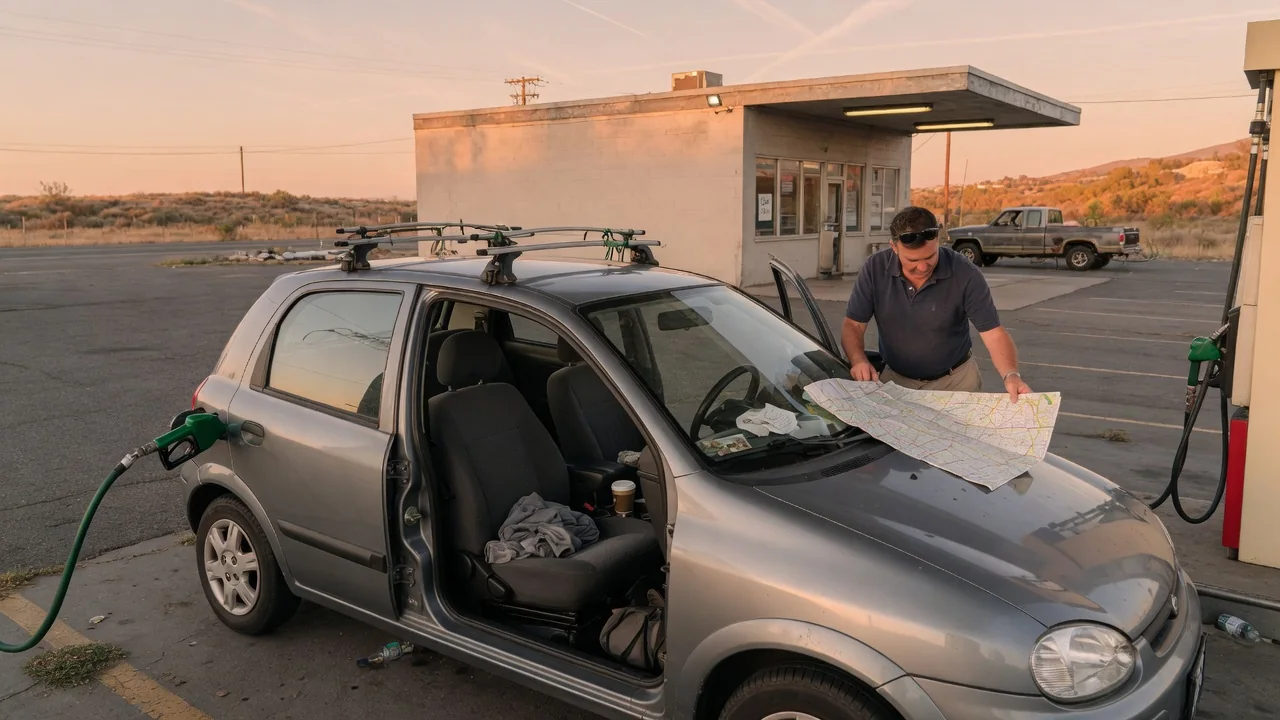
Learning how to plan a trip when a car has a small fuel tank comes down to two habits: knowing what the vehicle really consumes and stopping earlier than the gauge demands. A compact tank does not make long drives impractical, but it shrinks the room for error, so the route, the stations and the reserve all deserve attention before departure.
Measure range
The most reliable range figure comes from the car itself rather than a brochure. Fill the tank until the pump clicks off, reset the trip odometer, drive normally, then refill and divide the miles covered by the gallons added. Repeating this over several tanks gives an average that reflects your tires, load and driving style. Multiply that figure by the usable tank capacity listed in the owner's manual, and you have a realistic starting number instead of an optimistic estimate.
Highway trips rarely match everyday averages, so adjust before relying on the result. Sustained high speed, headwinds, roof boxes, mountain grades, cold weather and heavy air conditioning use can all raise consumption, sometimes noticeably. The dashboard distance-to-empty readout is useful, but it is calculated from recent driving and can drop quickly when conditions change. Tank size, reserve volume and the point at which the low fuel light appears differ between models, so confirm those details in the manual for your vehicle.
Locate stations
Once the practical range is known, lay it over the route. Navigation apps and built-in systems can show fuel stations along the way, and it helps to mark candidates at roughly half to two thirds of your measured range rather than at its limit. On an interstate with frequent exits this is easy, but rural highways, desert crossings and mountain passes may have long gaps where a single closed station changes the whole plan.
Check details that maps do not always show clearly. Some small-town stations close overnight or on holidays, some pumps are card-only, and not every location carries the grade your engine requires, whether that is premium gasoline or diesel. Choosing a primary stop and a backup a short distance beyond it gives a simple safety net. Downloading offline maps before leaving is worthwhile too, because cell coverage often fades in exactly the stretches where stations are scarce.
Avoid low margin
A small tank leaves little cushion, so treat the bottom quarter as reserve rather than usable range. Refueling when the gauge reads around a quarter means a detour, traffic jam or closed station becomes an inconvenience instead of an emergency. Idling in a long delay still burns fuel, and in hot or freezing weather you may need the engine running for climate control, which a nearly empty tank cannot support for long.
There is a mechanical reason for caution as well. In many vehicles the electric fuel pump sits inside the tank and relies on the surrounding fuel for cooling, so running very low repeatedly may add stress, though designs vary. Low levels can also allow the pickup to draw air during hard cornering or on steep grades, causing hesitation. Running a diesel completely dry can be particularly troublesome, since some systems need to be primed before they will restart.
Everyday Use and Observations
Daily driving is the best rehearsal for a long trip. Keeping a simple log of miles and gallons at each fill-up shows how consumption shifts between city commutes, highway runs and seasons. Watch how the gauge behaves too: many needles fall slowly through the top half and faster through the bottom, because tank shapes are irregular. Noting how many miles you typically cover after the low fuel warning appears, without deliberately testing it, gives helpful context.
These observations translate directly into trip planning. If the log shows consumption climbing with a full load of passengers and luggage, shorten the planned distance between stops accordingly. Small tanks appear in city cars, some sports cars and certain hybrids, and each behaves differently; a hybrid may stretch a small tank in town yet lose part of that advantage at steady highway speed. Frequent stops also pair naturally with rest breaks, which helps driver alertness on long days.
Limits and Next Steps
No plan removes every uncertainty. Calculated range is an estimate, gauges and trip computers have tolerances, and station information can be outdated. Carrying extra fuel is sometimes suggested, but it brings real hazards; only an approved container, secured properly and kept out of the passenger compartment, should be considered, and local rules may apply. For most paved routes, tighter stop spacing is the safer answer than transporting gasoline.
If consumption suddenly worsens compared with your records, look into it before a long drive. Underinflated tires, a dragging brake, overdue maintenance or an engine fault can all shorten range, and a check engine light deserves proper diagnosis; any stored code is a lead to interpret, not proof that a specific part has failed. Before departure, verify tire pressures, review the route for the longest gap between stations, and set a firm refueling point that you will not talk yourself past.