What Is a Car's Fuel Tank Capacity?
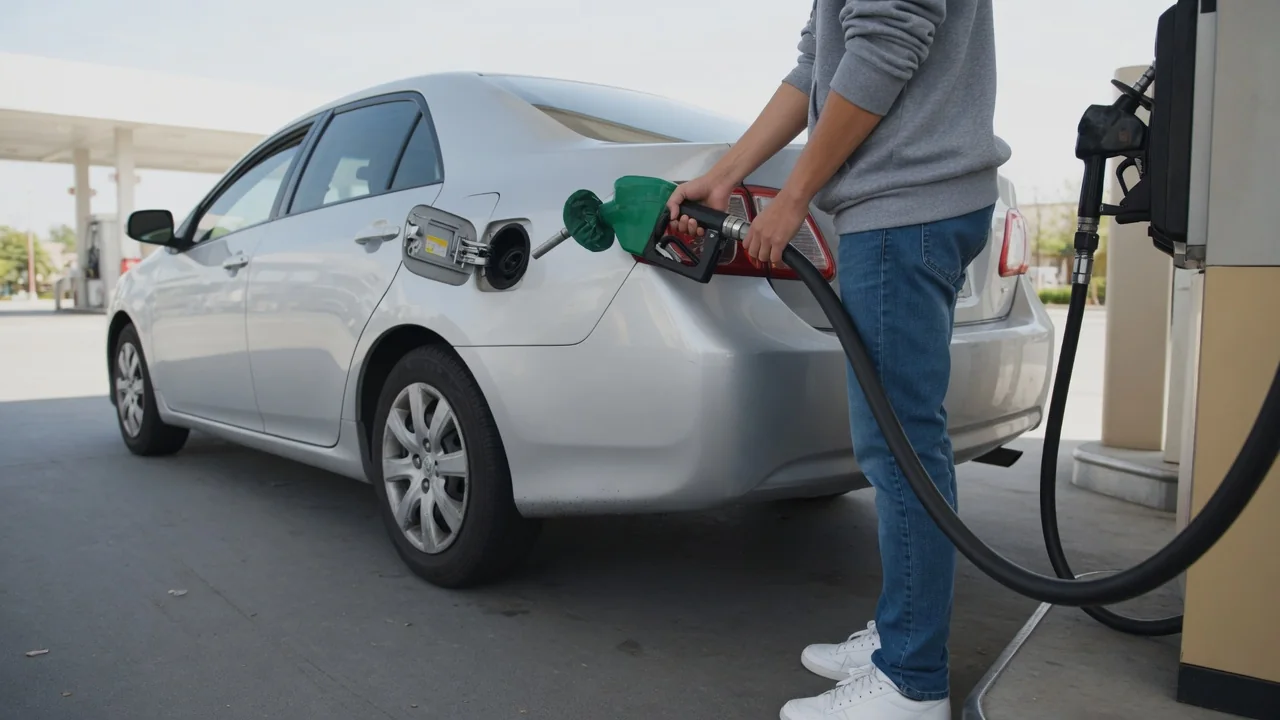
Ask what is a car's fuel tank capacity and the answer seems like a single number printed in the owner's manual. In practice, that rated volume rarely matches what the pump delivers at a fill-up. The gap comes from how tanks are rated, how much fuel remains when the gauge reads empty, and when the nozzle clicks off.
Nominal tank
The nominal capacity is the figure a manufacturer publishes for the tank, usually listed in gallons in the specifications section of the owner's manual. It describes the usable volume the tank is designed to hold when filled to its intended level, not every cubic inch inside the shell. Designers leave vapor space at the top so gasoline can expand as it warms, and that air pocket is deliberately excluded from the rated number.
Published figures can also differ within the same model line. All-wheel-drive versions, hybrids, and different body styles sometimes use differently shaped tanks to clear driveshafts, battery packs, or exhaust components, so the rating for one trim may not apply to another. Rounding conventions and conversion from liters add small differences too. The reliable source is the manual or specification sheet for the exact vehicle, matched by model year and drivetrain rather than a general figure for the nameplate.
Reserve
Reserve is the fuel still in the tank when the gauge needle reaches empty or the low-fuel warning lights up. Most vehicles are calibrated so the warning arrives while some gasoline remains, giving the driver a margin to reach a station. Because of this buffer, a driver who refuels the moment the light appears will usually pump noticeably less than the rated capacity, even though the gauge suggested the tank was nearly dry.
The size of that margin is not standardized, and it varies by manufacturer, model, and even how the sender reads on a slope or during cornering. Some manuals state an approximate amount remaining when the light comes on; others say nothing. A distance-to-empty display is an estimate built from recent consumption, so it shifts with driving conditions. Treating the reserve as a safety cushion rather than usable range also protects the in-tank electric pump, which relies on surrounding fuel for cooling.
Pump shutoff
The station nozzle stops automatically when fuel rising in the filler neck covers a small sensing port near its tip, cutting off the airflow that holds the valve open. That click signals that liquid has reached the nozzle, not that a precise volume has been delivered. Filler neck angle, the flow rate selected, fuel foaming, and how deeply the nozzle is inserted all influence the moment of shutoff, so two fill-ups of the same car can end at slightly different levels.
Continuing to squeeze in fuel after the first click can push the amount pumped closer to, or occasionally beyond, the rated figure, because gasoline starts occupying the filler neck and the expansion space. That practice is discouraged. Liquid fuel can reach the evaporative emissions system, where the charcoal canister is meant to handle vapor only, and saturation may lead to drivability complaints or a warning light. Stopping at the first automatic shutoff keeps the fill within the level the tank was designed for.
Everyday Use and Observations
A simple comparison shows how these factors combine. Suppose a manual lists a tank at fifteen gallons and the driver refuels shortly after the low-fuel light appears. The receipt may show only twelve or thirteen gallons, which is normal: the remainder is the reserve still sitting in the tank plus any difference in where the nozzle shut off. The numbers are illustrative, but the pattern holds for most passenger cars and light trucks.
Gauge behavior adds to the impression that the tank is smaller or larger than stated. Many needles linger at full for a long stretch, then fall faster through the lower half, because tank shapes are irregular and the float does not track volume in a straight line. Temperature matters slightly as well, since fuel volume changes with heat. Tracking gallons pumped against miles driven over several fill-ups gives a clearer picture of real usable capacity than any single visit.
Limits and Next Steps
The rated capacity is a planning figure, not a guarantee of what any one fill-up will take. It cannot reveal exactly how much fuel is left at empty, and it should not be used to stretch range until the engine stumbles. Running a tank very low risks drawing in air, stressing the pump, and leaving the vehicle stranded. Multiplying capacity by average fuel economy gives a theoretical range, but a comfortable margin should always be subtracted.
A refill that consistently falls far short of the rating, a nozzle that clicks off repeatedly at the start of fueling, or a gauge that reads erratically deserves attention from a qualified technician. Possible causes range from a restricted vent path to a faulty level sender, and proper diagnosis is needed before assuming any part has failed. For the exact figure, consult the owner's manual, the manufacturer's specifications for that model year, or a dealer service department.