How to Cool a Hot Car Before a Trip
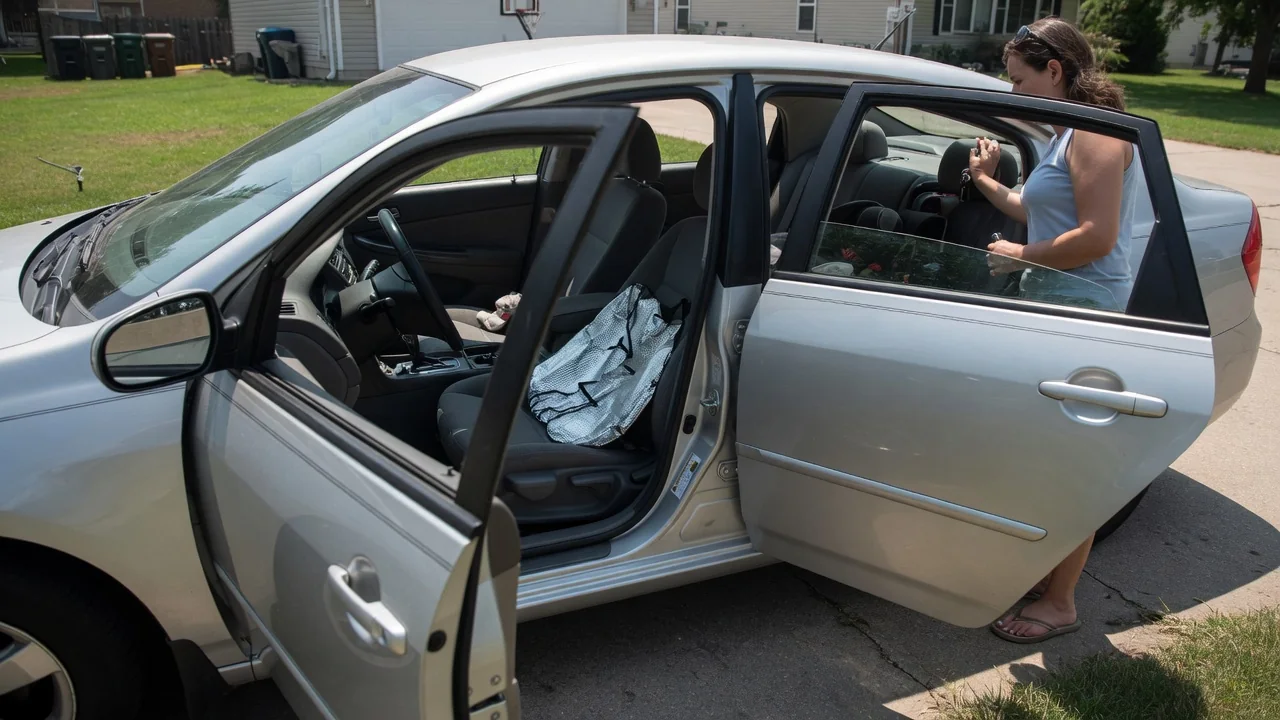
A car parked in direct sun can trap heat far above the outside temperature, turning the seats, steering wheel and dashboard into radiators. Knowing how to cool a hot car before a trip comes down to a simple sequence: push the trapped air out, bring the air conditioning in at the right moment, and let the cabin surfaces shed their stored heat.
Release hot air
The air inside a sun-soaked cabin is usually hotter than the air outside, so the fastest first step is to swap it rather than chill it. Opening the doors on both sides for a short time lets the hottest air, which collects near the roof, spill out and be replaced by ambient air. Lowering all the windows achieves the same result if opening doors is impractical in a tight parking space. A sunroof that tilts or slides adds a high exit point for rising heat.
Some vehicles let you lower the windows from the key fob or a phone app, which starts ventilation while you walk up; whether that feature exists, and how it is activated, depends on the make, model and settings, so the owner's manual is the reference. You can judge progress by feel: the blast of heat at the door opening fades within moments, although the dashboard, seats and belt buckles stay hot because solid surfaces release heat far more slowly than air.
Start cooling
Once the worst heat has escaped, start the engine or power up the vehicle and switch on the air conditioning with the fan set high and the temperature at its coldest setting. Keep the system drawing fresh outside air and leave the windows partly open for the first stretch of driving. Vents may blow warm at first because the ducts themselves are heat-soaked; moving air pushes that heat out through the open windows instead of circulating it around the cabin.
When the vent air feels clearly cooler than the outside air, close the windows and switch to recirculation. The system then re-cools cabin air that has already been chilled, which is less work than cooling a constant stream of hot outside air. Driving generally helps more than idling, since airflow across the condenser at the front of the car improves heat rejection, and many engine-driven compressors work more effectively above idle speed. Automatic climate control may manage these steps itself, with behavior varying by vehicle.
Passenger comfort
Comfort depends on more than air temperature. Dark leather or vinyl seats, the steering wheel and metal seat belt tongues can stay uncomfortably hot after the air has cooled, so check them by touch before children climb in, and pay special attention to child seat buckles. Aiming the center vents upward and toward the rear helps cool air travel over the front seats and reach the second row, where the temperature often lags behind the front.
Vehicles with rear vents, separate rear climate controls or ventilated seats give passengers more direct relief, though these features differ widely across trims. Where they are absent, running the fan high for the first minutes and then lowering it once the cabin stabilizes keeps noise and drafts down. Never leave children, pets or vulnerable adults inside a parked car while it cools, even briefly with the windows cracked; let everyone wait in shade until the interior is comfortable.
Everyday Use and Observations
Daily habits reduce how much heat there is to remove. Parking in shade, facing away from the afternoon sun, or using a reflective windshield shade limits how hot the dashboard and steering wheel become, and those are the surfaces that keep radiating heat into the cabin after you set off. Window tint, where it meets local law, and light-colored seat covers make a similar difference. Some owners leave the windows slightly open in secure locations, accepting the trade-off with security and sudden rain.
Remote start and electric vehicle preconditioning can cool the cabin before you arrive, and a plugged-in EV may draw that energy from the charger rather than the battery, depending on the vehicle. Pay attention to normal patterns as well: a puddle of clear water beneath the front passenger area after air conditioning use is typically condensation draining from the evaporator, and a brief musty smell at startup often points to moisture in the system or a cabin air filter due for inspection.
Limits and Next Steps
No technique makes a heat-soaked cabin comfortable instantly, and extreme temperatures stretch the process. Idling for a long time with the air conditioning running uses fuel, cools less effectively than driving in many vehicles, and may be restricted by local idling rules; it should never be done in an enclosed garage. In an electric vehicle, heavy cooling draws on the battery and can trim driving range, which matters when planning a long trip on a hot day.
If the vents never blow properly cold, airflow feels weak at every fan speed, cooling fades at stops, or the compressor makes unusual noises, the system deserves a professional look instead of guesswork. Possible causes range from a clogged cabin air filter to low refrigerant or a cooling fan problem, and each needs proper diagnosis. Refrigerant work requires specialized equipment and handling, so leave it to a qualified shop. Also watch the engine temperature gauge in severe heat and stop safely if it climbs.