Adding Oil to a Hot Engine
Direct Answer
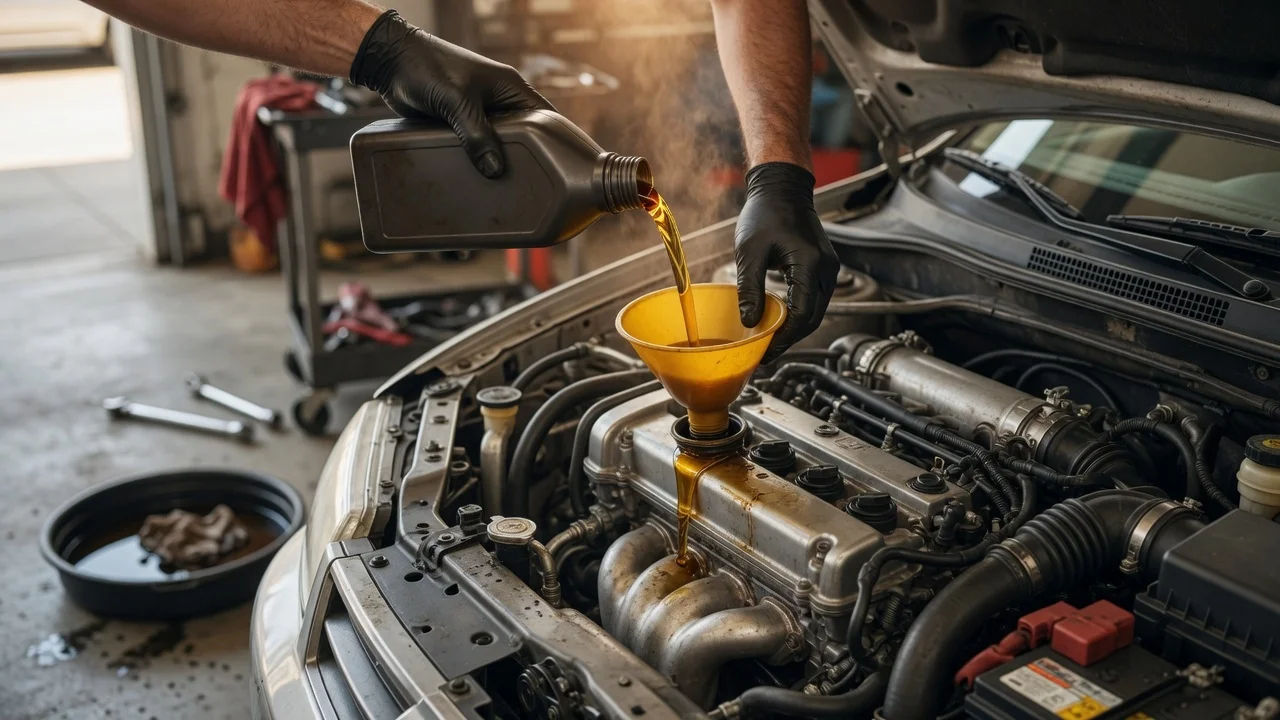
You can add oil to a hot engine, and doing so is generally safe if you follow basic precautions. The main qualification is that the dipstick reading taken immediately after shutdown may be less accurate because some oil is still circulating in the cylinder head, oil galleries, and turbocharger if fitted. For a supported next step, wait a few minutes after switching off before topping up. The engine does not need to be completely cold, and adding oil to a warm engine is common practice on long trips or when a low oil warning appears.
Scope and Practical Meaning
The question usually applies to a routine top-up between oil changes, not a full oil change. Adding a partial quart or litre to correct a low level is different from draining hot oil. The concern behind the question is often whether thermal shock or burns are a risk, and whether an immediate reading is trustworthy. In most passenger vehicles, adding oil through the filler cap on a hot but switched-off engine is acceptable when done slowly and carefully.
Why the Reading Changes on a Hot Engine
Immediately after shutdown, the dipstick may show a slightly lower level than the true oil volume. Oil that has not yet drained back to the sump is temporarily held in the upper engine. A reading taken within the first minute can therefore understate the amount in the pan. Waiting roughly three to five minutes, or until the exhaust manifold and nearby metal are no longer painfully hot to a careful near-hand check, allows most oil to return and gives a more repeatable level.
Safe Procedure for a Warm Top-Up
Park on level ground and switch the engine off. Open the bonnet and locate the oil filler cap, not the coolant expansion tank. Wait three to five minutes after shutdown so oil can drain back to the sump. Pull the dipstick, wipe it clean, reinsert it fully, then remove it again and read both sides. Add a small amount of the oil grade specified in the owner’s manual, typically 200–300 ml at a time. Wait a minute, recheck the dipstick, and repeat until the level reaches the upper mark without exceeding it. Refit the dipstick and filler cap securely.
Precautions Specific to a Hot Engine
The main hazard is contact with hot surfaces such as the exhaust manifold, turbo heat shield, or radiator hoses. The oil itself is not boiling in the same way as water, but a hot filler neck can cause a minor steam or oil-vapour puff when the cap is opened. Opening the cap slowly helps release any pressure. Avoid pouring cold oil directly onto a very hot turbocharger cartridge if the filler path is near it; instead pour steadily into the filler neck. Use gloves and avoid loose sleeves or dangling straps.
Model and Powertrain Qualifications
Some turbocharged engines retain more oil in the turbo after shutdown, so the immediate reading can be more misleading than on a naturally aspirated engine. Dry-sump systems, found in some sports cars, have a separate procedure and may require the engine to be warm and running for a correct reading; in that case the owner’s manual takes priority. Diesel engines with diesel particulate filters can raise oil level through fuel dilution, so a rising level on a hot engine should not be assumed to mean overfilling alone. Always follow the specific model-year and engine guidance in the manual.
Known Gaps
No universal temperature limit is published for adding oil because safe handling depends more on component layout and access than on a single engine temperature. The exact drain-back time also varies by engine design, oil viscosity, and ambient temperature. This guide therefore gives a practical waiting window rather than a fixed measurement.