Engine Smoking After Adding Oil: Causes and What to Do
The short answer
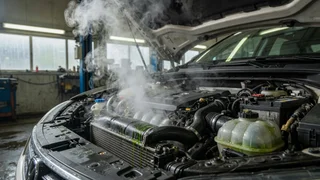
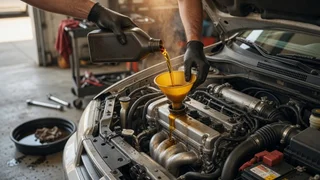
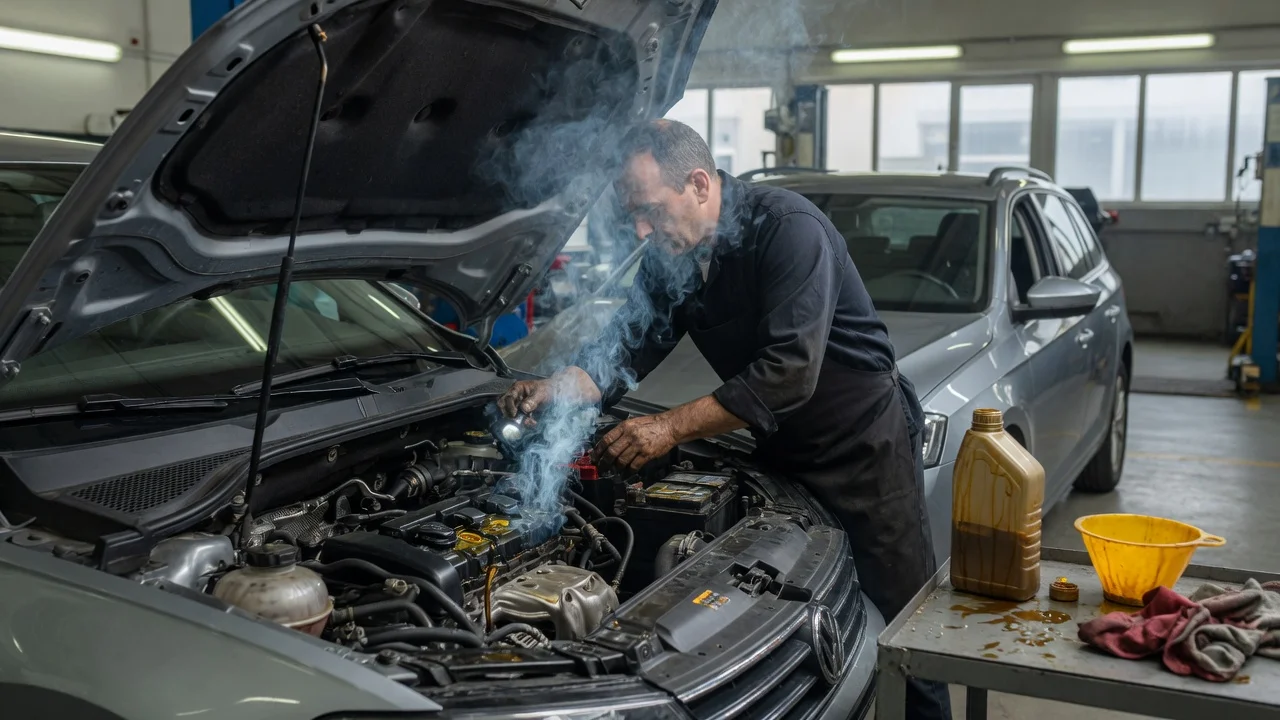
Smoke that appears soon after you top up the oil is most often caused by oil spilled during filling. The oil lands on hot parts such as the exhaust manifold, which is the pipe assembly that carries exhaust gas away from the engine, and burns off. This usually causes light smoke from under the hood and a burning-oil smell. It is generally harmless and stops once the spilled oil has burned away. Two other causes are more serious and need checking: too much oil in the engine, and a filler cap or dipstick that was not put back properly.
Where the smoke comes from is the most useful clue. Smoke rising from the engine bay points to oil on the outside of the engine. Blue-grey smoke from the tailpipe means oil is being burned inside the engine. Tailpipe smoke after a top-up often suggests overfilling.
Likely causes, from most to least common
Spilled oil on hot components: oil that misses the filler neck can run down onto the exhaust manifold or other hot surfaces and smoke as it burns. Overfilling: if the level is above the full mark on the dipstick, excess oil can be churned by moving engine parts. It can also be pushed through the crankcase ventilation (PCV) system into the intake and burned in the cylinders. This tends to show as blue-grey exhaust smoke. Filler cap or dipstick not secured: a missing or loose cap lets oil splash out while the engine runs, which keeps feeding the smoke. An existing fault made more visible: if the engine was already burning or leaking oil from worn seals, rings or gaskets, topping up can make the symptom more noticeable. In that case, adding oil did not cause the problem.
What to check
Park on level ground, switch off the engine and let it cool before touching anything near the exhaust. Check that the oil filler cap is in place and tight, and that the dipstick is fully seated. Look for oil on the top of the engine, around the filler neck and on the exhaust manifold or heat shields. Wipe off what you can safely reach once the parts are cool. Check the dipstick, following the procedure in your owner's manual. Some engines are checked hot and some cold, and some vehicles use an electronic level reading instead of a dipstick. If the level is above the maximum mark, have the excess drained or extracted rather than driving on it. If the oil was changed rather than topped up, also check the drain plug and the oil filter for leaks.
When to stop driving
Do not keep driving if the smoke is heavy or getting worse, if you see flames, or if oil is dripping steadily. The same applies if the oil pressure warning light comes on or you hear new engine noises. Persistent blue exhaust smoke with a correct oil level is also a reason to stop. These signs point to more than a simple spill and should be inspected by a qualified mechanic.
Limits of this guidance
This guide covers general causes that apply to most piston engines. It cannot cover every model. Several details vary by model year, engine and manufacturer: the correct oil capacity and grade, how far the full and minimum marks are apart, the dipstick procedure, and where the hot exhaust parts sit relative to the filler. Your owner's manual or a dealer has the figures for your vehicle. How long spilled oil takes to burn off also varies with the amount spilled and where it landed, so no fixed time can be given. If smoke continues after the external oil has been cleaned off and the level is correct, have the engine diagnosed.