What to Check When a Car Is Fully Loaded for a Trip
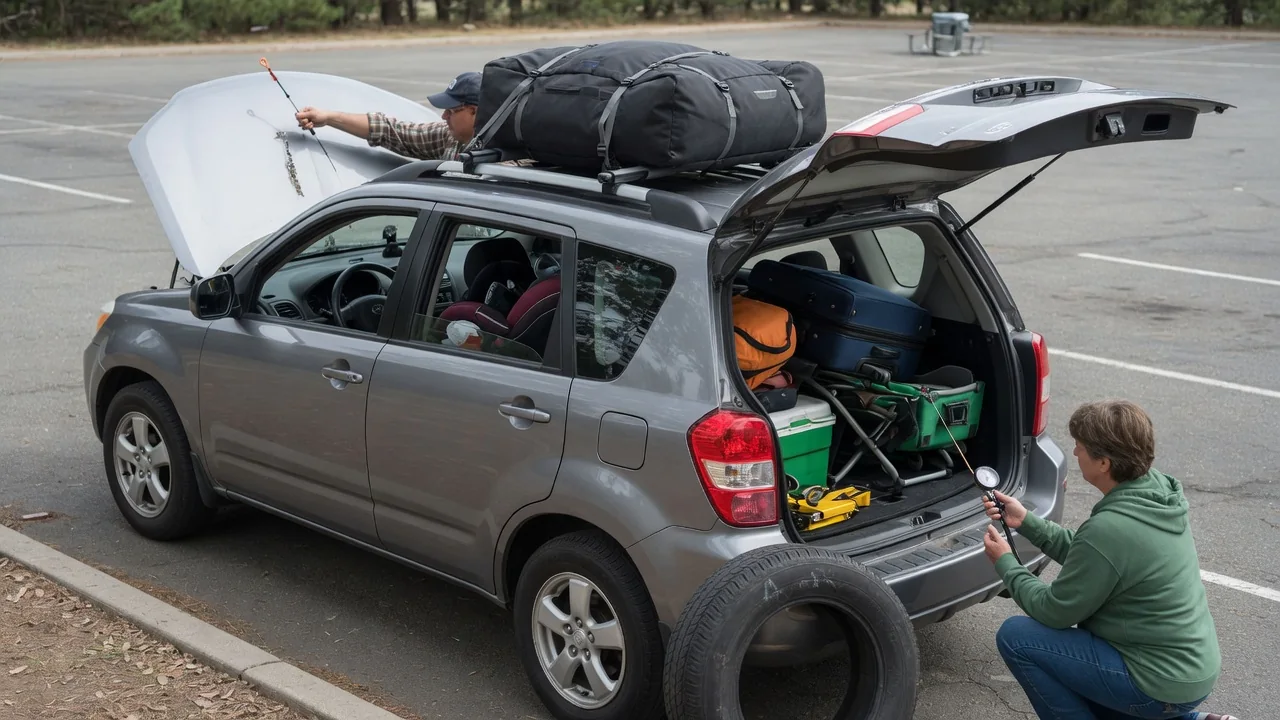
Knowing what to check when a car is fully loaded for a trip matters because extra weight changes how a vehicle steers, stops and rides. Luggage, passengers and roof cargo affect tire load, braking distance and the driver's view. A short inspection of cargo restraint, sightlines and tire condition before departure helps the car behave predictably once it reaches highway speed.
Secure load
Loose cargo becomes a hazard the moment a driver brakes hard or swerves. In a sudden stop, an unrestrained suitcase or cooler keeps moving forward with a force far greater than its resting weight, which is why heavy items belong low and against the rear seatback rather than stacked on top of softer bags. In wagons, hatchbacks and SUVs, where the cargo area opens into the cabin, anything piled above the seatback line can travel toward occupants unless a cargo net, barrier or cover holds it back.
Many vehicles provide tie-down rings in the cargo floor, and straps or a net hooked to them keep a load from shifting during cornering. After packing, push firmly on the heaviest pieces; if they slide or rock, they need repositioning or restraint. Roof boxes and racks deserve the same attention, with clamps and straps checked by hand and long items tied at more than one point. Tie-down locations, split-folding seat latches and roof mounting designs differ between models, so the owner's manual shows what each attachment point is meant to hold.
Check sightlines
A full cargo area often blocks the view through the rear window, leaving the interior mirror showing only luggage. From the driver's seat, with everything packed, look through the rear glass and check whether following traffic is still visible. If it is not, the load should be lowered or rearranged where possible, and both door mirrors must be adjusted carefully because they become the main source of rearward information. Bags stacked against rear side windows can also hide vehicles in adjacent lanes during shoulder checks.
Weight over the rear axle changes the car's stance as well as the view out. A squatting tail tilts the nose upward, which can raise the headlight beams enough to dazzle oncoming drivers and shorten the useful lit area on the road. Some vehicles level their headlights automatically, others have a manual adjustment dial on the dashboard, and some offer neither, so the manual is the reference. Backup cameras and parking sensors keep working with a full trunk, but a rear-mounted bike rack or carrier may obstruct the lens, the lights or the license plate.
Review vehicle ratings
Every vehicle has a limit on the combined weight of occupants and cargo, usually printed on the tire and loading information placard found on the driver's door jamb or door edge. That figure covers everyone on board plus everything they bring, so five adults can use up most of it before a single bag goes in the trunk. Adding up approximate passenger and luggage weights gives a reasonable estimate of where the car stands. Exceeding the limit strains tires, suspension and brakes and makes handling less predictable.
The same placard lists recommended cold tire pressures, and some manufacturers specify higher values for a full load or sustained highway speed. Those figures vary by vehicle and tire size, so they should come from the placard or manual rather than from the maximum pressure molded into the tire sidewall. Roof loads have their own rating, set by both the vehicle roof and the rack system, and the lower number governs. When towing, the tongue weight of the trailer counts against the vehicle's payload too, which is easy to overlook.
Everyday Use and Observations
Tires carry all of the added weight, so they deserve a close look before leaving. Pressures are best measured with a gauge when the tires are cold, since a loaded tire that is underinflated flexes more, builds heat and wears quickly at the shoulders. Sidewalls should be free of bulges, cuts and cracking, and tread should be reasonably deep and even across the surface. The spare tire, jack and tools are worth confirming as well, particularly because luggage often ends up buried on top of the compartment that holds them.
A short drive near home reveals how the loaded car actually behaves. Braking will feel longer and the pedal may need more effort, so following distances should grow accordingly. Steering can feel lighter if the weight sits far back, and the body may lean more in bends or bottom out over dips and driveways. Rattles, thumps or a shifting sound from the rear suggest cargo that has moved. Crosswinds and passing trucks push harder on a car with a roof box, and fuel consumption typically rises with weight and added drag.
Limits and Next Steps
A driveway inspection has limits. Without a scale, total weight is only an estimate, and a visual check cannot confirm the internal condition of tires, the state of brake components or wear in shock absorbers and springs. A car that sags noticeably at the rear, sits unevenly side to side or feels unstable at moderate speed is signaling that the load is too heavy or poorly distributed. Moving dense items forward and lower, or leaving some behind, is a safer answer than pressing on with a vehicle that feels unsettled.
Conditions change during the trip, so the checks are worth repeating at fuel stops. Straps loosen, roof box clamps can settle and bags shift after the first stretch of driving, while tire pressures may drift with temperature and altitude. A tire pressure warning light, a vibration through the steering wheel or a pull to one side calls for stopping somewhere safe and looking closer. If tire damage, brake fade or persistent handling problems appear, a qualified technician should inspect the vehicle before the journey continues, and pressures should return to normal settings once the car is unloaded.