What Is Bump Steer? Toe Change, Road Feel and Diagnosis
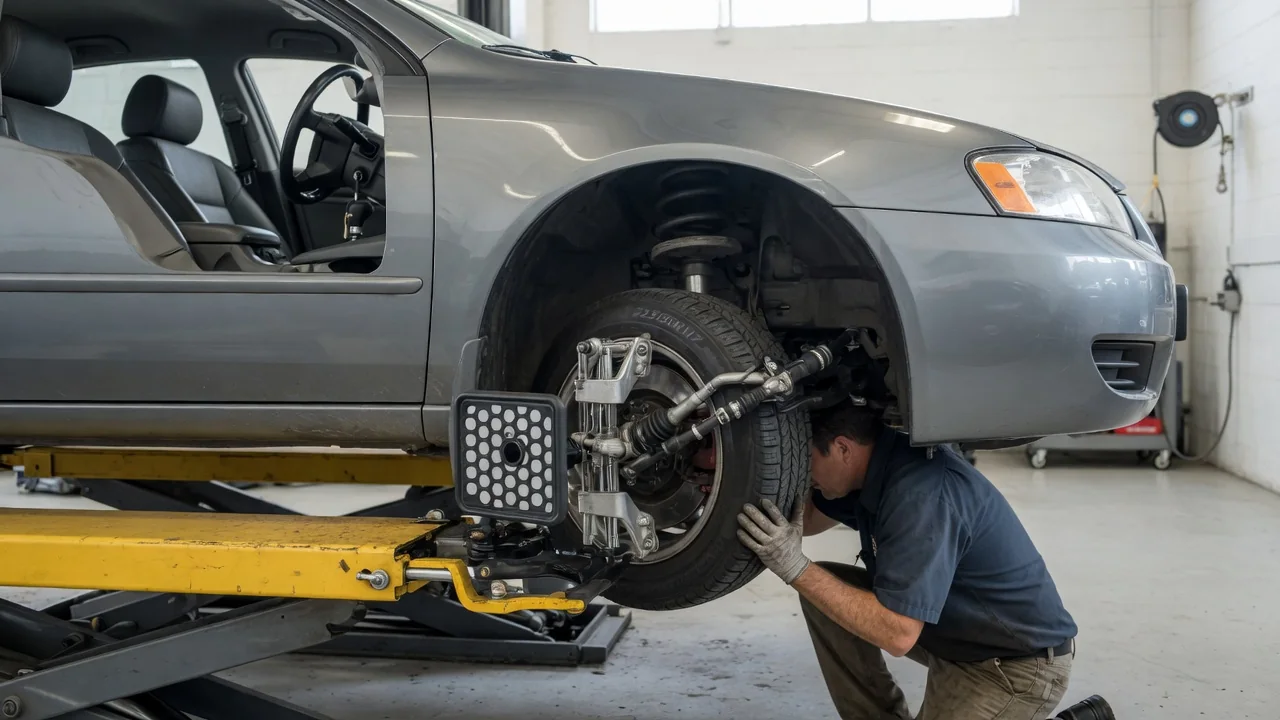
Bump steer is the change in a wheel's toe angle that happens as the suspension moves up and down, without the driver turning the steering wheel. In plain terms, bump steer means that hitting a bump or dip can make the car steer itself slightly. This article explains what causes that toe change, how it shows up in road feel, how it is diagnosed, and what it realistically means for owners of everyday and modified vehicles.
Toe change
Toe describes whether the front edges of a pair of wheels point toward each other (toe-in) or away from each other (toe-out) when viewed from above. On a steered axle, the tie rods set toe. They connect the steering rack or linkage to the steering arm on each knuckle. As the wheel travels upward in compression (bump) or downward in extension (rebound), the knuckle follows a path defined by the control arms, strut or links. The tie rod also swings through an arc, pivoting at its inner joint. If the tie rod's arc does not match the path of the steering arm attachment, the tie rod pushes or pulls on the steering arm as the suspension moves, and the wheel's toe changes. That change in toe with vertical travel is bump steer.
How closely the two arcs match depends on the tie rod's length and angle. It also depends on where the tie rod's inner and outer pivots sit relative to the control arm pivots. Anything that moves these points can alter the relationship. Examples include lowering or lifting the vehicle, relocating the steering rack, swapping knuckles or spindles, and bending a steering arm. Solid front axles steered by a drag link show a similar effect. When the drag link and the track bar swing through different arcs, vertical axle movement turns the wheels.
Bump steer is better described as a curve than as a single number. Toe can move toward toe-in, toward toe-out, or reverse direction partway through travel. Zero is not always the design target. Engineers sometimes use a small, controlled amount on purpose to shape how the vehicle responds to body roll, often called roll steer. Independent rear suspensions show the same behavior through their toe links. Problems arise when the change is large, uneven from side to side, or different from what the original design intended.
Road feel
Because toe change acts like a small steering input, bump steer is felt most on uneven pavement. A vehicle with significant bump steer may dart or twitch when one front wheel hits a pothole, expansion joint or patched section, even when the driver holds the wheel steady. Drivers often describe it as the car following ruts, feeling nervous over bumps, or needing constant small corrections on broken roads. The steering wheel may also kick or tug as the suspension briefly steers the tire instead of the driver.
The effect also appears in corners and when loads shift. When the body rolls, the outside wheel compresses and the inside wheel extends. Bump steer can therefore add or remove steering in the middle of a turn, and a mid-corner bump can push the car off its line. Hard braking and acceleration pitch the body and move both front wheels through their travel, which can make the car feel unsettled in a straight line. If the toe change differs between sides, the vehicle may pull toward one side over bumps that hit both wheels. How strongly a driver feels any of this depends on the amount of toe change, the tires, the steering ratio, the speed and the road surface. Vehicles with similar geometry can therefore feel different.
Diagnosis
Several common faults produce symptoms that resemble bump steer, so diagnosis starts by ruling them out. Wandering or darting can come from worn inner or outer tie rod ends, loose steering rack mounts, tired control arm bushings, worn ball joints or play in the steering gear. Incorrect static alignment, mismatched tire pressures and damaged tires can cause the same symptoms. The first steps are a careful inspection for play in steering and suspension joints and a standard alignment check. If those are in order and the behavior remains, true bump steer becomes a stronger suspect. This is especially true after a ride height change or a parts swap.
A normal alignment measures toe at one static ride height, so it cannot show how toe changes through travel. Measuring bump steer means recording toe while the suspension moves through its range. A common method removes the spring or replaces it with a solid spacer. The hub can then be raised and lowered in steps with a jack while the steering is held centered. A bump steer gauge, typically a plate with dial indicators set against the hub or wheel face, reads the toe change at each position above and below ride height. The readings are plotted as a curve, and both sides are measured and compared. Procedures, travel steps and acceptable values vary by vehicle and should come from service information or the suspension component maker.
Correction usually means changing the tie rod geometry rather than the toe setting itself. Depending on the design, options include shimming or relocating the steering rack, changing the outer tie rod pivot height with spacers or adjustable ends, fitting corrected steering arms or a bump steer kit, and replacing bent parts. On solid axles, a common approach is to bring the drag link and track bar closer to parallel. After any change, the curve is measured again and the alignment is reset.
Practical implications and limits
On an unmodified vehicle in good condition, bump steer is part of the original design, and owners rarely need to measure it. It becomes a practical concern mainly after something has disturbed the geometry. Common causes are lowering springs or coilovers, lift kits, different knuckles, aftermarket control arms, collision damage and bent steering components. In those cases, a vehicle that drove calmly before may become tiring on rough roads, and the cause will not appear on a routine alignment printout. Telling the technician about the vehicle's modification history helps focus the inspection.
Bump steer explains only part of how a car steers, and correcting it has limits. It is one of several kinematic effects, alongside camber change, caster change and bushing compliance. The steering feel a driver perceives combines all of these with the tires and dampers. Removing bump steer entirely may not be the right goal, because the manufacturer may have chosen the original amount to shape handling. Measuring it takes time, special fixtures and vehicle-specific data, so the work is mostly done by suspension shops, motorsport preparers and builders of modified vehicles. Any persistent change in steering behavior is still a reason for inspection, because worn or damaged steering parts can affect safety regardless of geometry.