What Is Torque Steer?
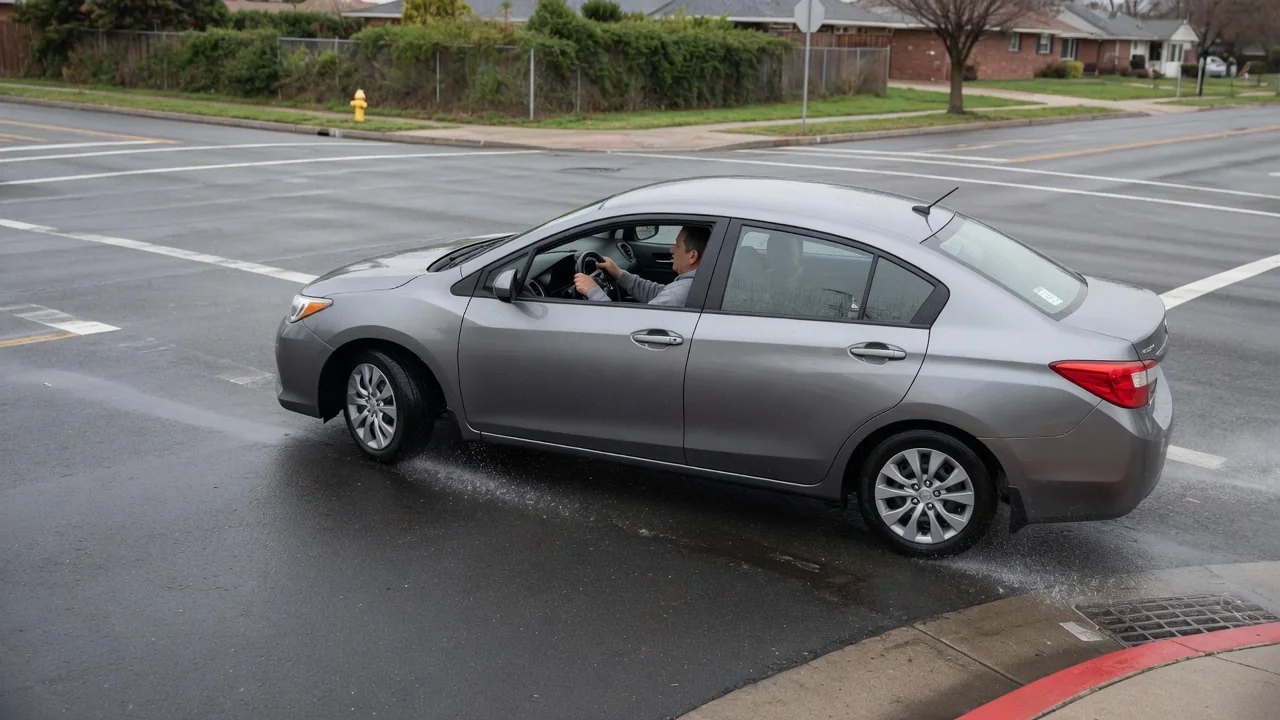
Anyone asking what is torque steer has probably felt it already: the steering wheel tugs to one side when you accelerate hard, even though the road is straight and your hands are steady. It appears mostly in front-wheel-drive cars, where the same two wheels must both steer and deliver engine power, and it ranges from a faint nudge to a pull that demands real correction.
Uneven force paths
Torque steer starts with the front wheels receiving drive force that is not perfectly balanced side to side. In many front-wheel-drive cars the engine and transaxle sit crosswise, with the differential offset toward one side. That leaves one driveshaft shorter than the other. The two shafts then run at different angles and twist by different amounts under load, so the wheels do not react to a sudden surge of torque in exactly the same way, and the steering feels the difference.
Suspension geometry decides how much of that imbalance reaches your hands. Each front wheel pivots around a steering axis, and the tire's contact patch sits slightly away from that axis. Drive force acting through this offset creates a turning effort on each wheel. When both sides are equal, the efforts cancel through the steering rack. When traction, shaft angle or tire grip differs, one side wins and the wheel pulls. Some manufacturers fit equal-length shafts with an intermediate shaft, or revised front strut designs, to reduce the effect.
When noticed
The tug appears under strong acceleration, not while cruising. It is most obvious when pulling away briskly from a stop, accelerating hard in a low gear, or pressing the throttle while merging onto a highway. Lower gears multiply engine torque the most, so first and second gear produce the clearest effect. Turbocharged engines can make it feel abrupt, because the pull arrives as boost builds rather than rising smoothly with pedal travel. Ease off the throttle and the steering typically settles immediately.
Road surface plays a large part. A crowned lane, a rut worn by trucks, a painted line or a wet patch under one front tire gives the two wheels unequal grip, and the steering follows the side with more traction. Accelerating out of a tight corner can also exaggerate the sensation, since the car's weight shifts and the inside wheel is lightly loaded. Powerful front-drive hatchbacks and sedans show it most, while modestly powered commuter cars may barely reveal it at all.
Mechanical faults
A small amount of torque steer can be a normal design characteristic, but a pull that is new, stronger than before, or clearly worse in one direction deserves attention. Worn engine or transmission mounts let the powertrain rock under load, changing driveshaft angles at the moment torque peaks. Tired control arm bushings allow a front wheel to shift its alignment as drive force is applied. Either condition can turn a mild, familiar tug into a noticeable lurch, sometimes accompanied by a clunk when accelerating or lifting off.
Tires and alignment are equally common contributors. Unequal pressures, mismatched tire brands or uneven tread wear across the front axle give each side different grip and rolling diameter, which the steering reads as a pull. Incorrect alignment settings, a bent suspension component after a pothole or curb strike, or a worn constant-velocity joint can add to it. A dragging brake caliper causes a pull as well, though that one usually persists while coasting, which helps separate it from a genuine torque-related effect.
Everyday Use and Observations
In daily driving, the practical clue is the link to the throttle. If the wheel tugs when you accelerate and relaxes when you lift, drive torque is involved. If the car drifts to one side at a steady speed with a light throttle, the cause is more likely alignment, tire condition or road crown. A pull that appears only under braking points toward the brake system instead. Noting which of these three situations triggers the behavior makes any later inspection far more efficient.
Driving style changes how often you notice it. Smooth, progressive throttle application gives the tires time to share the load and keeps the steering calm, while stabbing the pedal in a low gear invites a tug. A relaxed but secure grip on the wheel is enough to hold a straight line in most cars. Traction control and electronic differential functions on many modern vehicles trim the effect by managing wheelspin, although how these systems behave differs between manufacturers and even between trim levels.
Limits and Next Steps
Layout sets the boundaries. Rear-wheel-drive cars separate steering from propulsion, so the front wheels are not asked to do both jobs and classic torque steer is largely absent. All-wheel-drive systems send part of the torque rearward, which usually reduces it, though designs biased toward the front axle can still show a trace. Front-drive electric vehicles deliver strong torque instantly and may exhibit the same tug. Fitting stickier tires, wider wheels with a different offset, or raising engine output can all increase it beyond what the original design intended.
When the behavior has changed rather than always being present, start with the simple checks: compare front tire pressures against the placard on the door jamb, look for uneven wear, and confirm both front tires are a matching pair. If the pull remains, a workshop inspection of mounts, bushings, driveshafts and alignment is the sensible next step. Describe exactly when it happens, including gear, speed and direction. Any warning light or stored fault code should be treated as supporting evidence that still needs vehicle-specific confirmation.