Why Does a Car Bounce After a Speed Bump?
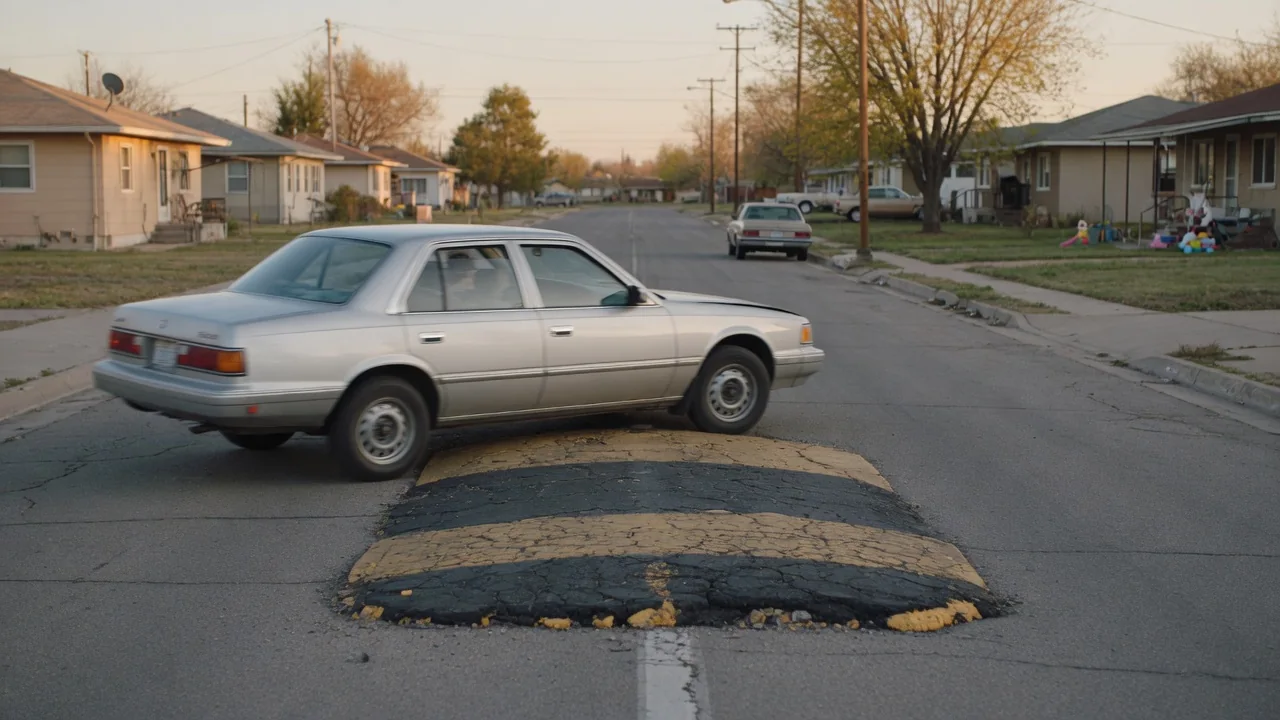
If you have ever wondered why does a car bounce after a speed bump, the answer lies in how springs and shock absorbers share the work. Springs store the energy of the hit, and dampers are supposed to bleed it away. How quickly the body calms down afterward tells you a good deal about the condition of the suspension.
Normal settling
When a wheel climbs a speed bump, the spring compresses and absorbs the upward shove instead of passing it straight into the cabin. As the wheel drops off the far side, that stored energy pushes back and the spring extends. A healthy suspension lets the body rise once, dip slightly, and return to its normal ride height. That single controlled movement is ordinary settling, not a fault, and it happens on every vehicle with conventional springs.
The shock absorber or strut is what keeps that motion brief. Inside it, a piston forces hydraulic fluid through small valves, turning spring movement into heat. How firm this feels varies by design. A softly tuned sedan or a tall SUV may float a little longer than a sport-tuned hatchback, and a pickup with an empty bed can feel lively at the rear. Mild differences like these reflect tuning choices rather than worn parts.
Repeated bouncing
Trouble begins when the body keeps oscillating after the bump is behind you. A spring left to itself will bounce several times before friction stops it, so two, three, or more up-and-down cycles suggest the damper is no longer resisting movement well. Internal seals can wear, fluid can leak out, or the valving can lose effectiveness over time. The spring is still doing its job; nothing is controlling the rebound.
Drivers often describe this as a boat-like or pogo sensation, sometimes at one end only. A front end that keeps nodding after the bump points attention toward the front struts, while a rear that hops or wallows directs it toward the rear shocks. Heavier loads, towing, or a full trunk can exaggerate the effect. These impressions are clues, not proof, because worn bushings, tired mounts, or incorrect tire pressure can produce similar sensations.
Inspection
A basic visual check can add useful evidence. With the car parked on level ground, look at each shock or strut body for a wet, oily film, which can indicate fluid escaping past a seal. Light dust-covered misting is common on older units, while fresh running fluid is more concerning. Also compare ride height from side to side, since a sagging corner may suggest a weakened or broken spring rather than a damper problem.
Tires tell part of the story too. Scalloped or cupped patches around the tread can develop when a wheel repeatedly skips against the pavement instead of staying planted. Pressing down firmly on a corner and watching how it recovers is a traditional check, but it is a rough guide, especially on stiffer modern suspensions. A technician with the vehicle on a lift can examine mounts, bump stops, bushings, and links far more reliably.
Everyday Use and Observations
Daily driving offers plenty of chances to judge damping without any tools. Notice whether the nose dives sharply under braking, whether the rear squats when pulling away, and whether the body leans and then sways back in corners. Listen for clunks or knocks over rough surfaces, which can point to loose mounts or worn links. A car that feels unsettled on wavy highway pavement often shows the same weakness that appears over speed bumps.
Approach speed and angle matter when comparing impressions. Taking the same bump at the same gentle pace gives a fair baseline, while hitting it quickly will make any vehicle react harder. Changes that build slowly are easy to miss, because drivers adapt to gradual wear. Vehicles with air springs or electronically adjustable dampers may behave differently between drive modes, so a change in ride quality on those systems deserves vehicle-specific investigation.
Limits and Next Steps
Observation has limits. A bounce that feels excessive to one driver may be normal for that model, and several different faults can produce the same symptom. Weak damping also matters beyond comfort, since tires that lose steady contact with the road can lengthen stopping distances and reduce control in evasive maneuvers, particularly on wet surfaces. Persistent bouncing, visible leaks, uneven tire wear, or new noises together make a stronger case for professional attention.
A qualified shop can confirm which components are actually at fault before anything is replaced. Dampers are commonly renewed in axle pairs so both sides respond alike, and related hardware is usually checked at the same time, though the right approach depends on the vehicle and its suspension design. Suspension work can involve springs under considerable stored force, so it is best left to someone with proper equipment. An alignment check afterward is often recommended.