Why Does a Car Door Bounce Back When Closing?
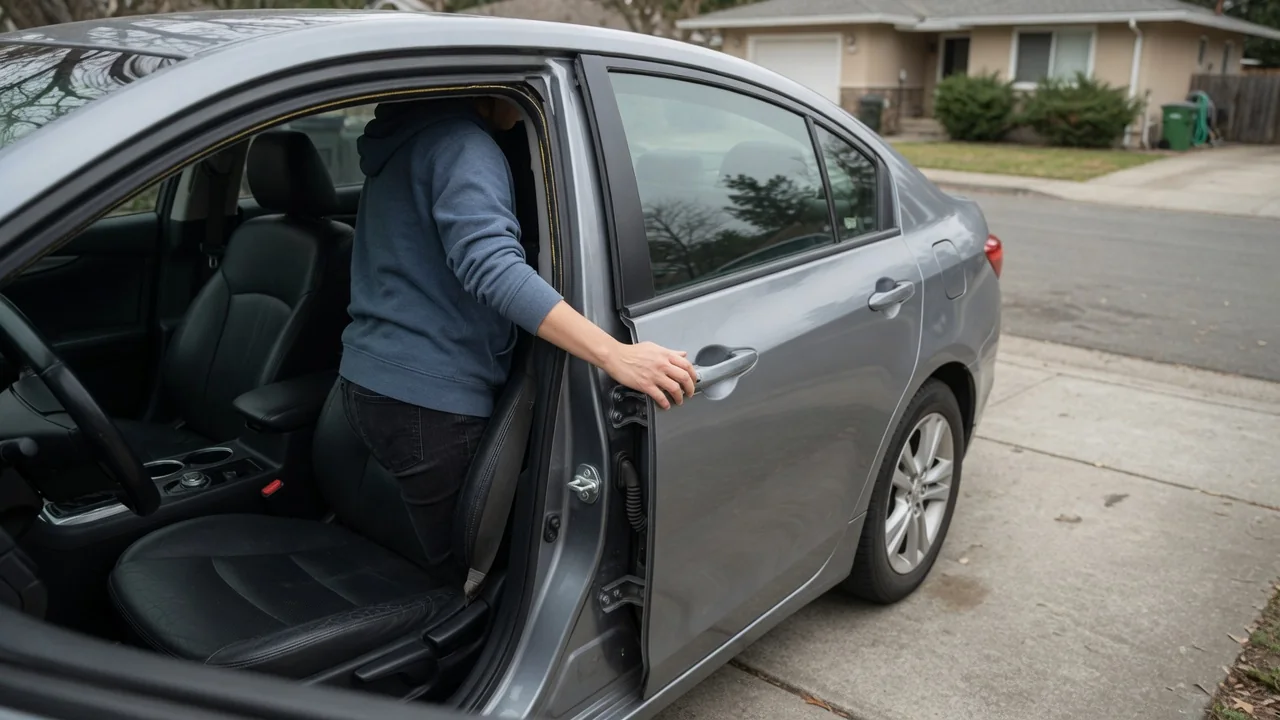
A door that swings shut and then springs back open is telling you something stopped it from latching. If you are wondering why does a car door bounce back when closing, the answer usually lies in one of three areas: something in the doorway, a latch that is not catching the striker, or a seal or alignment problem pushing the door outward.
Inspect doorway
Start with the opening itself, because the simplest cause is a physical obstruction. A seat belt buckle or webbing that did not retract fully often hangs across the sill or the pillar and takes the impact before the latch reaches the striker. Floor mats that have crept outward, a jacket hem, a grocery bag strap, or a child seat tether can do the same thing. Look along the entire perimeter of the opening, including the lower sill and the area near the hinges, where small objects tend to hide.
Next, study the rubber weatherstrip that runs around the door or the body opening. A seal that has pulled out of its channel, folded over on itself, or swollen with age adds resistance that can push the door back before it latches. In cold weather, ice on the seal or in the door jamb can have the same effect. Seal layouts differ between vehicles, with some using a single seal on the body and others adding a second one on the door, so compare the problem door with one that closes normally.
Check latch
The latch sits in the rear edge of the door and grabs a metal loop or post, called the striker, mounted on the body pillar. Inside the latch is a fork-shaped claw that rotates around the striker and locks in place. If that claw has already rotated to the closed position while the door is open, it presents a solid face to the striker and the door simply rebounds. This can happen when a handle is bumped, when someone tests the latch with a finger, or when the mechanism sticks.
With the door open, look at the latch opening and compare it with another door on the same vehicle. An open claw leaves a clear slot for the striker, while a closed one blocks it. Pulling the door handle usually releases a claw that has tripped shut, though designs vary and some vehicles use electronic latches that behave differently. Also look at the striker for shiny wear marks above or below center, loose fasteners, or a worn plastic coating, since those marks show where the latch is actually making contact.
Service
Dried grease, dirt, and corrosion are common reasons a latch moves sluggishly and fails to catch. A latch that feels gritty or returns slowly may respond to cleaning and a lubricant suited to latch mechanisms, applied sparingly to the moving parts. Hinges deserve the same attention, because worn hinge pins or bushings let the door sag so that the latch meets the striker too low. Lifting gently on the open door's rear edge and feeling for vertical play is a simple way to detect that kind of wear.
Alignment corrections are best left to a body shop or qualified technician. The striker position is adjustable on many vehicles, but small movements change how the door sits against its seals, how flush it is with neighboring panels, and how securely it holds. A latch that is worn internally, a damaged seal, or sagging hinges generally call for replacement parts matched to the specific vehicle. Doors containing side airbags, wiring, or powered closing mechanisms add further reasons to rely on professional service rather than improvised adjustment.
Everyday Use and Observations
Patterns in daily use help narrow the cause. A door that bounces back only when all the windows are up may be fighting cabin air pressure, since a tightly sealed interior resists the rush of air a closing door pushes inward. Opening a window slightly and trying again is an easy comparison. A door that misbehaves only on cold mornings points toward stiff seals, ice, or thickened lubricant in the latch, while a problem that appears after loading the car suggests something left in the opening.
Listen and feel as the door closes. A healthy latch usually gives two distinct clicks, the first being a partial safety catch and the second the fully closed position. A dull thud with no click suggests the claw is blocked or the door is hitting something before the latch arrives. A door that needs a hard slam, sits slightly proud of the body, or triggers a door-ajar warning on the dash is likely catching only the first position. How much effort is normal varies with vehicle design and seal stiffness.
Limits and Next Steps
Visual checks and simple comparisons can identify an obstruction, a tripped latch, or a displaced seal, but they cannot confirm internal latch wear or measure alignment precisely. Collision damage, even from a minor impact, can shift the door opening or pillar in ways that are hard to see, and previous body repairs may have left the striker or hinges slightly out of position. If the door began bouncing back after an accident, a hard impact against a post, or being forced open by wind, mention that history when seeking help.
A door that will not stay latched should not be trusted on the road, and holding it shut with a strap or relying on a partial catch is unsafe, since the door could open while driving. Avoid repeated hard slamming, which can damage the latch, striker, and window components without solving the cause. If clearing the doorway and resetting the latch do not restore normal closing, have the vehicle inspected, and consult the owner's manual or a dealer for details specific to your model's latch and seal design.