What Is Acoustic Glass in a Car?
Anyone asking what is acoustic glass in a car is really asking about a special kind of laminated glass. It sandwiches a sound-damping plastic interlayer between two sheets of glass so that less wind, tire, and traffic noise reaches the cabin. Automakers use it in windshields and, on some models, in the side windows to make driving quieter and conversation easier.
Layer design
Ordinary laminated glass bonds two glass sheets to a plastic interlayer, usually polyvinyl butyral, so the pane holds together when it breaks. Acoustic glass keeps that sandwich but changes the middle. The interlayer is commonly built from several plies, with a softer, more elastic core between stiffer outer films. When sound makes the glass vibrate, that soft core shears and converts part of the vibration energy into a tiny amount of heat, so the inner sheet moves less than the outer one.
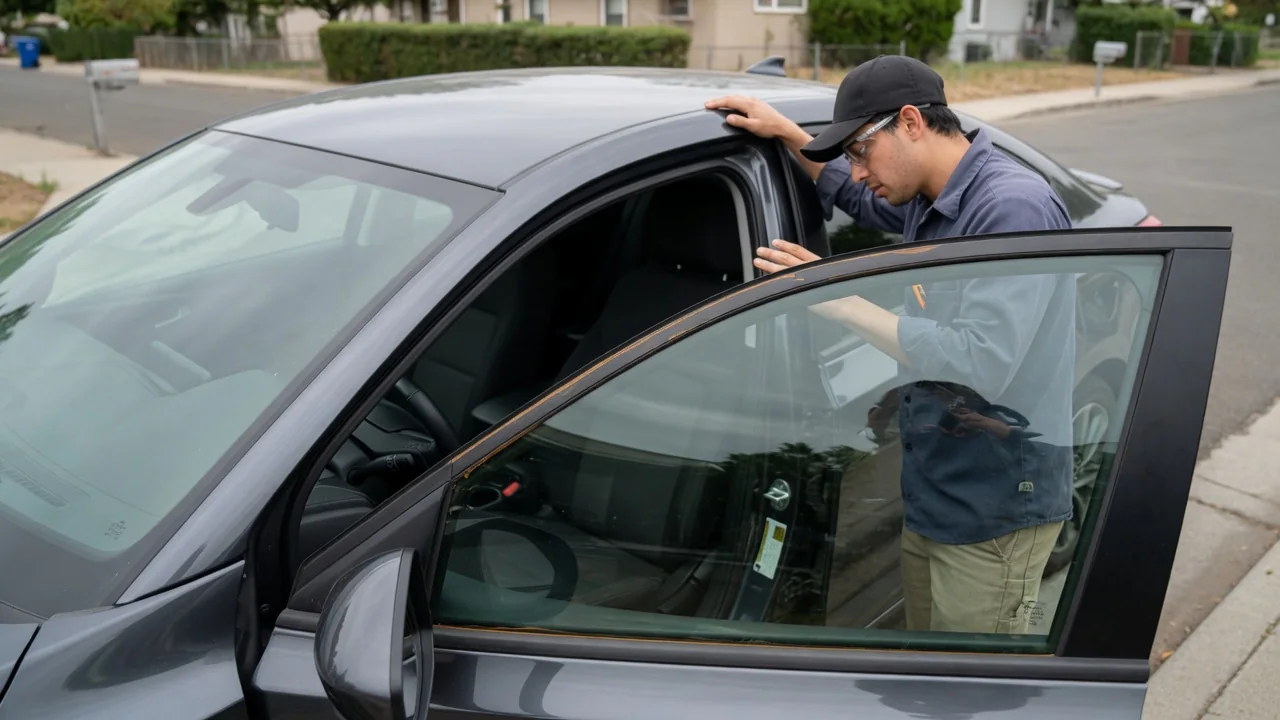
From the driver's seat the construction is nearly invisible, but there are clues. Lowering a door window and looking at its top edge can reveal a thin line running through the middle, showing two sheets instead of one piece of tempered glass. The stamp printed in a corner may include wording such as acoustic, a sound-related brand name, or a small ear symbol, although marking conventions differ between glassmakers. Overall thickness and which windows receive the treatment vary by model and trim level.
Cabin sound
Glass is a weak point in a car body because it is thin, stiff, and covers a large area close to the occupants' ears. Every panel also has a frequency range where it passes sound unusually well, and for typical automotive glass that range overlaps with wind rush and with speech-band noise. The damped interlayer blunts this dip, which is why the improvement is most noticeable as reduced hiss around the windshield pillars and mirrors at highway speed.
The effect is less dramatic on low-frequency sound. Tire boom on coarse pavement, exhaust drone, and vibration traveling through the suspension enter mainly through the floor and structure, so glass changes them only modestly. What occupants tend to report is a calmer character rather than silence: passing trucks sound less sharp, rain on the windshield is duller, and voices or audio need less volume. Electric vehicles often benefit noticeably, because without engine sound to mask it, wind noise becomes the dominant thing heard.
Replacement fit
When a windshield or door glass is replaced, the acoustic feature is not automatic. Many vehicles are offered with both standard and acoustic versions of the same opening, and the two can look identical once installed. A replacement should be matched to the original equipment using the vehicle identification number and the options on the old glass, including rain sensor mounts, camera brackets, heating elements, head-up display compatibility, and tint bands. Fitting a non-acoustic pane usually works mechanically but may leave the cabin noticeably louder.
Fit quality matters as much as the glass itself. A windshield is bonded to the body with urethane adhesive, and gaps in the bead, misaligned moldings, or a disturbed cowl panel can create whistles that no interlayer will hide. Laminated side glass may differ in thickness from tempered glass, so the door's channels, seals, and regulator are designed around it; swapping types is not always straightforward. Vehicles with windshield-mounted driver-assistance cameras may also need calibration after replacement, depending on the manufacturer's requirements.
Everyday Use and Observations
In daily driving, acoustic glass asks nothing special of the owner. It is cleaned, defrosted, and tinted like other automotive glass, and the interlayer typically filters much ultraviolet light as a side benefit. A stone chip in a laminated windshield behaves as it would in any laminated pane, often damaging only the outer sheet. Laminated side windows respond differently from tempered ones when struck: they crack and stay in place rather than crumbling into small pieces, which can slow a break-in attempt.
That same behavior deserves a moment of thought for emergencies, since laminated door glass is much harder to break through than tempered glass, and common window-breaking tools may not work on it. Knowing which windows in a particular car are laminated is worthwhile. Owners may also notice a slightly heavier feel when the windows operate, or, in older vehicles, a milky haze or bubbles creeping in from the edges if moisture has attacked the interlayer, a condition called delamination.
Limits and Next Steps
Acoustic glass is one part of a noise-control package, not a cure. Door seals, body cavity insulation, carpet underlay, wheel-arch liners, and tire choice all shape what occupants hear, and a worn seal or noisy tire can easily outweigh the gain from the glass. Two cars with the same windows can therefore sound quite different. Retrofitting acoustic glass to a vehicle that never offered it is rarely practical, because the parts must exist for that body and fit its hardware.
For someone shopping or diagnosing a noise complaint, a few sensible steps follow. Check the window stamps and the equipment list, or ask a dealer to confirm what the build includes, since acoustic glazing is sometimes tied to a trim or option package. If a car became louder after glass work, ask the installer which part was fitted and have the seals and moldings inspected. A new whistle or rush at one location usually points to sealing or trim rather than the glass itself.