Why Do Some Car Windows Have an Acoustic Interlayer?
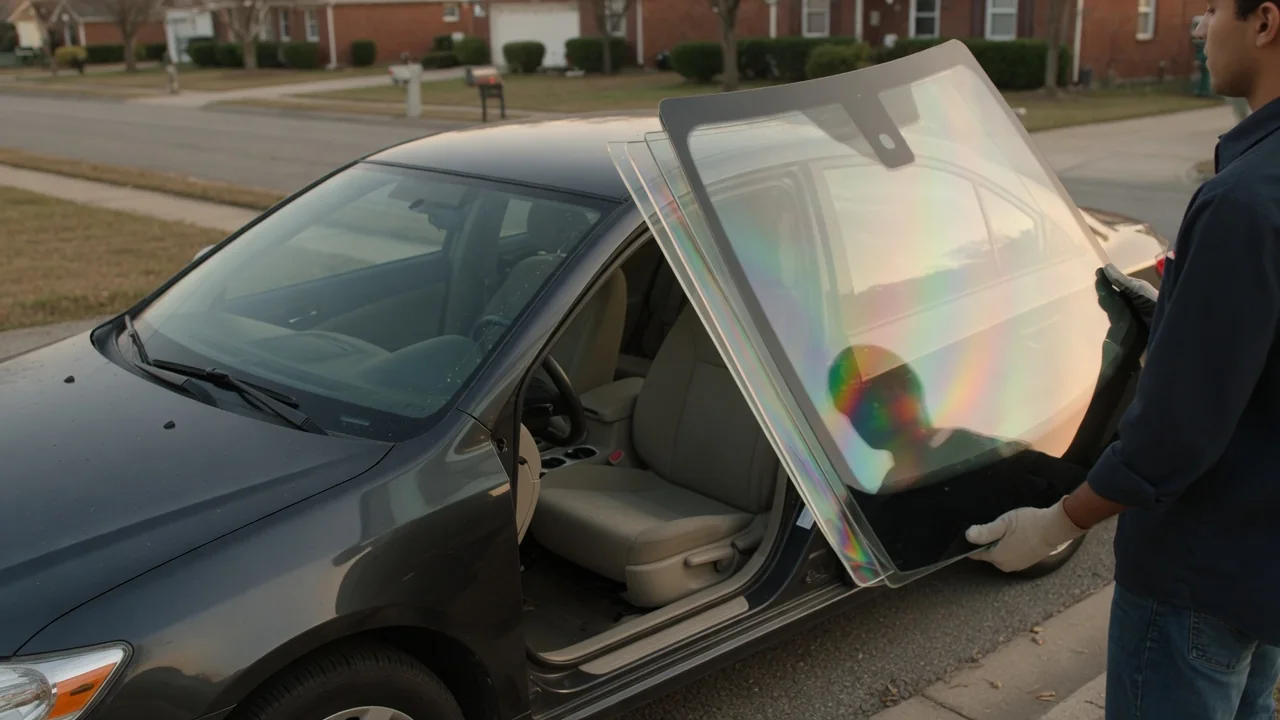
Most drivers never think about what sits between the layers of their windshield, yet that thin plastic film shapes how quiet the cabin feels at highway speed. Some car windows use an acoustic interlayer, a specially engineered film designed to absorb vibration rather than simply hold the glass together. Understanding how acoustic laminated car glass is built, what noise it actually reduces, and why the correct replacement matters helps owners make better decisions when glass needs attention.
Layer design
Laminated automotive glass is built from two sheets of glass bonded to a plastic interlayer under heat and pressure. The interlayer is most often polyvinyl butyral, usually shortened to PVB. In a conventional windshield, its main jobs are to keep broken glass fragments attached, help resist penetration, and screen out most ultraviolet light. The glass and film together behave as a single panel, which is why a cracked windshield usually stays in one piece instead of shattering into the cabin.
An acoustic interlayer changes the construction of that film. Instead of a single uniform layer, acoustic PVB is typically made as a multilayer sandwich: a softer, more flexible core is enclosed between stiffer outer layers that bond to the glass. The core material is viscoelastic, meaning it behaves partly like a solid and partly like a thick fluid when it is flexed. The outer layers preserve the adhesion and safety behavior expected from laminated glass, while the core is formulated for damping. From the outside, an acoustic windshield looks essentially the same as a standard one; the difference lies inside the laminate.
Because the interlayer is only one part of the panel, glass thickness, curvature, and coatings still matter. Acoustic film can be combined with other features, such as solar-control layers or the wedge-shaped interlayers used with some head-up displays, so the exact build varies from one glass design to another.
Noise reduction
Sound reaches the cabin through glass largely by making the panel vibrate. A heavier panel resists that vibration better, which is why thicker glass generally blocks more noise. Adding thickness, however, adds weight, and weight works against efficiency and handling. Every glass panel also has a range of frequencies where its stiffness and the wavelength of incoming sound line up, a condition often called the coincidence effect. In that range the panel vibrates easily and lets noticeably more sound through than its mass alone would suggest.
The soft core of an acoustic interlayer targets that weakness. As the two glass sheets flex, the core is sheared between them, and the viscoelastic material converts part of the vibration energy into a tiny amount of heat. This damping reduces the drop in sound insulation around the coincidence region, which for typical automotive glass falls in the higher frequencies where wind rush, whistling around mirrors and pillars, and the clarity of speech are concentrated. The practical result is a calmer-sounding cabin in which occupants can converse or hear audio more easily at speed.
This also explains why manufacturers find the technology attractive. Acoustic laminated car glass can offer sound insulation comparable to a thicker conventional laminate, allowing engineers to limit glass weight without giving up refinement. Quiet powertrains, especially electric drive, make wind and road noise more noticeable, which increases the value of treating the glass.
Fit
Windshields in passenger cars are laminated as part of their safety design, so adding acoustic film to them is a relatively direct step. Side windows are a different case. Many vehicles use tempered glass for door windows, and tempered glass has no interlayer at all. Where a manufacturer wants a quieter cabin, it may specify laminated side glass, and that laminate may also be acoustic. Laminated side glass can bring additional benefits, such as greater resistance to break-ins and help in keeping occupants inside the vehicle during a crash, but whether a given car uses it depends on the specific model, trim, and market.
For owners, fit becomes important at replacement time. An acoustic windshield and a non-acoustic windshield can share the same shape while being different parts. Installing a standard laminate where the vehicle was designed for an acoustic one may leave the cabin audibly louder, even though the glass fits the opening and functions correctly as a windshield. Some glass carries an acoustic marking near the manufacturer's stamp, but such markings are not consistent across all producers, so the most reliable route is to identify the original part through the vehicle identification number or the manufacturer's parts information.
Installation quality also affects the result. The urethane bond, moldings, and seals around the panel close the paths that noise can take around the glass. An acoustic laminate set in a poorly sealed opening cannot perform as intended, because sound leaks through gaps rather than passing through the damped panel.
Practical implications and limits
An acoustic interlayer is not a cure for every kind of cabin noise. Its strongest effect is on airborne sound in the middle and upper frequency range. Low-frequency boom from tires, suspension, and the road surface often travels through the body structure rather than through the glass, and the windshield film can do little about it. Tire choice, door seals, body insulation, and pavement texture all continue to shape what drivers hear, so two vehicles with acoustic glass can still sound very different.
The damping material is also sensitive to temperature. Viscoelastic layers are tuned to work best across a typical range of operating temperatures, and their behavior shifts when the glass is very cold or very hot. That does not compromise the safety role of the laminate, but the acoustic benefit is not identical in every season or climate.
Day-to-day ownership changes very little. Acoustic laminated glass is cleaned like any other windshield, and small chips are assessed for repair the same way, with suitability depending on the size and position of the damage rather than on the interlayer type. Replacement is where extra care pays off: if the windshield also hosts driver-assistance cameras, sensors, or a head-up display, the new glass must satisfy those requirements too, and camera calibration may be needed afterward. Treating the acoustic layer as one item on that compatibility checklist keeps the vehicle's original quietness from being lost unnoticed.