Why Do Cars Use Acoustic Windshields?
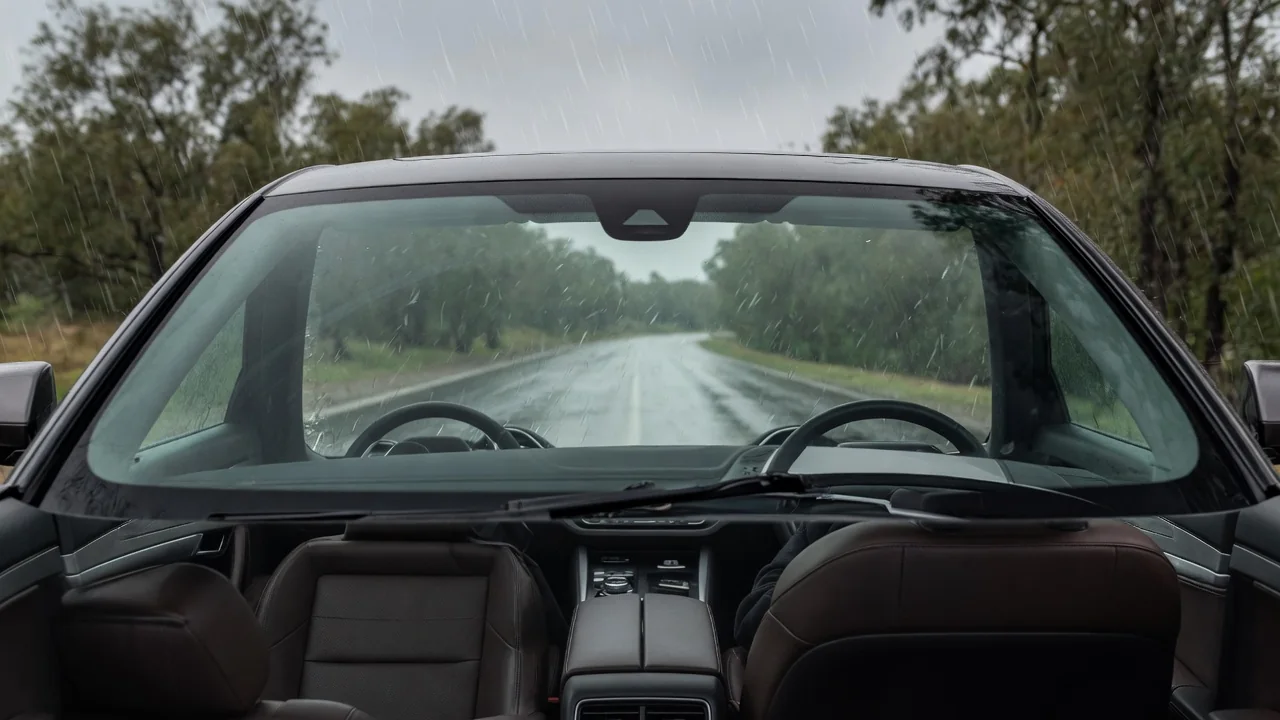
An acoustic windshield looks almost identical to a standard one, yet many modern cars use them to make the cabin quieter. The difference is inside the glass: a plastic layer engineered to absorb vibration instead of passing it along. This article explains why cars use acoustic windshields, how the interlayer reduces noise, which kinds of wind and road noise it helps with, and what matters when the glass needs to be replaced.
How the Acoustic Interlayer Works
Every modern car windshield is laminated glass. Two sheets of glass are bonded to a thin plastic interlayer, most commonly polyvinyl butyral, usually called PVB. The interlayer's main job is safety. When the glass cracks, the interlayer holds the fragments together and keeps the windshield in one piece. A standard PVB layer absorbs a little sound, but noise control is not what it is designed for.
An acoustic windshield uses a modified interlayer, typically built from several layers. A softer, more viscoelastic core sits between stiffer outer layers. When sound or vibration makes the glass flex, the glass sheets move slightly relative to each other. That movement shears the soft core, and the core turns part of the vibration energy into a very small amount of heat. This is called damping. The sound energy that is absorbed in the interlayer never reaches the cabin.
Damping matters most because of the coincidence effect. In any stiff panel, there is a frequency range where bending waves traveling through the panel line up with sound waves in the surrounding air. In that range the panel radiates sound very efficiently, and its ability to block noise drops noticeably. The exact frequency depends on the glass thickness and construction, but for automotive glass it falls in the audible range. A damping interlayer reduces the strength of that resonance and smooths out the weak spot. The glass weighs about the same as before, so the improvement comes from damping rather than from adding mass.
Wind and Road Noise Through the Windshield
The windshield is one of the largest panels on the car, and it faces straight into the airflow. At highway speeds, air moving around the A-pillars, mirrors, wipers, and roof edges becomes turbulent. Those pressure fluctuations push on the glass, and airborne noise from the surrounding airflow passes through it. Wind noise tends to be broadband, with a lot of mid- and high-frequency content. That is the range where acoustic windshield noise reduction is most effective, so the benefit is usually most noticeable on the highway.
Road noise is more mixed. When tires roll over pavement, they produce airborne noise that reaches the cabin through the glass and body panels. They also produce structure-borne vibration that travels through the suspension and body structure. An acoustic interlayer can reduce some of the airborne tire noise that reaches the windshield. It does much less about low-frequency rumble or drumming that travels through the chassis, because that energy bypasses the glass and because interlayer damping is generally less effective at low frequencies.
Several other factors also make acoustic glass appealing to vehicle engineers. Making the glass thicker would block more sound but would add weight, and weight works against efficiency and handling. A damping interlayer reduces noise with little change in mass. In vehicles where powertrain noise is low, such as electric vehicles, wind and road noise are no longer masked by an engine and become easier to hear. That makes glazing a more noticeable part of overall cabin refinement.
Replacing an Acoustic Windshield
The most important rule for replacement is to match the original specification. Acoustic and non-acoustic windshields for the same vehicle often fit the same opening and look nearly the same. A non-acoustic replacement may install without any problem and still leave the cabin noticeably louder. To identify the correct part, check the printed marking area on the original glass. Many acoustic windshields carry a word or symbol indicating the acoustic interlayer, although marking conventions vary between manufacturers. A parts lookup by VIN at a dealer or glass shop can also help confirm the correct part.
An acoustic interlayer is often only one of several features built into a windshield. Depending on the vehicle, the glass may also carry a camera bracket for driver-assistance systems, a mount for rain and light sensors, heating elements, solar-control coatings, or a specially shaped interlayer for a head-up display. The replacement needs to match all of them. Where a forward-facing camera is involved, the manufacturer's procedures typically require calibration after the windshield is replaced.
The quality of the installation affects noise as much as the glass does. The urethane adhesive bead, the seating depth of the glass, and the fit of the surrounding moldings all determine whether air can leak or whistle around the edges. A poorly seated molding can create wind noise that no interlayer will hide. Aftermarket glass can also be made with an acoustic interlayer, so if you are not using an original part, ask the installer to confirm that the part number corresponds to the acoustic version.
Practical Implications and Limits
An acoustic windshield is one part of a larger noise-control system. Door and window seals, side glass, body insulation, tire design and condition, and the road surface all shape what you hear in the cabin. The improvement from acoustic glass is real but often subtle. Drivers usually notice less high-frequency hiss rather than less low rumble. Acoustic glass is also not something you can add to an existing windshield. The only way to get it is to install an acoustic windshield, and only if a compatible part exists for that vehicle.
If the cabin seems louder after a windshield replacement, there are a few likely causes. The replacement may not be the acoustic version. A molding may be missing, damaged, or poorly seated. Or the noise may come from something unrelated, such as worn door seals or a change of tires. A whistle that changes with speed or crosswind usually points to an air leak around the glass or seals, not to the glass itself. Because the damping material is viscoelastic, its performance also depends somewhat on temperature, so perceived quietness can vary a little with weather.
In short, cars use acoustic windshields because they cut wind and airborne road noise at the source with very little added weight. To keep that benefit, replace like with like, have the glass installed carefully, and keep in mind that the windshield is only one contributor to a quiet cabin.