What Is Acoustic Windshield Lamination?
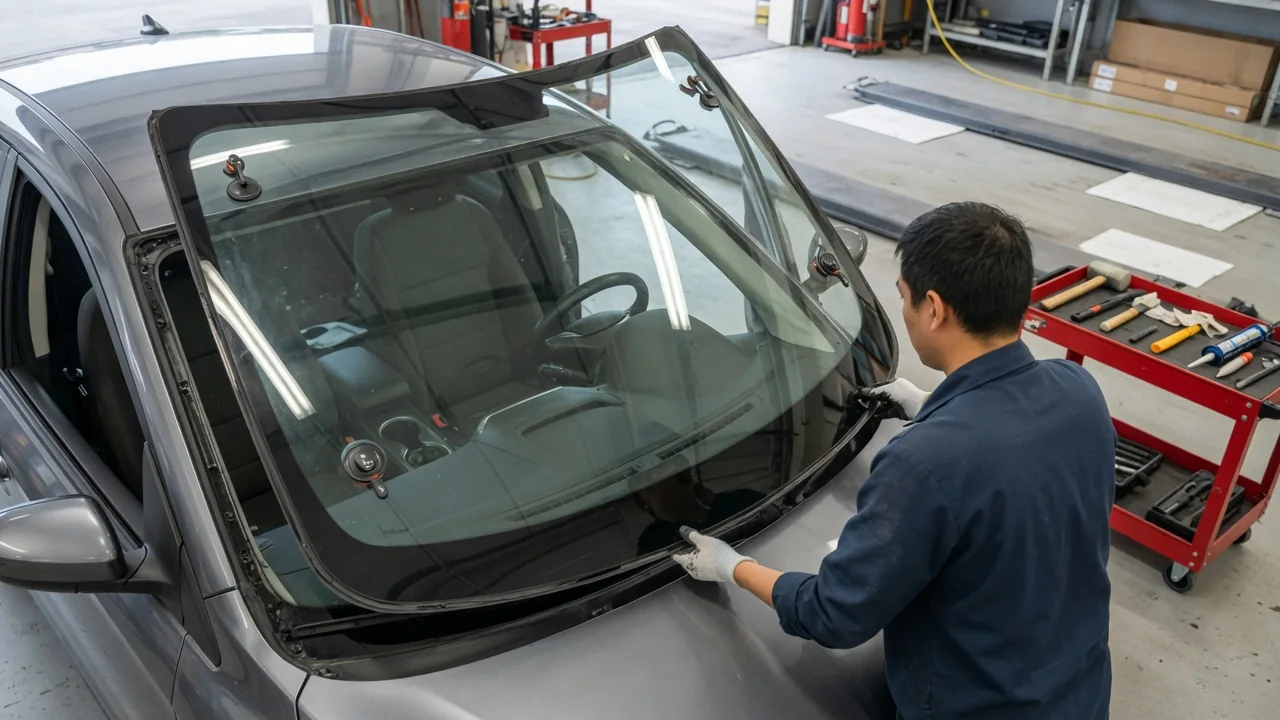
Drivers who ask what is acoustic windshield lamination are usually wondering why some cars feel calmer at highway speed than others. The answer lies inside the glass itself: a specially formulated sound-damping interlayer sandwiched between two sheets of glass. This article explains how that layer is built, what it does to cabin noise, and what matters when the windshield needs replacing.
Layer structure
Every modern windshield is laminated, meaning two sheets of glass are bonded to a plastic interlayer, typically polyvinyl butyral, that holds fragments together in a collision. Acoustic lamination changes the interlayer rather than the glass. Instead of a single uniform film, the manufacturer uses a multi-layer film with a softer, more viscoelastic core tucked between two conventional outer skins. The finished windshield looks ordinary, yet the middle of the sandwich behaves very differently when it vibrates.
That soft core works through shear damping. When sound pressure makes the outer glass flex, the two glass sheets try to move slightly relative to each other, and the compliant layer converts part of that motion into a tiny amount of heat instead of passing it along. Glass thickness, interlayer formulation and the number of film layers vary by automaker and model, and some vehicles extend the same construction to the front door glass, so details should be confirmed for the specific vehicle.
Cabin noise
Cabin noise reaches occupants along several paths, and the windshield is one of the largest panels facing the oncoming airflow. Air rushing over the A-pillars, wipers and mirror bases creates pressure fluctuations that shake the glass, which then radiates sound inward like a loudspeaker cone. Standard laminated glass has a frequency band where it transmits sound unusually well, and that band tends to sit in the range where human hearing and speech are most sensitive.
The acoustic interlayer targets that weak spot, reducing how freely the glass resonates so less wind rush and high-pitched hiss comes through. Occupants often describe the result as easier conversation and clearer audio at speed rather than outright silence. Low-frequency rumble from tires, suspension and the exhaust travels mainly through the body structure and floor, so the glass does little for it. How noticeable the improvement feels depends on the vehicle's door seals, body insulation and overall aerodynamic design.
Replacement fit
When a windshield cracks, the replacement should match the original construction. Acoustic glass is commonly identified by a marking in the printed stamp at a lower corner, which may show the word acoustic, a brand-specific name, or a small ear or sound-wave symbol, though marking conventions differ between glass makers. Looking at the exposed edge of the glass, an acoustic interlayer can sometimes appear as a slightly more distinct band, but that is not a reliable test alone.
Many vehicles are offered with several windshield variants that share the same shape but differ in features such as rain sensor mounts, camera brackets, heating elements, head-up display wedge layers and acoustic lamination. A non-acoustic pane may physically fit the opening yet leave the cabin noticeably louder than before. Giving the installer the vehicle identification number helps them order the right part, and vehicles with windshield-mounted driver assistance cameras may require calibration after installation, according to the manufacturer's procedures.
Everyday Use and Observations
In daily driving, acoustic lamination demands nothing special. The windshield is cleaned, defrosted and wiped just like any other, and the interlayer is sealed inside where it cannot be touched. Stone chips still happen, and repairs follow the general approach used for laminated glass, although a technician should judge whether a particular chip or crack is repairable. The interlayer also continues to do its original safety job, retaining glass fragments and supporting the windshield's role in the body structure.
The most telling observation usually comes after a change. An owner who receives a standard windshield in place of an acoustic one may notice more wind hiss around highway speeds, a harsher sound in rain, or the need to raise the audio volume. Comparing impressions on the same road, at the same speed, with the same tires gives a fairer picture than memory alone. Because laminated interlayers also filter much ultraviolet light, some acoustic products are marketed with added solar features, which vary by supplier.
Limits and Next Steps
Acoustic lamination is a refinement, not a cure for every noise. A whistle that appears suddenly points more toward a displaced molding, a gap in the urethane bond, a worn door seal or a roof rack than toward the glass type. Droning that rises with road speed often traces to tires or wheel bearings, and a windshield upgrade will not mask it. Treating the glass as one contributor among many keeps expectations realistic and avoids paying for the wrong fix.
For anyone unsure what their vehicle has, the sensible next steps are to read the glass stamp, check the original equipment listing or build information, and ask a qualified glass shop to confirm the correct part before ordering. Owners whose vehicles never came with acoustic glass can ask whether an acoustic version exists for their model, since availability is vehicle-specific. If new wind noise follows a replacement, returning to the installer for an inspection of the fit and seal is a reasonable first move.