What Is a Reflector Headlight? Bowl, Bulb Position and Beam Explained
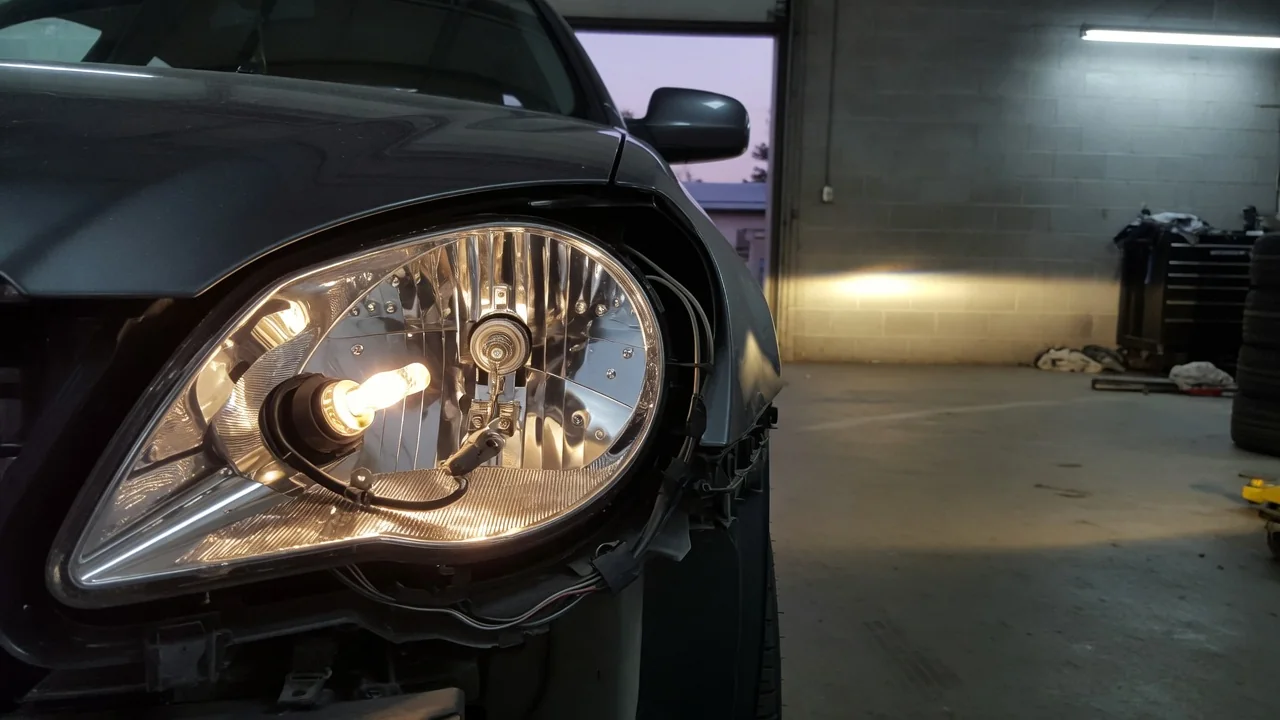
A reflector headlight is a lamp that uses a mirrored bowl behind the light source to collect light and send it forward onto the road. It is one of the oldest and most widespread headlight designs, used with both halogen bulbs and LED light sources. A reflector car headlight design depends on three connected elements: the shape of the reflective bowl, the exact position of the bulb, and the beam pattern that results.
The Reflective Bowl
The core of a reflector headlight is a curved housing whose inner surface acts as a mirror. A bare bulb sends light in nearly every direction. Without help, most of that light would scatter sideways, upward, or back into the housing. The reflective bowl surrounds the light source, so rays that strike its surface are redirected forward. This turns a diffuse glow into usable light on the road. Classic designs use a parabolic shape because of a useful geometric property: light leaving the focal point of a parabola reflects off the surface in roughly parallel lines. Many modern housings use a complex or free-form surface instead. These surfaces are divided into many small segments, each shaped to send light toward a particular part of the road.
The mirror finish is usually a thin metallic layer, commonly aluminum, applied to a plastic or metal base and covered with a protective coating. Older sealed-beam units combined the light source, reflector, and lens in one glass assembly that was replaced as a whole. In many earlier designs, ridges or prisms molded into the front lens did much of the beam shaping. In multi-faceted reflectors, the bowl itself does most of that work, which is why many current reflector headlights have a smooth, clear outer lens.
Why Bulb Position Matters
A reflector only works as designed when the light source sits in a precise spot relative to its surface. In a parabolic bowl, that spot is the focal point. In a free-form reflector, it is the location the facets were calculated around. If the glowing filament or emitter shifts even slightly forward, backward, or to the side, each reflected ray leaves at a different angle than intended. The result can be a dimmer center, stray light above the cutoff, or uneven patches on the road.
Bulbs and their sockets have keyed bases, locating tabs, and tight manufacturing tolerances for this reason. The base fixes the bulb's depth and rotation so the filament lands where the reflector expects it. Some headlights produce both beams from a single housing using a dual-filament halogen bulb. The two filaments sit at different points. One is placed for high-beam output. The other is offset and partly shielded, so its reflected light is directed downward and away from oncoming traffic.
The same principle explains a common problem with aftermarket replacements. An LED or HID conversion bulb made for a halogen socket may lock in place, yet its light-emitting area can differ in size, shape, or location from the original filament. The reflector was designed around the original source, so the pattern can become scattered or glaring even when the lamp looks bright. Factory LED reflector headlights are a different case, because those housings are designed around their specific emitters.
How the Beam Is Formed
The beam is the result of the bowl's shape working together with the bulb's position. A low beam needs to light the road ahead and the near edge while limiting the light that reaches oncoming drivers' eyes. Reflector low beams typically produce a cutoff line, a fairly defined boundary above which light is restricted. The pattern is usually asymmetric, reaching farther on the curb side than toward oncoming traffic, though the details depend on the design and on regional regulations. High beams drop most of these restrictions and concentrate light down the center of the road for greater reach.
A projector headlight uses a lens, and often a shutter, to create its cutoff. A reflector headlight generally shapes its beam with the mirror surface itself. Reflector beams often have a softer cutoff and a broad spread of light, while projectors are often associated with a crisper edge. Neither layout is automatically better. How well a particular headlight performs depends on its optical design, light source, and aim, not on its category alone.
Practical Implications and Limits
Because the beam depends on precise geometry, aim matters as much as bulb output. Most reflector headlights have adjusters that move the housing or reflector vertically, and some also adjust horizontally. A lamp aimed too high can dazzle other drivers, while one aimed too low reduces how far ahead you can see. Aim can drift after a collision, suspension work, or headlight replacement. Procedures and specifications vary by vehicle, so use the owner's manual or service manual as the reference for any adjustment.
The reflector's condition also affects performance over time. Heat, age, or moisture entering through a damaged seal can cause the reflective coating to dull, bubble, or flake, which scatters light and weakens the beam. A yellowed or hazy outer lens has a similar effect. Lens restoration only treats the outer surface and cannot repair a degraded reflector, so in that case replacing the headlight assembly is often the practical fix. Persistent condensation inside a housing may point to a seal or vent problem worth inspecting.
When replacing bulbs, the safest choice is the type specified for the housing, fully seated in its socket. Avoid touching halogen glass with bare fingers, because skin oils can create hot spots on the bulb. Brighter or differently colored bulbs do not always improve visibility, and conversions that change the light source may not meet lighting regulations in many jurisdictions. A reflector headlight performs best when its housing, bulb, and aim all match the original design.