What Is a Car's Front Track?
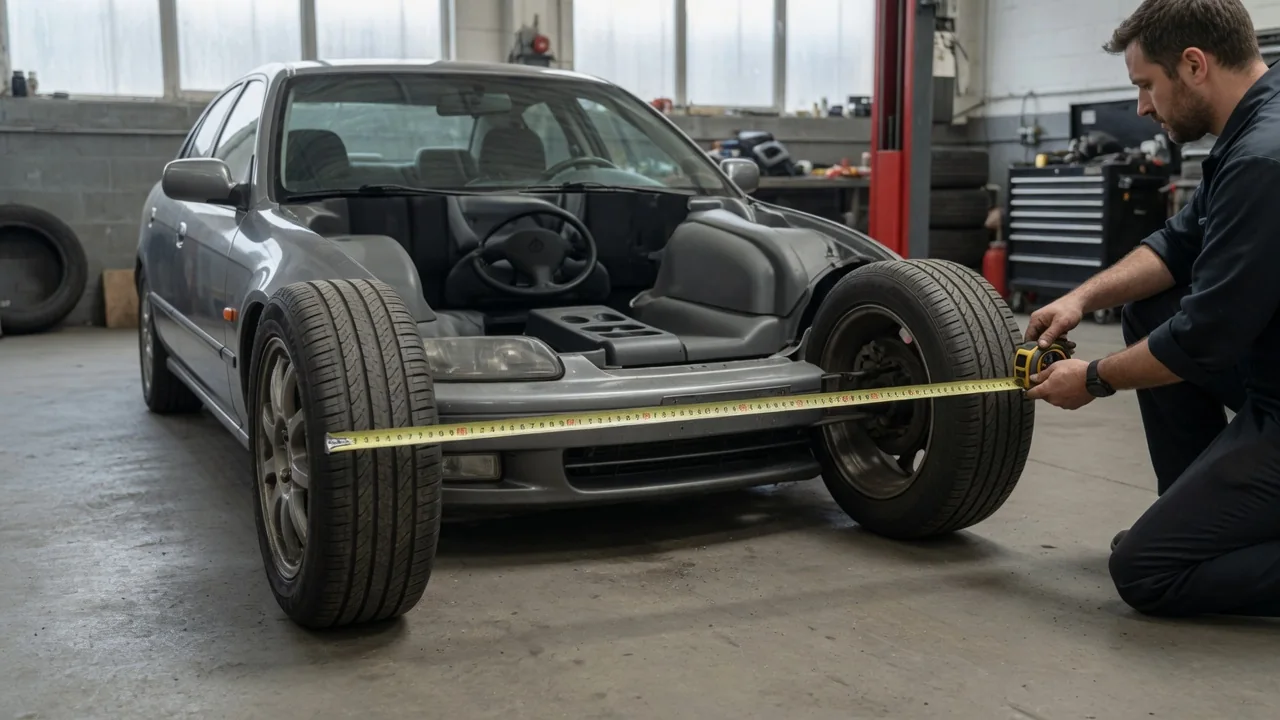
A car's front track is the side-to-side distance between the centers of its two front tires, measured where they meet the road. It sounds like a minor dimension, yet it shapes how a vehicle corners, how it fits a lane, and which wheels suit it. Knowing what the front track is and how it is measured makes spec sheets and handling behavior easier to understand.
Track definition
Front track, sometimes called track width or tread in older literature, is the lateral distance between the centerlines of the left and right front tires. The measurement is taken at the contact patches, from the middle of one tire to the middle of the other, rather than from the outer sidewalls. That distinction matters because overall vehicle width includes bodywork and mirrors, while track describes only where the tires actually sit on the pavement.
It should not be confused with wheelbase, which runs front to rear between the axle centerlines. Many vehicles also carry a different rear track, so the front figure is listed separately. A sports car might run a wider track at one end to tune balance, while a pickup with dual rear wheels has a rear layout that looks nothing like the front. Viewed head-on, the track is roughly the span between the middle of each front tire tread.
Stability context
Track width influences how much weight shifts to the outside tires in a corner. For a given center-of-gravity height and cornering force, a wider track reduces lateral load transfer, which lets the inside tire keep doing more work and generally improves resistance to rollover. This is one reason tall vehicles such as SUVs and vans benefit from a generous track relative to their height, and why low, wide sports cars feel so planted during quick direction changes.
The front track in particular affects steering feel and balance. Changing the front relative to the rear alters how roll resistance is shared between the axles, which can nudge a car toward understeer or oversteer. Wider is not automatically better, though. A broad front track can enlarge the turning circle, may add steering kickback over bumps if the scrub radius changes, and makes a vehicle harder to place on narrow roads. Engineers balance these trade-offs with suspension geometry, spring rates, and tire choice.
Specs
Manufacturers publish front track in the dimensions section of a specification sheet or owner documentation, typically in inches or millimeters alongside wheelbase, overall width, and rear track. The figure normally applies to a specific wheel and tire combination, because wheel offset moves the tire centerline inward or outward. Two trims of the same model can therefore show slightly different numbers when one uses wider wheels or a different offset, even though the suspension mounting points are identical.
Measuring it at home is straightforward in principle. With the car on level ground and the steering pointed straight ahead, a tape measure stretched from the center of one front tread to the center of the other gives an approximate value. An easier method is measuring from the outer edge of one tire to the inner edge of the opposite tire, which yields the same center-to-center distance when both tires are the same width. Toe and camber settings introduce small differences, so published figures remain the reference.
Everyday Use and Observations
In daily driving, front track shows up in ways most people never attribute to it. A wide-track vehicle fills more of the lane, sits closer to curbs in a drive-through, and may meet automatic car wash guide rails or service lift ramps differently than a narrow city car. Rutted highways can also feel different, since tires that match the spacing of worn grooves tend to follow them, while a different track rides across the ridges.
Visual clues help as well. Tires that sit flush with the fenders suggest a track near the limit of the bodywork, whereas wheels tucked deep inside the arches indicate a narrower stance. Tire prints left in snow or on a wet driveway make the dimension easy to see, and comparing front and rear prints reveals whether the two axles share the same width. Results vary widely by vehicle type, from narrow subcompacts to full-size trucks.
Limits and Next Steps
Front track alone does not predict how a car handles. Center-of-gravity height, suspension design, tire grip, weight distribution, and electronic stability control all contribute, so a wider number on paper is not a guarantee of better cornering or safety. Comparing two vehicles by track is most meaningful when they are similar in height and purpose; otherwise the figure is simply one piece of a larger chassis picture.
Altering track with wheel spacers or different-offset wheels deserves caution. Pushing the tires outward changes scrub radius, increases leverage on wheel bearings and suspension joints, and can cause tire-to-fender contact or affect how driver-assistance systems behave. Local regulations may also limit how far tires can protrude. Anyone considering such a change should check the manufacturer's approved wheel dimensions for their specific vehicle and consult a qualified alignment or suspension shop before buying parts.