What Is a Car's Front Air Dam?
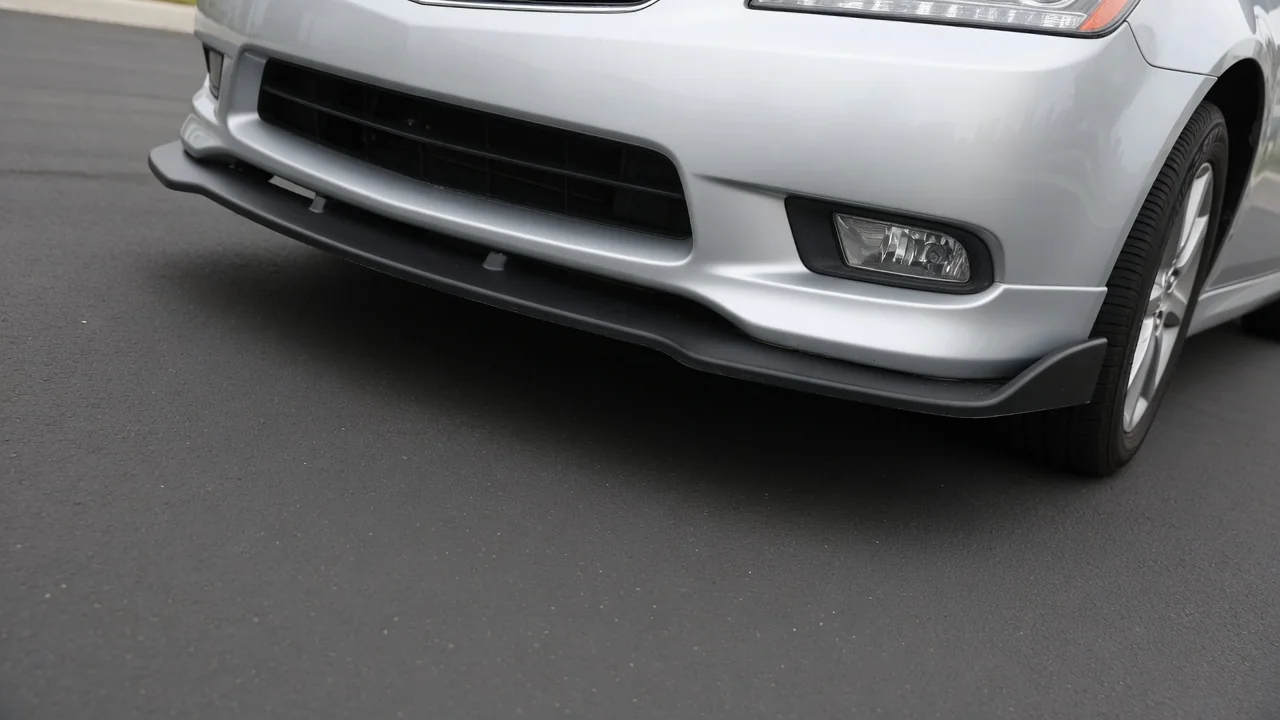
Anyone asking what is a car's front air dam is usually looking at the low panel hanging beneath the front bumper. It is a shaped strip of plastic or rubber that manages how air meets the nose of the vehicle. Its job is aerodynamic, yet its position close to the pavement creates a constant tradeoff between airflow control and ground clearance.
Air routing
A moving vehicle pushes into a wall of air, and that air has to go somewhere. Without a barrier below the bumper, a large share of it rolls underneath, where it tumbles across suspension arms, exhaust piping, crossmembers, and other uneven surfaces. That turbulence adds drag and can create lift at the front axle as speed rises. An air dam blocks part of that path, sending more of the oncoming flow around the sides of the body and over the hood rather than through the cluttered underside.
The panel also influences cooling. By reducing pressure beneath the engine bay, it helps draw air through the radiator and condenser instead of letting it spill under the core support. Some designs include openings or ducts aimed at the brakes or an intercooler. The shape differs widely: a pickup may carry a deep, flexible valance for highway efficiency, while a sports coupe uses a rigid lip tuned for stability. Looking beneath the bumper usually reveals which approach a manufacturer chose.
Ground contact
Because an air dam works best when it sits close to the road, it is usually the lowest point at the front of the vehicle. That makes it the first component to meet parking curbs, steep driveway aprons, speed bumps, snow ridges, and road debris. The approach angle, meaning the steepest slope the nose can climb without touching, is often set by this panel rather than by the bumper itself. A loaded front end or hard braking lowers it even further.
Manufacturers anticipate this contact. Many air dams are molded from flexible material that bends and springs back, and some are designed to fold or detach rather than transfer force into the bumper cover. A scraping sound when pulling into a parking space or entering a sloped driveway is the typical sign of contact. Occasional light rubbing is common on lower vehicles, but repeated hard strikes can tear mounting tabs, crack rigid sections, or leave the panel hanging at an angle.
Repair
Damage tends to show up in a few recognizable forms. Scuffs and shallow gouges along the bottom edge are mostly cosmetic. A sagging corner, a visible gap between the panel and bumper, or a flapping noise at speed usually points to broken clips, missing fasteners, or torn mounting points. A panel that drags on the pavement deserves prompt attention, since it can catch on an obstacle and pull away adjacent trim, splash shields, or the lower portion of the bumper cover.
The appropriate fix depends on the construction. Some air dams are separate bolt-on pieces that can be replaced on their own, while others are molded into the bumper cover or tied to underbody shields, which makes the work more involved. Loose panels can often be secured with new retainers if the mounting holes are intact. Cracked rigid plastic may be repairable by a body shop, though replacement is frequently simpler. Part design and attachment methods vary by vehicle, so the specific layout should be confirmed before ordering anything.
Everyday Use and Observations
In daily driving, the benefit of an air dam is subtle. Drivers rarely feel it directly, but it contributes to steadier highway behavior, less wind noise from beneath the car, and marginal gains in fuel economy at cruising speed. The effect grows with speed, so city commuting shows little difference. Owners who remove the panel sometimes report nothing obvious, while others notice a lighter feeling at the front end on the highway or slightly higher engine temperatures in demanding conditions.
Habits make a real difference in how long the part lasts. Stopping short of concrete parking blocks, rather than pulling forward until the tires touch, avoids the most common source of damage, because the panel can hook on the block when backing out. Approaching steep driveways at an angle lets one wheel climb at a time and keeps the nose higher. A quick glance under the front bumper during a wash reveals fresh scrapes, loose fasteners, or packed debris before they become larger problems.
Limits and Next Steps
An air dam is not a performance cure, and it has clear boundaries. It cannot compensate for worn suspension, misalignment, or poor tires, and a deeper aftermarket piece is not automatically better. Lowering the front edge further may sharpen airflow management while making ordinary driveways and unpaved roads difficult. Trucks and SUVs used off pavement are a good example, since some owners remove the factory panel for clearance and accept a small efficiency penalty in exchange for a better approach angle.
Anyone considering a change should first identify what the original panel does on that particular vehicle. On some models it supports cooling airflow or works together with underbody trays and active grille shutters, so removal or modification may have effects beyond appearance. The owner's manual, a dealer parts department, or a trusted body shop can clarify how the piece is mounted and whether it is serviced separately. If the panel is damaged and hanging, having it secured or replaced promptly prevents further harm to surrounding components.