What Is a Buck in Vehicle Design? Package, Fit, and Ergonomics
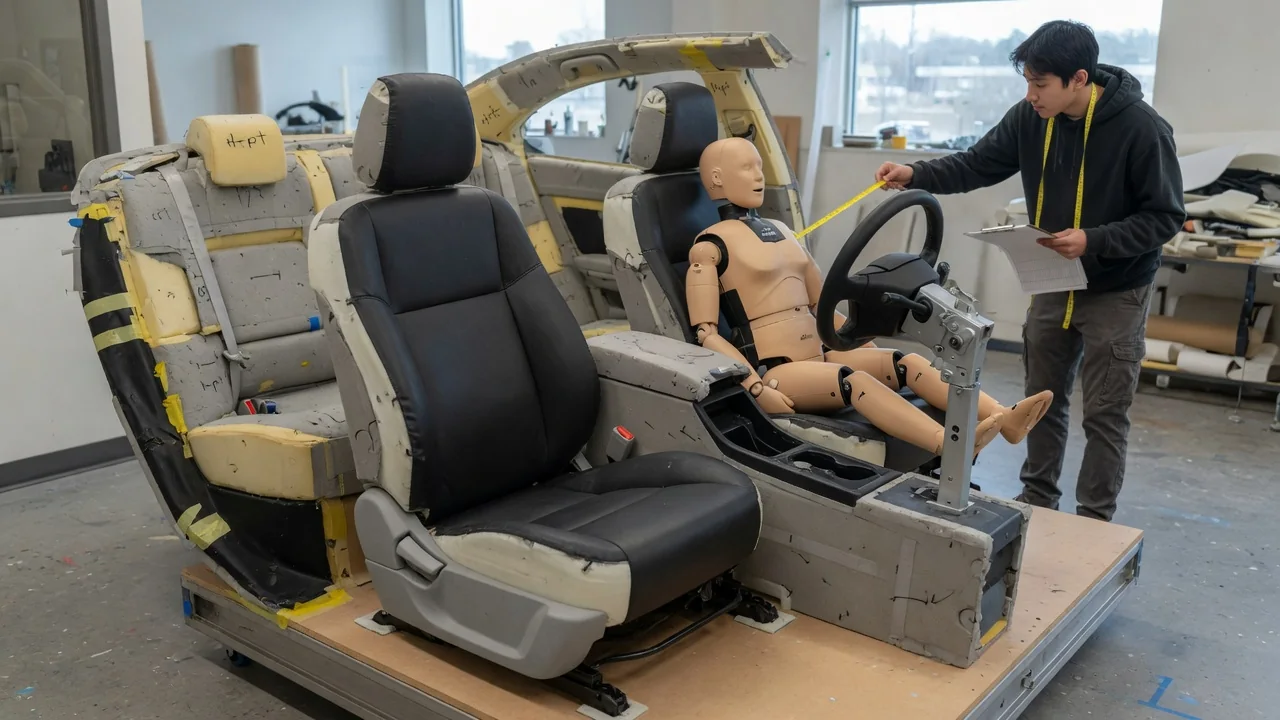
In vehicle design, a buck is a full-size physical mockup that represents part or all of a vehicle before production tooling exists. It may be a bare frame with a seat and steering wheel, a detailed interior shell, or a precision fixture for checking parts. An automotive design buck lets engineers and designers sit in, reach into, and measure a proposed vehicle. They can test package dimensions, component fit, and ergonomics in three dimensions instead of relying only on drawings or screen models.
Package dimensions
Packaging is the job of fitting occupants, powertrain, cargo space, safety structures, and mechanical systems inside a fixed exterior envelope. The governing numbers include wheelbase and overall length, width, and height. Interior measures matter too, such as headroom, legroom, shoulder room, and cargo opening size. A package buck turns those numbers into a physical space. At its simplest, it is a platform with seats placed at their intended locations. It adds a floor and a representation of the roof line, the windshield header, the door openings, and the instrument panel position. Designers often locate everything from a few reference points. Two common ones are the seating reference point, which marks the occupant's hip location, and the heel point on the floor. This way the buck reproduces the same relationships the digital package defines.
The value of a physical buck is that dimensions feel different in person than they look on a drawing. A small change in roof height, windshield rake, or the distance between front and rear seats can noticeably alter how open or cramped a cabin feels, even when the measured values look acceptable. Many bucks are built with adjustable elements, such as movable roof panels, sliding seat mounts, repositionable pillars, or interchangeable floor sections. These let a team compare alternatives in the same session. Construction materials vary widely. Wood, foam, metal tubing, fiberglass, and parts machined or 3D printed directly from CAD data are all common. The level of detail depends on the question being asked, so an early package buck may look crude while still answering a precise dimensional question.
Component fit
As a design matures, bucks shift from defining space to checking how real parts come together. An interior buck may carry prototype instrument panels, center consoles, door trim, seats, headliners, and glazing. Engineers use it to look for interference between neighboring parts, inconsistent gaps, and surfaces that do not meet as intended. Physical assembly also exposes practical problems that are easy to miss on a screen. A wiring harness may need more slack, a hand may not reach a fastener location, or a trim panel may not install in the planned sequence. When a buck includes an engine bay or underbody section, the same approach can show whether routine service items will be reachable with ordinary tools.
A more specialized form is the measuring buck, often called a cubing or by the German term meisterbock. It is a rigid, precisely machined reference body that represents the vehicle's nominal geometry. Prototype or production parts such as fenders, doors, lamps, bumpers, and interior modules are mounted to it, and the resulting gaps, flushness, and alignment are measured. Because the reference body is held to tight tolerances, any deviation can be traced to the part rather than to variation in a real body shell. This makes measuring bucks useful when suppliers and vehicle manufacturers need to agree on whether a part is correct before production assembly begins.
Ergonomics
An ergonomic or seating buck focuses on the people who will use the vehicle. Evaluators of different body sizes sit in it and judge several points: seat height and angle, steering wheel reach and tilt, and pedal placement. They also check armrest height, knee clearance to the dashboard, and headroom with the seat in different positions. Engineers typically set targets using standardized occupant manikins and percentile ranges of body dimensions. A buck lets real people confirm whether those targets produce a comfortable, natural posture. Posture also depends on footwear, clothing, and personal preference, so sessions often involve repeated adjustments rather than a single fixed setting.
Visibility and reach are central to ergonomic work. From the driver's seat, evaluators check how much the A-pillars and mirrors block the view and how much of the road shows over the hood. They also check whether the instrument display can be read through the steering wheel rim. They can test whether switches, screens, storage spaces, door handles, and seat controls fall naturally to hand. Getting in and out, called ingress and egress, requires the buck to represent the door aperture, sill height, roof rail, and seat bolster shape. Together, these decide whether someone has to duck, twist, or climb. Some teams pair a physical buck with virtual reality. They keep real touchpoints such as the seat, wheel, and armrest while a headset shows the styled interior around them.
Practical implications and limits
Owners notice many of these qualities every day: how easily they get in, how well they see around the pillars, and whether frequently used controls are within easy reach. These qualities are generally settled early in development, when teams make packaging decisions and check them with bucks and digital tools. Once production tooling is ordered, changing seat locations or body openings becomes costly, so the geometry approved at this stage tends to carry through the life of a design. That helps explain why a mid-cycle update often changes styling, trim, and features while the underlying seating position and door openings stay largely the same.
A buck also has clear limits. It is static, so it cannot reproduce ride motion, vibration, road and wind noise, cabin heat, or changing daylight and glare. It also cannot show the fatigue that builds over a long drive. The evaluators who sit in it represent only a sample of body sizes, so a layout that suits the panel may still feel wrong for some drivers. Mockup seats and trim may not match final materials, which can make the cabin feel slightly different once the real parts arrive. For these reasons, bucks support drivable prototypes, road testing, and validation work rather than replacing them. Methods also differ between manufacturers and have changed over time, so an owner should not assume a particular vehicle was developed with a specific type of buck.
The word buck also appears in coachbuilding and restoration, where it means a wooden or metal form over which sheet metal is shaped by hand. That form shares the same basic idea: a full-size reference that turns a design into a physical shape. It serves panel fabrication, however, rather than the packaging, fit, and ergonomic evaluation described here.