What Does Neutral Do in an Automatic Car?
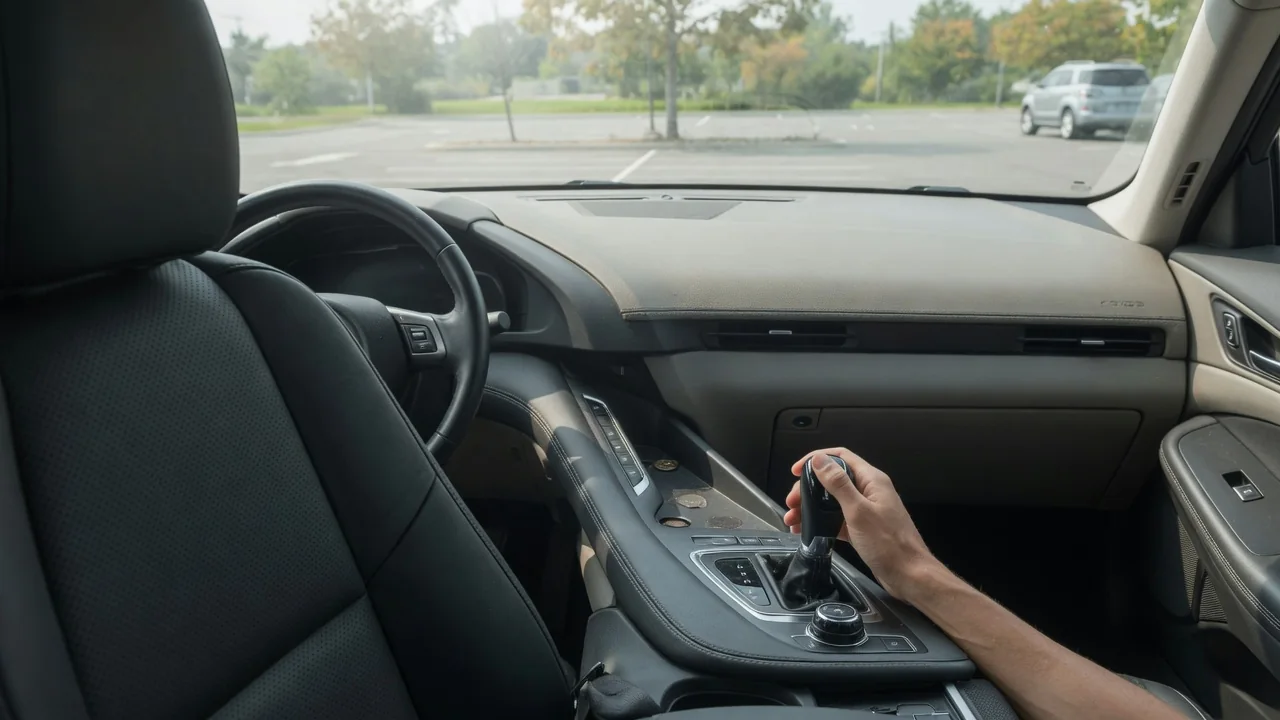
Many drivers wonder what does neutral do in an automatic car, since the position sits between reverse and drive yet rarely gets used. Neutral disconnects the engine from the driven wheels without locking the transmission, so the engine can run while the vehicle is free to roll. Understanding that difference helps you choose the right selector position safely.
Power flow
In drive, engine torque passes through the torque converter or clutch packs, into the gearset, and out to the wheels. Selecting neutral releases the internal clutches or bands that link the gearset to the output shaft, so the engine keeps spinning but nothing is pushed toward the axles. Press the accelerator in neutral and the revs climb freely while the car goes nowhere, because the engine has no load from the drivetrain to work against.
The exact hardware differs by design. A conventional automatic uses hydraulic pressure to release its clutch packs, a dual-clutch unit opens both clutches, and a continuously variable transmission disengages its forward and reverse clutch. Many newer vehicles use an electronic shifter, where neutral is a command sent to a control module instead of a mechanical linkage. In hybrids and electric vehicles, neutral may simply mean the drive motor stops applying torque, so the owner's manual is the best guide to how your vehicle behaves.
Rolling behavior
The key distinction between neutral and park is that neutral leaves the wheels free. Park engages a pawl that locks the transmission output, while neutral has no such restraint. On a slope, a car in neutral will roll downhill under gravity unless the brake pedal or parking brake holds it. On level ground it may sit still, but even a slight grade, a push from behind, or a gust of wind against a light vehicle can start it moving.
Neutral also removes the gentle forward creep that an automatic produces in drive at idle. Release the brake in drive on flat pavement and most cars edge forward; in neutral they stay put or follow the slope instead. While moving, shifting to neutral removes engine braking, so the car coasts and slows only through rolling resistance, air drag, and the brakes. On a long descent you may notice speed building faster than it would with the transmission left in gear.
Driver caution
Coasting downhill in neutral is a habit worth avoiding. Without engine braking, the friction brakes absorb all the work of controlling speed, which can build heat on a long grade and lengthen stopping distances. You also lose the ability to accelerate instantly if traffic demands it, because the transmission must re-engage first. Modern fuel-injected engines typically cut fuel while decelerating in gear, so coasting in neutral rarely delivers the savings some drivers expect.
Never rely on neutral to hold a stationary car. Leaving the vehicle with the selector in neutral and no parking brake applied invites a rollaway, particularly on driveways and inclined parking spaces. Revving the engine in neutral and then dropping into drive is another risk, since the sudden engagement shocks clutches, mounts, and driveline components. Shifts between neutral and a drive range are best made at idle with your foot firmly on the brake pedal.
Everyday Use and Observations
Neutral has legitimate everyday uses. Conveyor-style car washes usually require it so the track can pull the vehicle along on free-rolling wheels. If a car stalls or will not start, neutral lets helpers push it out of a traffic lane or onto a recovery truck. Some vehicles allow the engine to be started in neutral as well as park, which can be useful if the engine quits while the car is still rolling.
Neutral can also serve as an emergency measure. If the accelerator sticks or the engine surges unexpectedly, selecting neutral cuts drive to the wheels while steering and braking remain available, letting you slow down and pull over. At long stops, some drivers shift to neutral, although holding the brake in drive is generally fine for normal traffic lights. You may notice the engine idle smooth out or a faint change in vibration when the load from the transmission is removed.
Limits and Next Steps
Neutral is not a safe towing mode for every vehicle. Many automatics depend on an engine-driven pump to circulate fluid, so pulling the car with the drive wheels on the ground and the engine off can starve internal parts of lubrication. Whether flat towing is permitted, and under what speed and distance limits, depends entirely on the manufacturer. All-wheel-drive models, hybrids, and electric vehicles often carry stricter rules, and a flatbed is commonly the recommended option.
Vehicles with electronic shifters may return to park automatically when the engine is switched off or a door opens, so a specific procedure is often needed to keep neutral selected for a car wash or for towing. That sequence varies between makes and should be confirmed in the owner's manual. If the car moves in neutral under power, refuses to select it, or engages drive harshly afterward, have a qualified technician inspect the transmission before assuming any particular part has failed.