What Is a Manual Shift Mode in an Automatic Car?
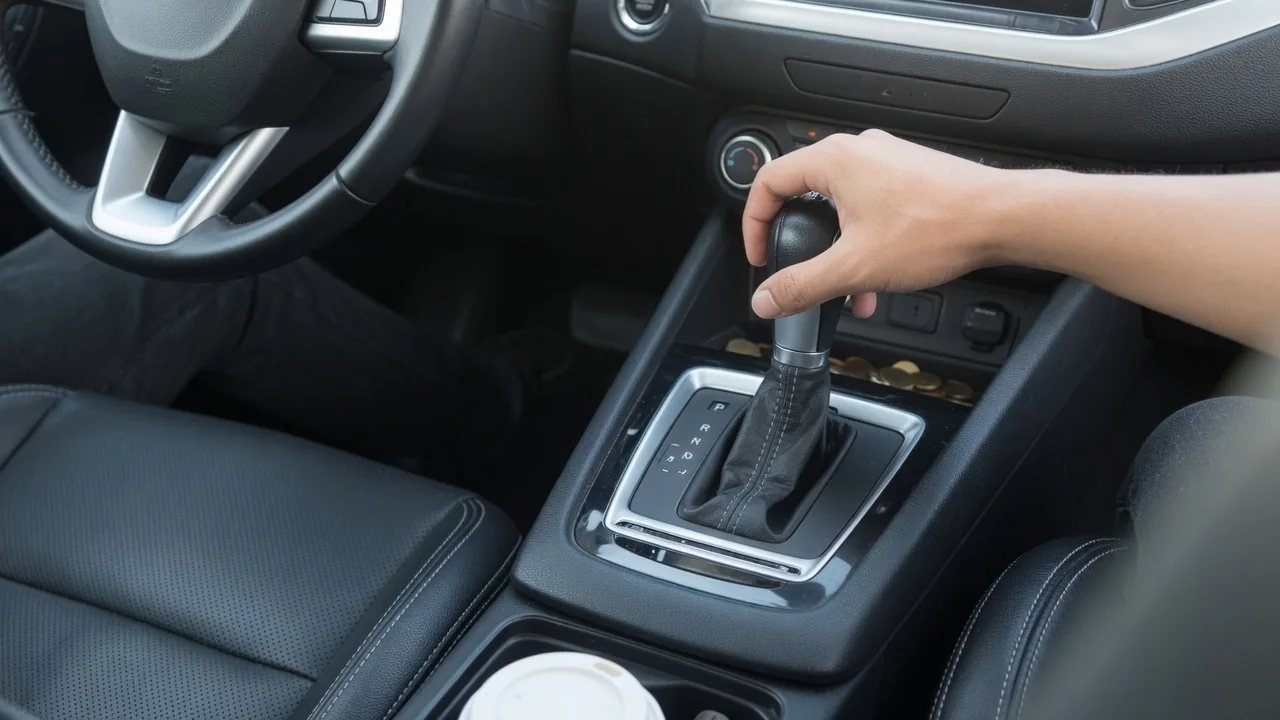
Many drivers notice plus and minus symbols near the shifter and wonder what is a manual shift mode in an automatic car. Put simply, it is a setting that lets the driver request upshifts and downshifts while the transmission still handles the clutch work itself. There is no third pedal, yet gear choice moves partly into the driver's hands.
Paddles or lever
Manual shift mode is usually reached in one of two ways. Some vehicles have a separate gate beside the Drive position, where the lever is moved sideways and then nudged forward or back to request a higher or lower gear. Others use paddles mounted behind the steering wheel, typically one marked with a plus sign for upshifts and one with a minus sign for downshifts. Certain models offer both, and a few use buttons on the shifter knob instead.
Whichever control is fitted, the input is an electronic request rather than a mechanical link. The transmission control module receives the signal and commands the shift through its own hydraulics or actuators, so no clutch pedal is needed. Drivers can usually see the selected gear as a number in the instrument cluster. Layouts differ between manufacturers, including which direction on the lever means upshift, so the owner's manual is the reliable reference for a particular vehicle.
Control limits
The driver's authority in this mode is real but not absolute. Transmission software screens every request against engine speed and road speed. If a downshift would push the engine beyond its safe rev range, the request is commonly ignored or delayed, sometimes with a flashing gear indicator or a chime. That protection is the reason an accidental pull on the downshift paddle at highway speed generally does not produce the mechanical damage it could in a true manual gearbox.
Many systems also step in at the other extreme. Some will upshift on their own as the engine approaches redline, while others hold the gear against the rev limiter until the driver acts. As the car slows to a stop, most will drop to a low gear automatically so the engine does not lug or stall. Some vehicles also revert to full automatic operation after a period without paddle input. These behaviors vary by make, model, and selected drive mode.
When useful
Manual mode earns its place on long downhill grades. Selecting a lower gear lets engine braking hold the vehicle's speed, so the brakes do less work and are less prone to overheating and fade. The same logic applies when towing or carrying a heavy load on hilly roads, where an automatic left to itself may shift back and forth between two gears. Holding one gear keeps the engine in a steadier range and can reduce heat buildup in the transmission.
It also helps when the driver can see what the transmission cannot. Before overtaking, a downshift requested in advance puts the engine in its stronger rev range, avoiding the brief pause of a kickdown. On a winding road, holding a gear through a corner prevents an unwanted mid-bend shift. In snow or on ice, some vehicles allow starting in a higher gear to soften torque at the wheels, though whether that is permitted depends on the vehicle.
Everyday Use and Observations
In daily driving, the first thing most people notice is that the car feels more connected to throttle inputs. Engine sound rises and falls with a held gear instead of the transmission settling quickly into a high, quiet ratio. The tachometer becomes more relevant, since the driver is now deciding when to shift. Staying in a low gear at cruising speed keeps revs high and usually increases fuel consumption, so upshifting once speed is steady makes sense.
Shift feel depends heavily on the transmission type beneath the controls. A dual-clutch unit tends to respond crisply, a conventional torque converter automatic may feel smoother with a slight delay, and a continuously variable transmission often simulates fixed steps that are really preset ratios. In many cars, a tap of a paddle while in Drive gives temporary manual control that fades back to automatic after a few seconds, which is handy for a single downshift before a hill or a pass.
Limits and Next Steps
Manual shift mode does not turn an automatic into a manual gearbox. There is no clutch to slip or modulate, the software retains the final say, and the driver cannot force a shift the system considers harmful. It also does not replace sound braking practice; engine braking supplements the brake pedal rather than substituting for it. Drivers expecting instant, mechanical response may find some systems leisurely, particularly on vehicles tuned mainly for comfort and economy.
A sensible next step is to read the transmission section of the owner's manual, which explains how the mode is engaged, when it overrides the driver, and how to return to Drive. Practicing on a quiet, open road helps build familiarity with the controls and the gear display. If requests are consistently refused in normal conditions, shifts turn harsh, or a warning light appears, that points to a need for diagnosis by a qualified technician rather than proof of any single failed component.