What Is a Shift Solenoid? How It Controls Automatic Gear Changes
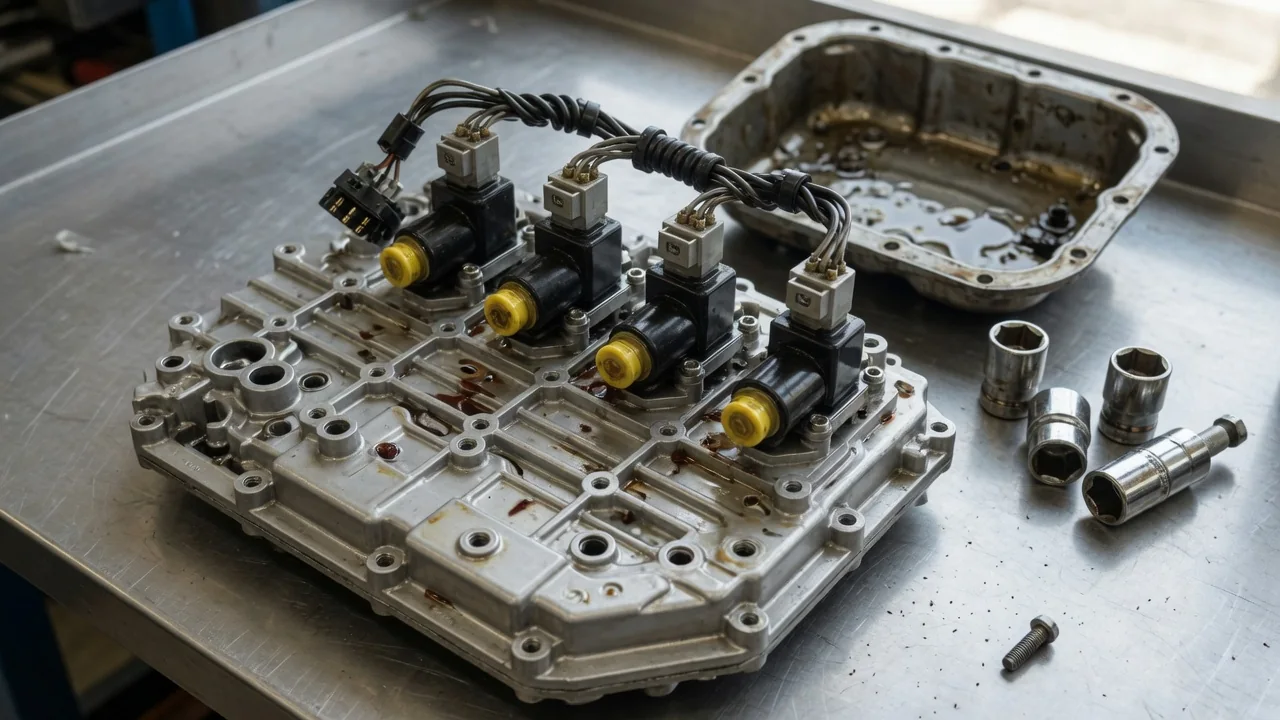
An automatic transmission shift solenoid is an electrically operated valve that controls where pressurized transmission fluid goes. When the transmission's control module decides a gear change is needed, it switches one or more solenoids, which redirect fluid to the clutches and bands that select each gear. Knowing how a shift solenoid is controlled, how it moves fluid, and how a fault usually shows up helps owners make sense of shifting problems and warning lights.
Electrical control: how the computer commands a shift
On most modern automatic transmissions, an electronic control unit makes the shifting decisions. This can be a dedicated transmission control module or a powertrain control module that manages both the engine and the transmission. The module reads inputs such as vehicle speed, engine speed, throttle position, fluid temperature, and selector position, and compares them with its programmed shift logic. When conditions call for a different gear, it changes the electrical state of specific shift solenoids. Each solenoid is a coil of wire around a movable plunger. Current through the coil creates a magnetic field that moves the plunger, which opens or closes a small fluid passage.
Designs differ in how solenoids are driven. Simple on/off solenoids are either energized or not, and the transmission selects a gear from the combination of states across two or more solenoids. Other designs use pulse-width-modulated or variable-force solenoids. With these, the module rapidly cycles or varies the current so that pressure is regulated in proportion to the command. This allows smoother and more precisely timed shifts. Many transmissions use both types, with some solenoids selecting gears and others managing line pressure or torque converter clutch apply.
Because the control module drives these circuits, it can also monitor them. Many modules check for an open circuit, a short to ground or to voltage, or a current draw outside the expected range. When a fault is detected, the module may store a diagnostic trouble code and turn on a warning light. Some problems are detected only indirectly, when the module compares input and output shaft speeds and finds that the expected gear ratio did not occur. Detection strategies and code definitions vary by manufacturer.
Fluid flow: turning an electrical signal into a gear change
An automatic transmission uses hydraulic pressure to apply the clutches and bands that hold or drive parts of its gearsets. A pump driven by the engine supplies pressurized fluid. A valve body, which is a casting full of passages and spool valves, routes that fluid. The shift solenoid links the electronics to the hydraulics. It usually does not apply a clutch directly. Instead, it controls a smaller signal pressure that moves a larger shift valve in the valve body. When that valve moves, it sends working pressure to one clutch or band and exhausts pressure from another.
Solenoids are described as normally open or normally closed, depending on whether fluid passes when the coil is not energized. That design choice affects what the transmission does if the solenoid loses power. Timing matters as much as routing. One element must release while another applies, and the overlap has to be controlled to avoid flare, which is a brief rise in engine speed between gears, or a harsh engagement.
Solenoids rely on small orifices and close-fitting plungers, so fluid condition affects them directly. Debris from normal clutch wear, varnish from overheated fluid, or contaminated fluid can slow or stick a plunger or partly block a passage. In that case the electrical command can be correct while the hydraulic result is wrong. This is why a solenoid problem is not always an electrical problem.
Symptoms of a failing shift solenoid
Symptoms depend on which solenoid is affected, what it controls, and whether it fails electrically or mechanically. Common signs include: • Delayed upshifts or downshifts; • Harsh or slipping shifts; • Skipped gears; • Being unable to shift into or out of a particular gear; • Erratic shifting; A fault in the solenoid that controls the torque converter clutch may cause shudder at steady cruising speeds, or it may keep the converter clutch from applying, which can show up as higher engine speed on the highway. A fault in a line pressure control solenoid may make every shift feel soft or firm, instead of affecting only one gear change.
Many transmissions respond to a serious solenoid or circuit fault by entering a fail-safe or limp mode. Normal shift control stops and the transmission defaults to a fixed gear. The vehicle can still be driven, but it may pull away sluggishly and rev high at speed. A check engine or transmission warning light commonly comes on, and the stored codes often point to a circuit or performance issue with a specific solenoid.
These symptoms are not unique to solenoids. Similar shift complaints can come from low or degraded fluid, a clogged filter, worn clutches, valve body wear, damaged wiring or connectors, sensor faults, or software issues. A code naming a solenoid circuit shows where the module saw a problem. It does not prove that the solenoid itself has failed.
Practical implications and limits
Good shift quality depends on every link in a chain: correct sensor inputs, a working control module, intact wiring, a responsive solenoid, and clean fluid at the correct level. A sensible diagnosis starts with the simplest steps. Read the stored codes with a scan tool, check the fluid level and condition using the manufacturer's method, and inspect connectors for corrosion or damage. Some transmissions have no conventional dipstick, and some need the fluid at a specific temperature for an accurate check, so follow the vehicle's own service procedure.
Repair options depend heavily on the transmission design. In some units, individual solenoids can be reached after removing the oil pan and replaced separately. In others, the solenoids are built into a valve body assembly or a combined mechatronic unit, so a repair means replacing a larger assembly. That replacement may also require programming or adaptation relearning with diagnostic equipment. An electrical resistance check can find an open or shorted coil. A solenoid that passes this check can still stick mechanically or respond slowly under pressure.
A new solenoid cannot fix every shifting problem. If the root cause is worn clutches, damaged seals, or a scored valve body, the symptom may continue after the solenoid is replaced. Contamination that damaged the original solenoid can also damage the replacement. Driving with persistent slipping or harsh engagement can add wear, so a repeatable shift problem should be diagnosed promptly. Behavior and procedures vary widely between transmissions, so the vehicle-specific service information is the authority for any given car.