Bad Shift Interlock Solenoid Symptoms: What They Mean and What to Check
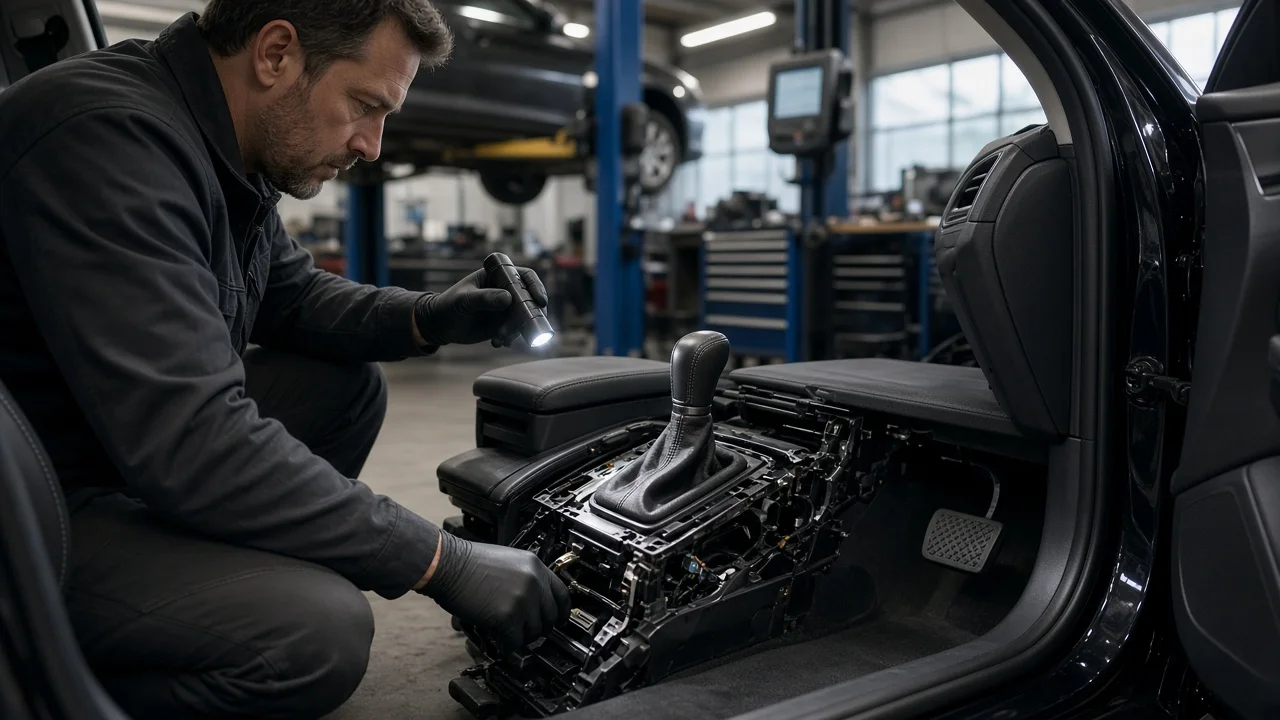
The shift interlock solenoid is a small electrically controlled lock in an automatic transmission shifter. When the ignition is on, it lets the selector leave Park only while the brake pedal is pressed. If the solenoid or the circuit that feeds it misbehaves, the shifter usually either refuses to leave Park or leaves Park too easily. This guide covers how to describe the symptoms, how to separate the likely causes, and what to check, in order, before you buy parts.
Establish the symptoms
The most common complaint is a selector stuck in Park while the engine runs and the brake pedal is pressed firmly. The opposite fault matters just as much: the lever moves out of Park without the brake applied, which means the safety lock is not engaging. On some vehicles the key also will not come out of the ignition, or a push-button start car may not switch off fully, because the shifter does not register that it is in Park. Many owners also notice that the faint click from the console or column, which used to happen when they pressed the brake, has stopped.
Before drawing conclusions, write down exactly when the problem occurs. Note whether it is constant or intermittent. Note whether it happens after the car has been parked for a while, after rain or a wash, when the battery is weak, or only when the car is parked on a slope. Check whether the brake lights work and whether any warning lights or messages appear. Record anything that changed recently, such as a battery replacement, console or stereo work, a spilled drink, or a brake pedal adjustment. Also identify the transmission type and the shifter design. A column lever, a console lever and an electronic shift-by-wire selector use different parts and diagnostic paths.
Distinguish plausible causes
A faulty shift interlock solenoid is only one possibility, and often not the most likely one. The brake light switch tells the interlock that the pedal is pressed. If that switch fails or is out of adjustment, the solenoid never receives its release command. Brake lights that do not work point strongly toward the switch, its fuse or its wiring rather than the solenoid. Brake lights that stay on with the pedal released suggest a switch stuck closed, which can explain a shifter that leaves Park without the brake.
Several electrical faults can cause the same symptoms: • a blown fuse shared with the interlock; • a loose or corroded connector; • a chafed wire under the console; • low system voltage; • a fault in the control module that manages the interlock on some models; Mechanical problems can look similar too. These include debris or a sticky spill in the shifter, a worn detent, a binding shift cable, or a misadjusted park/lock cable. On a hill, the vehicle's weight can rest on the parking pawl and make the lever hard to move even when the electrical side works perfectly. If you hear a click at the shifter, the solenoid itself is less likely to be at fault. If the mechanism moves freely when you use the manual release, the fault is more likely electrical.
Checks in a useful order
Start with checks that need no tools: • Set the parking brake, turn the ignition on and press the brake while a helper confirms whether the brake lights come on. • With the cabin quiet, listen and feel near the shifter for a click each time you press and release the pedal. • Check the fuse that the owner's manual lists for the brake lights or shift lock. • Look for obvious spills or objects around the console. If the vehicle has a shift lock release slot or button, the owner's manual explains how to use it. Moving the lever with the release engaged shows whether the mechanism itself moves freely.
The next steps need equipment and model-specific information. A scan tool can read diagnostic codes. On many vehicles it can also display brake switch status live, which shows whether the control module sees the pedal. With a wiring diagram and a multimeter, a technician can confirm power, ground and the control signal at the solenoid connector, then test the solenoid against the manufacturer's specification. Removing console trim, adjusting cables or the brake switch, and working on electronic shifters are best left to a qualified technician unless you have the correct service information. Incorrect adjustment can leave the vehicle able to roll or shift unexpectedly.
Interpret the findings
Each result narrows the search rather than proving that a specific part has failed: • No brake lights and a shifter stuck in Park: suspect the brake light switch, fuse or shared wiring first. Replacing the solenoid would not fix this. • Working brake lights but no click: the solenoid may not be getting power or a release signal, or the solenoid itself may be open or jammed. Only a voltage check at the connector separates these causes. • A click, but the lever still will not move: the problem is more likely mechanical, in the shifter or cable, than electrical.
If the lever leaves Park without the brake, check the brake lights. Lights that stay on point to the switch. Normal lights suggest the solenoid is not locking, the mechanism is worn, or the circuit is constantly energized. Stored codes help, but a brake switch code describes a condition in the circuit, not necessarily a dead switch. Intermittent faults are the hardest to confirm, so record the conditions each time one occurs. Before ordering parts, confirm fitment by VIN. On many vehicles the solenoid is sold only as part of the shifter assembly, and part numbers vary with transmission type and trim.
Urgency and next action
Treat a shifter that leaves Park without the brake as a safety problem, because the vehicle could be knocked into gear by accident. Until it is repaired, always set the parking brake and do not leave anyone in the car with the engine running. If the brake lights do not work, drivers behind you get no warning when you slow down, so do not drive the car until that is fixed. If the car is stuck in Park, you can use the manual shift lock release to move it, but only as a temporary measure. Keep your foot on the brake while you do it, and arrange a repair rather than relying on the release.
When you book the repair, give the shop the following information: • year, make, model, engine and transmission type; • shifter design; • a clear description of when the symptom happens; • how the brake lights behave; • any stored codes; • relevant service history; That helps the shop choose the right repair, such as adjusting or replacing the brake switch, repairing wiring, cleaning or rebuilding the shifter, or replacing the solenoid or shifter assembly. Transmission fluid type and fluid level do not affect the interlock, so a fluid service will not fix this problem. A technician may still check the fluid if the car also shifts abnormally while driving.