What Are Composite Body Panels?
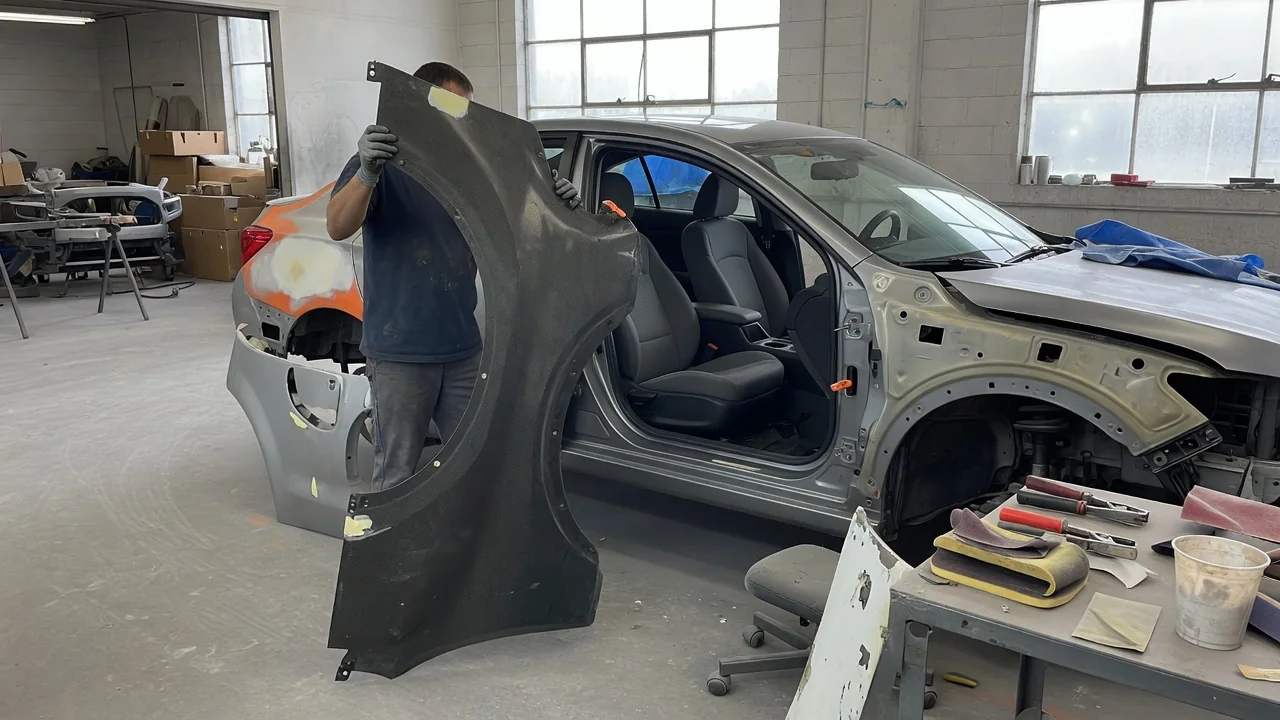
Anyone asking what are composite body panels is really asking how a car's outer skin can be made from something other than stamped steel or aluminum. A composite panel combines reinforcing fibers with a plastic resin so the finished part is light, stiff, and resistant to rust. This guide explains how those panels are made, where they appear, and how they behave in daily use.
How composites are formed
A composite body panel starts with two ingredients that do different jobs. Fibers, most often glass or carbon, carry the load much as steel rebar does inside concrete. A resin, typically a polyester, vinyl ester, or epoxy, surrounds those fibers, holds them in position, and transfers force between them. Neither ingredient is impressive alone: loose fibers are floppy and cured resin is brittle. Bonded together and hardened in a mold, they become a rigid shell that holds a precise shape without the stamping presses metal panels require.
Manufacturing methods differ widely, and that affects what you see on the vehicle. Sheet molding compound, a dough-like mix of chopped glass fiber and resin, is pressed in heated molds to produce hoods, fenders, and decklids in volume. Carbon fiber parts are more often built from woven fabric layered by hand or machine, then cured under heat and pressure. The underside of a panel often reveals the method: a slightly rough, fibrous back suggests chopped glass, while a visible woven pattern points to fabric layup. Automakers choose processes by model, so construction varies.
Common applications
Composites tend to appear where low weight, corrosion resistance, or complex shaping matters most. Hoods, front fenders, roof panels, liftgates, and pickup bed boxes are frequent candidates, as are spoilers, splitters, and aerodynamic trim. Some sports cars have used fiberglass-based bodies for decades, while high-performance models may feature carbon fiber roofs or hoods to trim mass high on the vehicle and lower its center of gravity. Heavy trucks and recreational vehicles also rely on molded panels for large, curved cab and body sections.
Not every plastic exterior part qualifies, which causes confusion. Bumper covers are usually unreinforced thermoplastic that flexes and returns, whereas a true composite panel contains reinforcing fiber and feels rigid. A simple check is a magnet: it will not cling to a composite or aluminum panel, though it cannot tell the two apart. Tapping gives another clue, since composites produce a duller, deader sound than sheet metal. Which panels are composite depends on the model, trim, and production year, so manufacturer body information is the reliable reference.
Repair limits
Composites fail differently from metal. Steel dents and stretches, so a technician can often push or pull it back into shape. A fiber-reinforced panel does not hold a dent; it either springs back or cracks, splinters, or delaminates, meaning the layers separate internally. Small cracks, chips, and holes in fiberglass-type panels can frequently be rebuilt with compatible resin, reinforcement, and filler by a shop familiar with the material. The repair products must suit the original panel chemistry, or the patch may show through the paint later or lose its bond.
Limits appear when damage reaches fibers that carry structural load or when hidden layers are affected. An impact can leave the painted surface nearly intact while fibers underneath are broken, so a visual check alone may understate the problem. Carbon fiber parts, bonded mounting points, and panels tied into the vehicle's structure are commonly replaced rather than patched, and manufacturers publish their own rules about which repairs are permitted. Heat is another constraint, because excessive temperature during refinishing can distort or blister some materials.
Everyday Use and Observations
In daily driving, the most welcome trait is that composites do not rust. Road salt and moisture that eventually perforate steel leave the panel itself unaffected, although metal brackets, fasteners, and underlying frames can still corrode. Resistance to parking-lot dings is typically good too, because the material flexes slightly and recovers rather than creasing. Owners sometimes notice panel gaps that shift a little with temperature, since composites and the metal structure beneath expand at different rates, and designers allow clearance for that movement.
Finish care is much like any painted surface, with a few things worth watching. Exposed carbon fiber depends on a clear coat for ultraviolet protection, and neglected clear can yellow, haze, or peel over time. On painted panels, look for spider-web cracks radiating from a point, small blisters, or a faint texture of fibers showing through the paint, which can indicate past impact, moisture, or aging resin. An area that sounds different from the surrounding panel when tapped lightly deserves a professional look.
Limits and Next Steps
Composites are not automatically better than metal. They can be costlier to produce in some forms, harder to recycle, and they demand specialized knowledge at the body shop. Their crash behavior also differs, absorbing energy by crushing and fracturing rather than folding, which is why engineers decide carefully where each material belongs. A paint thickness gauge designed for steel or aluminum may not read on these panels at all, so judging prior repairs on a used vehicle takes other methods and a trained eye.
If you suspect damage, avoid drilling, sanding, or applying generic filler before the material is identified, since dust from glass and carbon fibers is an irritant and the wrong product can compromise a later repair. Confirm what the panel is made of through the manufacturer's body repair information or a collision shop experienced with that vehicle. Ask whether repair is permitted, whether replacement is required, and how the finish will be matched. Insurance estimates should reflect the correct material, because procedures and labor differ from sheet metal work.