Why Are Car Body Panels Made From Different Materials?
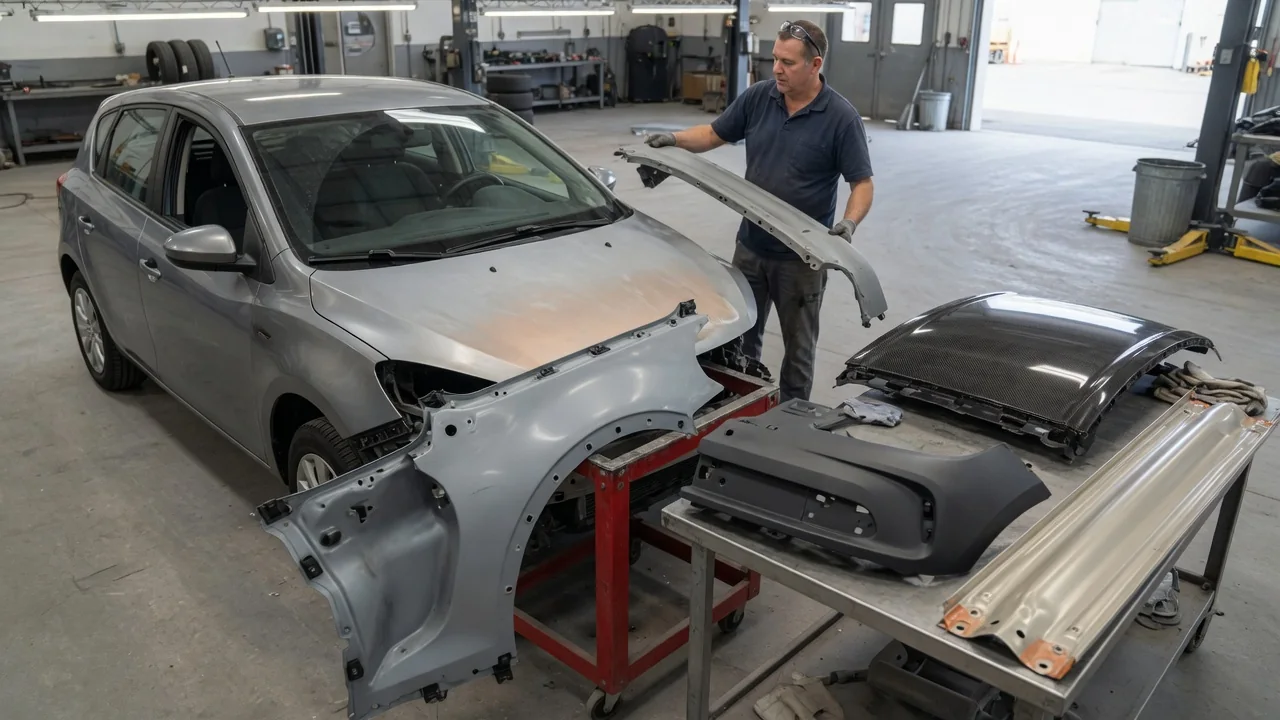
Walk around almost any modern vehicle and you are looking at a mix of steel, aluminum, plastic, and sometimes composite panels. If you have wondered why are car body panels made from different materials, the short answer is that each location on the body has a different job. Strength, weight, cost, corrosion resistance, and crash behavior all pull the choice in different directions.
Steel and aluminum basics
Steel remains the default for much of the body because it is strong, relatively inexpensive, and easy to stamp, weld, and repair. Not all steel is alike, though. Mild grades form easily into deep shapes such as quarter panels, while high-strength grades are reserved for pillars, rocker reinforcements, and roof rails that must resist deformation around the cabin. Engineers choose the grade by asking what each part must do in a collision: hold its shape to protect occupants or crumple to absorb energy.
Aluminum weighs considerably less than steel for a given volume, so it is often used for hoods, fenders, doors, and liftgates, where trimming mass helps efficiency and handling. A lighter hood is also easier to lift and can be shaped to deform gently in a pedestrian impact. Aluminum costs more and is harder to form and join, so many manufacturers apply it selectively. A simple magnet reveals the difference: it clings to steel but not to aluminum. Which panels use which metal varies widely by model and year.
Plastics and composites
Bumper covers are the most familiar plastic panels. A flexible thermoplastic cover can absorb a parking-speed nudge and spring back, where a metal skin would dent and crease. Plastic also molds into complex shapes with integrated grille openings, sensor mounts, and air ducts that would be costly to stamp from metal. The same reasoning applies to rocker moldings, wheel arch trim, and lower cladding, which sit in the path of road spray, gravel, and curbs and will never rust.
Composites cover a broader family, from fiberglass-reinforced panels to carbon fiber. Sheet-molded composites have been used for hoods, tailgates, and pickup bed components on some vehicles because they resist dents and corrosion while keeping weight down. Carbon fiber offers exceptional stiffness for its weight, but slow, expensive manufacturing mostly limits it to roofs, hoods, and structures on performance cars. Tapping a panel gives a clue: plastics and composites sound dull and hollow compared with the metallic ring of steel or aluminum.
Repair implications
Material choice shapes what happens after a collision. Conventional steel is forgiving; a technician can often pull, hammer, and weld it back into shape. High-strength steels are less tolerant, since heat can weaken them, so manufacturers frequently specify replacing those sections rather than straightening them. Aluminum behaves differently again. It does not return to shape as readily, work-hardens quickly, and typically calls for dedicated tools and a separate work area to prevent contamination from steel dust, which can trigger corrosion.
Plastic bumper covers can sometimes be repaired with plastic welding or adhesives, but torn mounting tabs or damage near radar and parking sensors often tip the decision toward replacement. Composite panels may be bonded or patched, though cracked carbon fiber structural parts are commonly replaced. Mixed materials also complicate joining: where aluminum meets steel, manufacturers use adhesives, rivets, and insulating coatings to prevent galvanic corrosion, and a proper repair must restore those barriers. Estimates can therefore differ noticeably between two similar-looking vehicles.
Everyday Use and Observations
Owners notice material differences in daily driving. A door ding from a shopping cart may leave a sharp dent in an aluminum panel that paintless dent repair handles less easily than in steel. A plastic fender or bumper may shrug off the same contact but show scuffed paint. Color match can vary slightly between metal panels and plastic bumper covers, because paint lays down differently on each substrate and the parts are often painted separately. That mismatch is not necessarily evidence of previous accident repair.
Corrosion behaves differently too. Steel shows familiar reddish-brown rust, usually starting at stone chips, seams, and wheel arches where moisture and road salt linger. Aluminum does not rust in that way, but it can develop white, powdery corrosion or bubbling beneath the paint, particularly along hems and edges. Plastic panels will not corrode at all, though prolonged sun exposure can fade unpainted trim, and cold weather makes some plastics more brittle. Washing salt from lower panels in winter benefits every material on the car.
Limits and Next Steps
Simple checks only go so far. A magnet will not distinguish mild steel from high-strength steel, and it cannot tell aluminum from plastic or from a steel panel covered in thick body filler. Appearance tells you nothing about the structure hidden beneath the outer skin, where a single vehicle may combine several grades and materials. Manufacturers also change panel materials between generations, trim levels, and even mid-cycle updates, so assumptions drawn from one car may not hold for another that looks nearly identical.
For reliable answers, the manufacturer's body repair information for the specific vehicle is the reference that matters. It identifies what each panel is made of and how it may be sectioned, joined, or replaced. When shopping for collision work, it is reasonable to ask whether a shop has the training and equipment for aluminum or composite repair if your vehicle uses them. Understanding the material map of your own car also helps when comparing estimates, judging used vehicles, and deciding how to protect vulnerable panels.