What Are Car Door Panels Made Of?
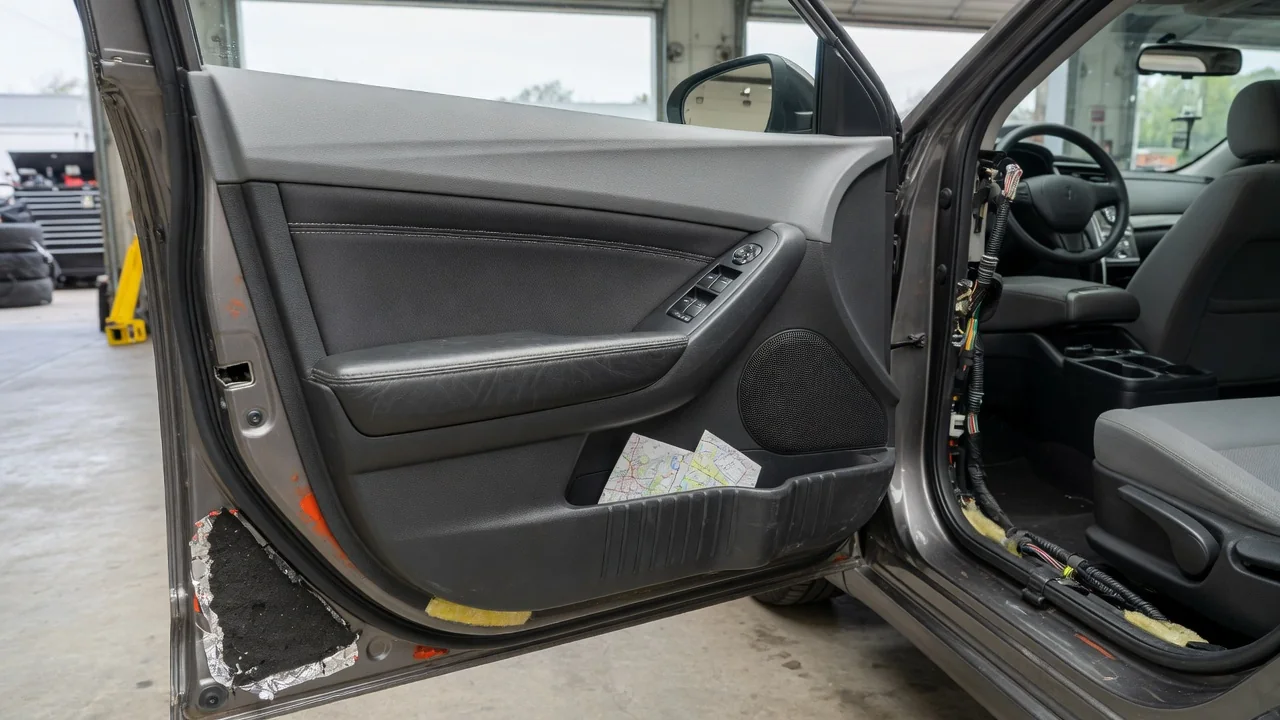
Anyone asking what are car door panels made of is usually looking at a single molded surface, but the panel is really a stack of layers. A decorative skin sits over a rigid backing, fasteners hold that assembly to the steel or aluminum door shell, and a moisture barrier behind it keeps water out of the cabin.
Visible surfaces
The part you touch is the trim skin. On many vehicles it is a molded plastic such as polypropylene or ABS, with a grain pressed into the surface to imitate leather or reduce glare. Higher trim levels often wrap sections in vinyl, cloth, synthetic suede or real leather, usually over a thin foam layer that gives the surface a soft, padded feel. The armrest and the upper area near the window tend to get the softest materials because elbows and forearms rest there on every drive.
Lower portions of the panel are normally hard plastic, since shoes, bags and seat belt buckles strike that area and a tougher surface resists scuffing. You may also see accent strips in painted plastic, metal-look film, real aluminum or wood veneer, plus a map pocket and a speaker grille molded in or snapped on. Materials differ widely between a work truck and a luxury sedan, so pressing lightly on each zone is the easiest way to tell where padding ends and bare molded plastic begins.
Inner structure
Beneath the skin is a rigid carrier that gives the panel its shape. Older vehicles commonly used pressed fiberboard or hardboard, which is light and cheap but swells and crumbles if it gets wet. Modern panels more often use injection-molded plastic or a composite of plastic resin and natural fibers, formed with ribs, bosses and mounting towers on the back side. Separate pieces such as the armrest, pull cup and switch bezel are frequently heat-staked, screwed or clipped to that carrier rather than molded as one part.
Between the carrier and the metal door sits the moisture barrier, sometimes called a vapor barrier or water shield. It may be a thin plastic sheet held with a sticky butyl bead, or a shaped foam sheet that also damps noise. Water that gets past the outer window seal runs down inside the door by design, and this layer steers it toward drain holes at the bottom instead of into the trim. Some doors use a sealed plastic or metal module carrying the window regulator in place of a loose sheet.
Removal care
Most panels are held by a row of plastic push clips around the perimeter, backed up by a few screws hidden under caps, inside the pull cup or behind the door handle bezel. The upper edge often hooks over the window ledge and has to lift upward before the panel comes free. Because the clips seat into holes in the door shell, pulling hard in one spot can tear the clip tower out of the carrier, which is far harder to remedy than replacing a broken clip. The exact fastener locations vary, so vehicle-specific service information is worth checking first.
Behind the panel are wiring connectors for the window and lock switches, a cable or rod for the inside handle, and sometimes courtesy lamps or speaker leads, all of which need to be released before the panel moves away. Doors with side airbags or impact sensors call for the manufacturer's safety precautions, and that work is best left to a qualified technician. The moisture barrier deserves equal care, because a torn sheet or a sealant bead that no longer sticks can let water reach the carpet after the panel goes back on.
Everyday Use and Observations
Daily wear shows up in predictable places. Soft-touch coatings on pull handles and switch surrounds can turn sticky or peel, fabric inserts may lift when the adhesive ages in heat, and vinyl on the armrest can crack or wear shiny where an elbow rests. Hard plastic near the sill collects scuffs from shoes. Sun exposure fades and dries the upper section first, which is why the top edge near the glass often looks different from the lower door after years of parking outdoors.
Sounds and feel also tell a story. A buzz or rattle that changes when you press on the panel often points to a clip that has loosened or broken, though a loose speaker or an item in the map pocket can sound similar. A panel that flexes outward at one corner suggests a fastener is no longer seated. Damp carpet near the door, a musty smell or water stains on the lower trim can indicate a moisture barrier problem, but blocked door drains and worn weatherstripping produce the same signs and should be checked as well.
Limits and Next Steps
Looking at the surface only tells you so much. Two panels that appear identical can use different carriers, clip styles and barrier designs depending on model year, trim level and options such as premium audio or power memory seats. Clips are often specific to a vehicle family and many are intended to be replaced once removed, so reusing fatigued ones can leave a panel that never sits tight again. Material names in general descriptions are typical examples, not a guarantee of what any particular door contains.
For cosmetic issues, a cleaner suited to the specific material is the sensible starting point, since products meant for leather can stain cloth and harsh solvents can strip coatings from plastic. Loose trim, persistent rattles or signs of water entry justify a closer inspection with the panel off, using the correct procedure for that vehicle. If the door houses an airbag, or if electrical features stop working after trim work, a professional diagnosis is the safer route. An upholstery or trim shop can often restore worn inserts without replacing the entire panel.