What Is a Vapor Barrier Inside a Car Door?
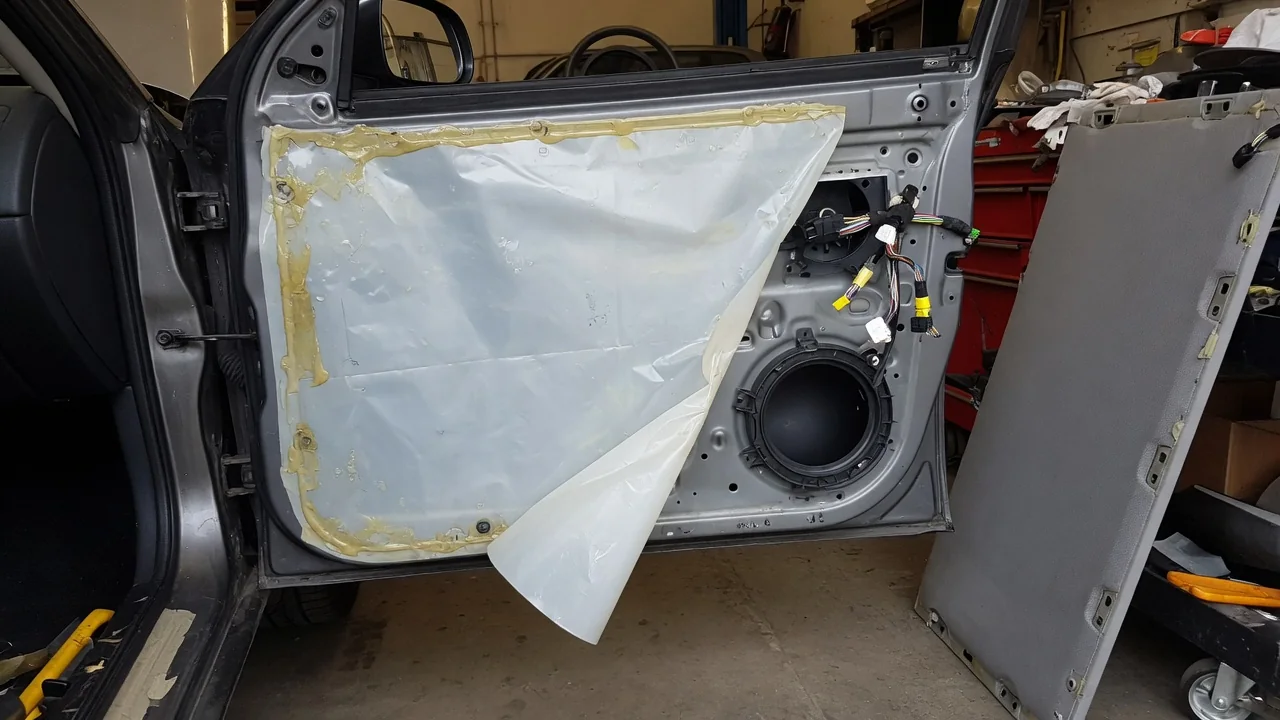
Anyone wondering what is a vapor barrier inside a car door will find the answer hidden just behind the interior trim panel. It is a thin membrane, usually plastic sheet or closed-cell foam, sealed to the inner door frame. Its job is to keep the water that normally travels through the door shell from reaching the trim, switches, speakers and carpet on the cabin side.
Barrier location
The barrier sits between the door's inner metal panel and the interior trim card. With the trim removed, it appears as a sheet covering the large access openings stamped into the inner panel, the same openings used to reach the window regulator, lock mechanism and speaker. A bead of sticky sealant, often a black butyl rope that never fully hardens, bonds the edges of the sheet to the painted metal so the wet cavity and the dry cabin side stay separated.
Designs vary considerably between manufacturers and model generations. Some vehicles use a clear or milky polyethylene film, others a molded foam shield that also deadens sound, and many newer doors replace the loose sheet with a rigid plastic carrier module that holds the regulator and seals with a gasket. Wiring harnesses, door handle cables and trim clips pass through the barrier at shaped slits or grommets, and those penetrations are as important to its sealing as the outer edge.
Water path
A car door is not a sealed box. The outer window seal wipes the glass but cannot stop all rain or wash water, so a steady trickle runs down the glass and into the door cavity whenever the car gets wet. That water is expected to fall down the inside of the outer skin, collect at the bottom of the door and leave through small drain holes or slots in the lower seam. The cavity is designed as a wet zone.
The membrane defines the boundary of that wet zone. Water splashing off the regulator or running down the inner panel hits the sheet and is directed back down inside the shell rather than through the access openings. The lower edge matters most, because any gap there lets water run onto the back of the trim card and then down to the sill and carpet. Some barriers include molded pockets or folded channels that steer drips away from speakers and connectors.
Repair after door work
Most barrier problems begin after someone has been inside the door. Replacing a window regulator, lock actuator, speaker or door handle usually means peeling the sheet back, and it is easy to tear the film, stretch it out of shape or contaminate the sealant with dust and grease. A barrier that is pushed back loosely, taped at a few points or left hanging at one corner can look acceptable and still leak the first time the car sits in heavy rain.
A sound repair restores a continuous seal around the whole perimeter, with particular attention to the bottom edge and lower corners. The original butyl can often be reused if it is clean and still tacky, while damaged sealant or torn sheet generally calls for fresh material suited to the purpose. Cable and harness pass-throughs should be closed again as they were. Because parts and sealing methods differ, the vehicle's service information is the best guide to the correct materials and layout.
Everyday Use and Observations
In normal driving a healthy barrier is invisible, so its condition shows up through symptoms. Damp carpet near the door sill after rain, a water line or warping along the bottom of the trim card, a musty smell, or windows that fog heavily on humid mornings all suggest moisture is reaching the cabin side. Water dripping from the bottom edge of the trim panel when the door is opened after a wash is a particularly direct clue.
Electrical and audio symptoms can follow as well. A door speaker that crackles or sounds distorted after wet weather, or window and lock switches that behave erratically, may have been exposed to water that should have stayed in the shell. The barrier also contributes to cabin quietness, so a loose or missing sheet sometimes brings more road noise or a faint rustle from the door. Sloshing sounds point elsewhere, usually toward blocked drains holding water in the cavity.
Limits and Next Steps
The membrane manages water inside the door, but it cannot compensate for other faults. Clogged door drains let the cavity fill until water rises above the sealed edge, and worn window seals admit more water than the system was meant to handle. Wet carpet also has many other possible sources, including door opening weatherstrips, sunroof drains, windshield sealing, the heater core and air conditioning drain, so the barrier should be treated as one candidate rather than an automatic conclusion.
A sensible next step is to confirm the drain openings along the bottom of the door are clear, then check whether dampness follows rain or washing and which door it sits near. If the evidence points to the door, removing the trim panel allows the sheet and its sealant to be inspected directly. Doors containing side airbags, impact sensors or complex wiring deserve extra caution, and a body shop or water leak specialist can test the door methodically when the source remains unclear.