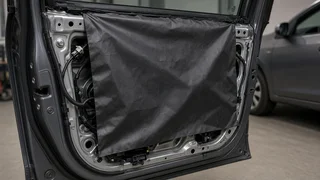
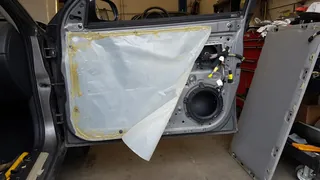
Car door vapor barrier

A car door vapor barrier is the thin sheet adhered to the door’s inner structure behind the trim panel. It separates the wet side of the door from the dry cabin side, directing water that passes the belt molding and weather seal toward the drains. The barrier also reduces drafts and helps keep the door panel and cabin quieter. When it is torn, loose, or missing after speaker or regulator service, moisture can reach the carpet and trim, and wind noise may increase around the latch, hinge, and actuator areas.
Essential answer
The essential answer is that a vapor barrier car door panel is a moisture-control layer, not a structural or crash part. It sits between the door’s inner sheet metal and the removable trim panel, covering access openings for the window regulator, latch rods, speaker, and wiring. Its job is to keep water that enters the door shell from migrating into the passenger compartment. Because the door cavity is deliberately open to the outside through the belt molding, the barrier provides the clean separation between the wet internal door environment and the dry interior surface.
It differs from the outer weather seal and the door’s rubber gaskets. Those flexible seals manage air and water at the perimeter where the door meets the body, while the vapor barrier handles moisture that is already inside the door. The barrier is commonly a polyethylene or foam sheet secured with butyl tape or adhesive. If it has been cut for a repair, it should be resealed or replaced so the door functions as intended and the interior materials stay dry.