What Is a Thermoset Composite in a Car? Curing, Panel Uses and Repair Limits
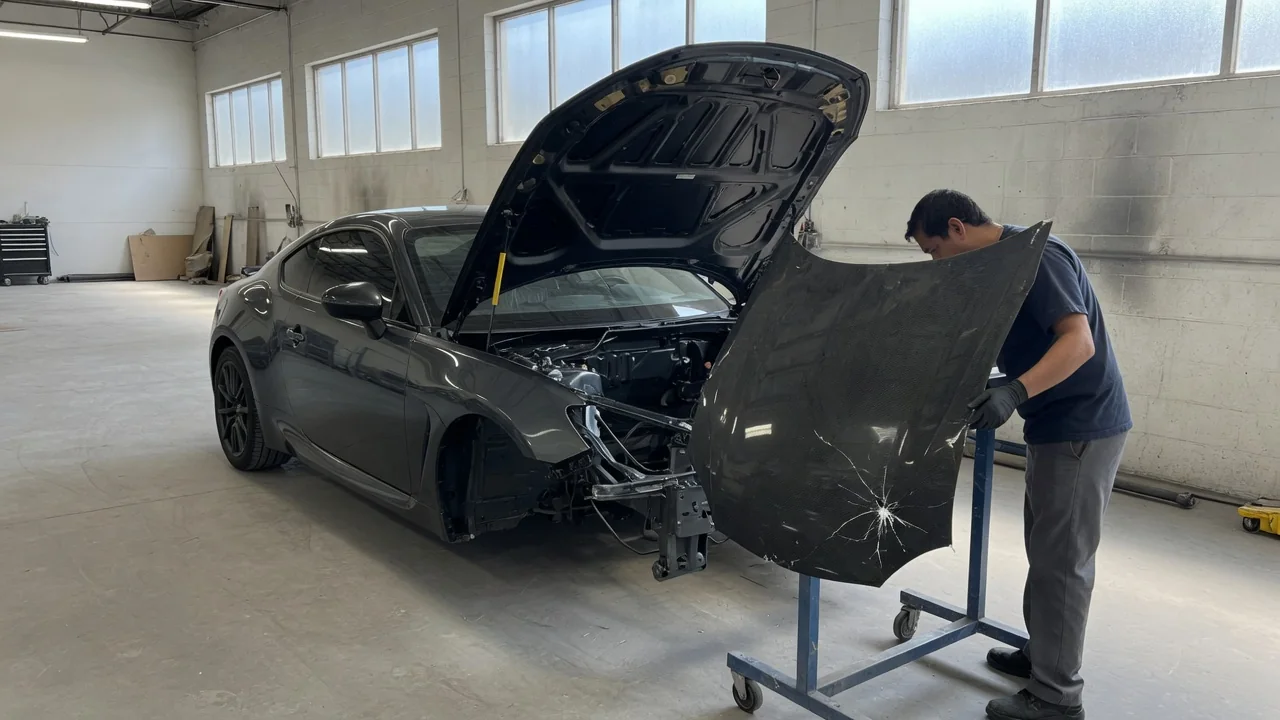
A thermoset composite in a car is a material made of reinforcing fibers, usually glass or carbon, locked inside a resin that hardens through a permanent chemical reaction. Once that reaction is complete, the part cannot be melted and reshaped. That is why an automotive thermoset composite behaves differently from steel, aluminum, and the softer thermoplastics used in many bumper covers. Knowing how these parts cure, where they appear on a vehicle, and why their repair options are limited helps owners understand body shop advice.
Curing: How a Thermoset Composite Becomes Permanent
Every thermoset composite starts with two basic ingredients: a liquid or paste-like resin and a reinforcement. Common automotive resins include unsaturated polyester, vinyl ester, and epoxy. The reinforcement is typically chopped or woven glass fiber, or carbon fiber in higher-cost applications. Manufacturers often blend in fillers and additives to control shrinkage, surface finish, and fire behavior. The resin is weak by itself. The fibers carry most of the load, and the cured resin holds them in position and transfers stress between them.
Curing is the step that turns this mixture into a solid. A catalyst, heat, or both trigger a reaction called crosslinking, in which the resin's molecular chains bond to one another and form a three-dimensional network. This network is what makes the material a thermoset. A thermoplastic softens when heated and hardens again when cooled. A cured thermoset does not return to a liquid state. Enough heat will eventually char or degrade it rather than melt it.
In automotive production, curing usually happens inside a heated mold. Sheet molding compound, often shortened to SMC, is a widely used example. Sheets of resin paste and chopped glass fiber are placed in a steel mold, pressed closed, and held under heat and pressure until the part cures. Other processes, such as resin transfer molding or curing pre-impregnated carbon fiber fabric, follow the same principle with different equipment. The finished part keeps the exact shape of the mold, so complex curves can be formed in one piece.
Panel Uses: Where Thermoset Composites Appear on Vehicles
Manufacturers choose thermoset composites for panels where low weight, corrosion resistance, and freedom of shape matter. Typical applications across the industry include hoods, trunk lids, liftgates, fenders, roof panels, and pickup bed components. Less visible uses include front-end carriers, inner panels, and some underbody shields. Whether a particular vehicle uses composite for any of these parts depends entirely on the manufacturer's design. The same body style may use steel, aluminum, or composite in different generations or trim levels.
Several properties make these materials attractive for exterior panels. They do not rust, so panels exposed to road spray and moisture avoid the corrosion concerns of untreated steel. They tend to spring back from light impacts, so they resist minor dents better than thin sheet metal. They also hold their dimensions well across normal temperature swings, which helps keep panel gaps consistent. SMC in particular can be molded with a smooth Class A surface that accepts automotive paint, so the panel can visually match the metal parts next to it.
Carbon fiber reinforced thermosets occupy a different niche. They are very stiff for their weight and appear in performance-oriented hoods, roofs, spoilers, and in some cases structural components. Their material and processing costs make them less common on mainstream vehicles than glass-fiber composites. Some carbon fiber parts are clear-coated to leave the weave visible, while others are painted to blend with the rest of the body.
Repair Limits: What Can and Cannot Be Fixed
The permanent nature of curing sets the first limit. A thermoset panel cannot be heated and pushed back into shape, and it cannot be welded the way steel or many thermoplastic parts can. When a thermoset composite is overloaded, it tends to crack, fracture, or delaminate rather than bend. Delamination means layers or fibers have separated from the surrounding resin. It may not be obvious from the painted surface, so a panel that looks only scuffed can hide weakened material underneath.
Repairable damage on glass-fiber panels is usually fixed by bonding rather than reshaping. A typical repair starts with grinding the damaged area to a tapered edge. The technician then applies a compatible resin or structural adhesive with new fiber reinforcement, sometimes adds a backing patch on the inside, and finally fills, sands, and refinishes the surface. These steps depend on matching materials and following the vehicle maker's repair procedures. Some manufacturers specify particular adhesives, patch sizes, or bonding methods for their composite panels.
This approach has clear boundaries. Large fractures, damage near mounting points or bonded seams, and cracks running through load-carrying areas often call for replacing the panel rather than repairing it. Carbon fiber structural parts are frequently subject to stricter rules, and some manufacturers allow only replacement. Grinding and sanding composites also releases fine fiber and resin dust, so proper respiratory protection and dust control belong in any legitimate repair process.
Practical Implications and Limits for Car Owners
For everyday ownership, the main difference shows up after an impact. A minor parking lot bump that would leave a shallow dent in steel may leave no mark on a composite panel. A harder hit, however, can produce a crack or a spider-web pattern in the paint. Those fine paint cracks can signal resin or fiber damage beneath the surface, so it is worth having them inspected rather than simply touched up. Paintless dent repair, a common fix for metal panels, generally does not apply to thermoset composites.
Identifying the material comes before any work. A magnet will not stick to a composite panel, which shows that the panel is not steel. It cannot tell composite apart from aluminum or thermoplastic. Many molded plastic and composite parts carry a material code on the back side, and owner or service documentation may also list panel materials. When the material is unclear, a body shop with access to the vehicle's repair information is better placed to decide than general guidance.
Realistic expectations also help. A well-executed composite repair can restore both appearance and function, but the result depends heavily on technique, materials, and adherence to manufacturer instructions, so quality can vary between shops. Aftermarket composite panels may differ from original parts in fit, finish, or resin type. Sustained high heat, harsh chemicals, or prolonged sunlight on damaged paint can degrade the resin over time. Protecting the finish and fixing chips promptly helps the panel stay in good condition over the long term.