Why Does Fresh Paint Need Curing Time?
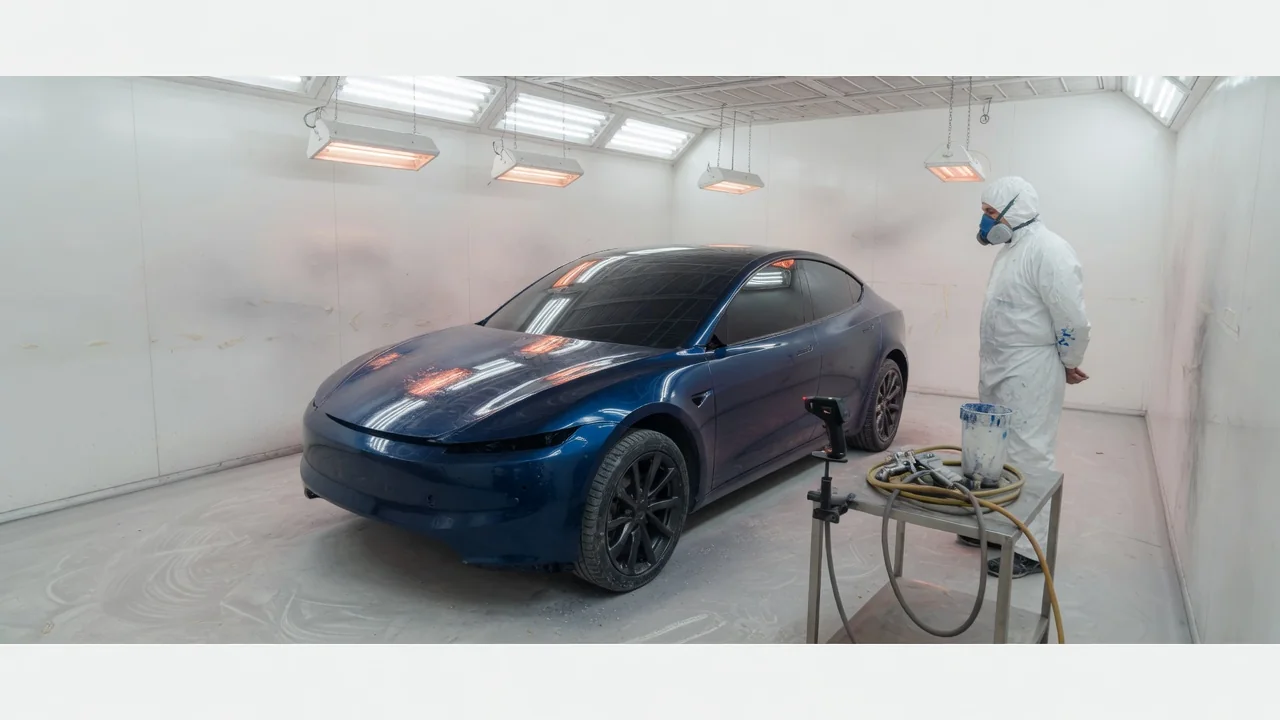
Fresh automotive paint can look finished within hours, but the film underneath is still changing. Solvents are still working their way out, and the resin is still building the chemical structure that gives it hardness and chemical resistance. That gap between looking dry and being fully cured is why body shops hand out care instructions after a repair. Understanding what happens during automotive paint curing after repair explains why fresh paint needs curing time and which habits protect the finish while it matures.
Solvent release
Most automotive coatings are sprayed as liquids. Resin and pigment are carried in a solvent: organic solvents in solventborne products, mostly water in waterborne basecoats. The carrier makes the material sprayable and lets it flow out into a smooth, level film. Once the paint is on the panel, that carrier has to leave. A large share evaporates quickly, which is why painters wait for a flash time between coats. A smaller portion stays behind, trapped deeper in the film as the surface begins to skin over. It then migrates slowly toward the surface and escapes over a longer period.
This slow release matters for several reasons. While solvent remains in the film, the paint is softer and easier to mark. As the solvent leaves, the film shrinks slightly, which can gradually reduce gloss or let fine sanding marks and texture from the layers underneath show through, an effect painters often call die-back. If solvent is sealed in, for example by heavy film builds or by covering the surface too soon, it can try to escape through the cured skin and leave small bubbles or pinholes, known as solvent pop. Thick coats, cool temperatures, and poor airflow all slow the process down.
Hardening
Evaporation alone does not create a durable finish. Most modern refinish clearcoats, and many primers, are two-component products: a resin is mixed with a hardener or activator just before spraying. Once mixed, the two components react and link together into a crosslinked polymer network. That reaction does not stop when the surface feels dry. Paint typically passes through several stages, from dust-free to tack-free to firm enough to handle and assemble, and finally to full cure. How long each stage takes depends on the specific product, temperature, humidity, and film thickness, which is why there is no single number that applies to every repair.
Heat speeds up the chemical reaction, which is why many spray booths use a bake cycle or infrared lamps. Factory finishes are generally cured at higher temperatures on a bare body before interior trim, wiring, and electronics are installed. A repair shop working on an assembled vehicle cannot safely use that kind of heat, so refinish materials are formulated to cure at lower temperatures and often reach full hardness more gradually. Until the crosslinked network is complete, the film is more vulnerable to chemicals, abrasion, and pressure. Fuel, harsh cleaners, bird droppings, or a heavy object resting on the surface can leave marks that would not affect a fully cured finish.
Care instructions
The shop that painted the car knows which products it used and how they were cured, so its written instructions should come first. General guidance for fresh refinish work usually focuses on gentle cleaning. Hand washing with plain water or a mild car wash soap and a clean, soft wash mitt is the safer approach. Automatic washes with brushes can scuff a soft film, and a pressure washer held close to the surface can force water against fresh edges and seams. Drying with a clean microfiber towel, blotting rather than dragging, reduces the chance of fine scratches.
Waxes, sealants, ceramic coatings, polishes, and compounds are best postponed until the shop confirms the paint is ready. A sealing product can interfere with the remaining solvent release, and abrasive products can cut into a film that has not reached full hardness. Contaminants deserve quick attention instead: bird droppings, tree sap, insect residue, and fuel spills should be rinsed or gently lifted off as soon as practical, since they can etch or stain soft paint. Parking away from trees and lawn sprinklers, when possible, reduces how often this cleanup is needed.
Physical contact is the other common risk. Tight-fitting car covers, magnetic signs, tape, stickers, and items leaned against the panel can imprint or mar a fresh finish. In cold weather, scraping ice or packed snow from a repaired panel with a hard tool can gouge paint that would otherwise resist it. Keeping these precautions in place until the shop says otherwise helps the finish cure evenly.
Practical implications and limits
Curing time is not a fixed calendar date. It varies with the paint system, such as single-stage versus basecoat and clearcoat, waterborne versus solventborne, with how the shop cured the job, and with the conditions the car lives in afterward. A vehicle that spends its first weeks in cold, damp weather may cure more slowly than one kept in a warm, dry garage. Because the timeline is product-specific, it is reasonable to ask the shop directly when washing, waxing, or other treatments become acceptable, and whether ignoring its instructions could affect any warranty on the work. Testing hardness with a fingernail is a poor substitute and can itself leave a mark.
Curing also has limits as a fix. It does not remove runs, trapped dirt, uneven texture, or a color mismatch, and some flaws may become easier to see as the film settles. Any concern is best raised with the shop early, since some defects are corrected by polishing only after the paint has fully hardened. Finally, these precautions apply mainly to refinished panels. Paint on a new vehicle is cured at the factory before delivery, so its care follows the owner's manual rather than post-repair guidance.