Motorcycle Passenger Grab Handles: What to Check Before You Buy
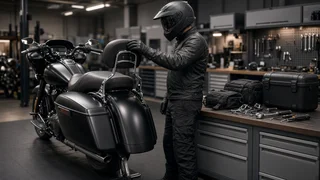
Motorcycle grab handles give a passenger something solid to hold during acceleration, braking and stops, so they don't have to grip the rider. The right choice is usually a handle or grab rail made for your exact motorcycle that bolts to the factory mounting points on the rear subframe, the frame section that supports the seat and tail. One condition can change that advice: whether you already have, or plan to add, a luggage rack, top case, saddlebags or an aftermarket seat. Those parts often share the same mounting points or space, so plan the handles and luggage together.
Do you need aftermarket grab handles at all?
Many motorcycles that are set up for two riders already have passenger handholds. These can be cast-in rails beside the tail, a rear rack that doubles as a handle, or a seat strap across the passenger section. Sport bikes and some naked or custom models often have minimal or no handholds, especially if the passenger seat is small or covered by a solo cowl. Before you buy anything, look at what the bike already has and ask the passenger whether it actually works for them. A seat strap that is fine for short rides around town may feel inadequate on longer trips or under hard braking.
Main types of passenger handholds
Type | How it mounts | Strengths | Trade-offs; Bolt-on grab rails | Rear subframe or tail-section mounting points | Solid, fixed hold close to the passenger's hips; often model-specific | May conflict with racks, luggage mounts or tail styling; Rear rack with integrated handles | Same points as factory rails or dedicated rack mounts | Combines a carrying surface with handholds | Handles may sit farther back; loaded luggage can block hand positions; Sissy bar or backrest with handles | Side plates bolted to fender struts or frame | Adds back support on cruisers and touring bikes | Changes the bike's look; affects how saddlebags and bags fit; Seat strap | Under or around the passenger seat | Simple and low profile; often already fitted | Limited leverage; can be awkward to hold with gloves; Rider-worn passenger belt | Worn by the rider; no bike modification | Works on any bike; quick to remove | Passenger still pulls on the rider; depends on correct fit and secure fastening; Tank or rider-side handles | Fuel tank area or the rider's body | Help the passenger brace forward under braking | Use varies by bike design; can interfere with the rider's movement
Many passengers benefit from two kinds of hold. Rear rails or a rack help when the bike accelerates. A belt or a forward brace point helps under braking, when the passenger tends to slide toward the rider. Think about both directions of force, not just one.
Fitment: confirm the exact model first
Grab handles are rarely universal in a meaningful way. Rails that look similar can use different bolt spacing, frame geometry or tail bodywork from one year or trim to the next. Before ordering, confirm the motorcycle's make, model, model year and market version. A listing that says it fits a model name may not cover every year, every trim, or bikes sold in other regions. If the seller lists a year range, check whether your bike was built during a mid-cycle update, such as a revised subframe, new tail section or different seat.
Model year and trim, including special editions that may use different bodywork or seats; US-market versus other-market versions, since tail lights, fenders and plate mounts can differ; Whether the bike has a factory rack, passenger rails or solo cowl that the new part replaces or works alongside; Any earlier modifications, such as a fender eliminator, aftermarket tail, lowered seat or relocated turn signals; Whether the listing names the exact mounting points it uses and includes the required hardware
Equipment compatibility with luggage and accessories
The most common fitment problem is a conflict with other accessories. Top-case plates, rack systems, saddlebag frames and tail bags often use the same subframe bolts as passenger rails. Some luggage systems are designed to work with the factory rails and some replace them. Others require you to remove the rails entirely. If you plan to add luggage later, find out now whether the rails and luggage mounts are compatible, or choose a rack that includes handles.
Top case: check whether the mounting plate leaves enough space to grip the handles once the case is attached, and whether a loaded case pushes a passenger forward; Saddlebags and side cases: confirm that the bag frames and the rails don't compete for the same bolts and that the bags still open fully; Soft luggage and tail bags: check that straps can be secured without covering the handles; Aftermarket seats: a taller or reshaped passenger seat changes where the passenger's hands naturally fall relative to the rails; Exhaust routing: on bikes with a high-mounted or under-tail exhaust, check that the handles keep the passenger's hands and clothing clear of hot parts; Drive side: on chain-drive bikes, make sure added side plates or brackets clear the chain and chain guard; on belt-drive bikes, check clearance around the belt guard
Construction, strength and finish
A grab handle has to resist a sudden pull from an adult. It is a load-bearing part, not trim. Look for solid construction, brackets that bolt directly to the frame or subframe rather than only to plastic bodywork, and hardware that is substantial and appropriate for the job. If the manufacturer states a load limit or a weight limit for an attached rack, stay within it, and remember that luggage weight and passenger forces add together when both use the same part. Don't assume a decorative or styling rail is designed to take a passenger's full pull unless the product says so.
Finish affects comfort and how long the part lasts. Bare polished metal can get cold, hot or slippery. Rubber, textured or coated grip areas are easier to hold with gloves. Powder coating and chrome both need some care against chips and corrosion, especially on bikes ridden in wet or salted conditions. Also check the shape: the handle should have enough clearance to wrap a gloved hand around it without pinching against the seat or bodywork.
Passenger ergonomics
The best handle position depends on the passenger as much as the bike. Handles placed slightly behind the passenger's hips usually let them hold on with relaxed arms while sitting upright. Handles placed far back make the passenger lean or twist, which gets tiring and can affect the bike's balance. If possible, have the passenger sit on the bike with feet on the passenger footpegs, and check where their hands fall naturally. Seat height, footpeg position and backrest use all change that point. Taller passengers and shorter passengers may prefer different setups on the same bike.
Installation basics
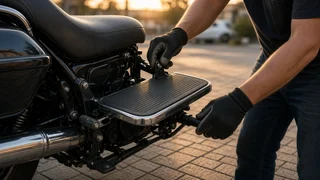
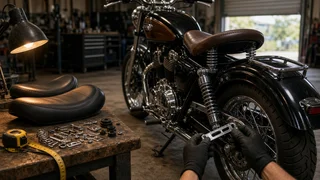
Most bolt-on rails are a manageable home job for owners with basic tools, but the work affects safety. Follow the installation instructions supplied with the part. Tighten fasteners to the torque values in the instructions or in the motorcycle's service specification, and use thread locker only where it is specified. Over-tightening can strip threads in the subframe, and under-tightening can let the rails loosen from vibration.
Check that removing seats, side panels or the tail cowl won't damage clips or wiring, and keep track of all original hardware; Route wiring for tail lights, turn signals and plate lights so it isn't pinched by new brackets; Confirm that the seat still locks, opens and closes normally after installation; Check that the rider can still reach and use the riding controls without the passenger's hands or a backrest getting in the way; Recheck fastener tightness after the first few rides and then at regular maintenance intervals; If the bike is under warranty, ask the dealer whether the accessory or installation method raises any warranty concerns
Legal and practical considerations in the US
Passenger equipment rules are set by individual states. Some states have requirements for carrying a passenger, such as a passenger seat and footrests, and some also address handholds. Because these rules vary and can change, check your state's current motorcycle equipment requirements if you plan to carry passengers regularly, especially if you are removing factory passenger equipment or adding a solo seat.
Buying checklist
Confirm exact make, model, model year, trim and market before ordering; Check what the bike already has: factory rails, rack, seat strap or none; Decide whether you also need luggage, and choose rails and racks that work together; Prefer frame- or subframe-mounted designs over parts that rely only on bodywork; Look for a stated load or weight limit and stay within it; Choose a grip surface and shape that is comfortable with gloves; Check clearance from the exhaust, chain or belt, lights and wiring; Test the hand position with the actual passenger on the bike; Install to the specified torque and recheck fasteners after early rides; Confirm your state's passenger equipment rules if anything factory-fitted is removed
Choosing your next step
If your bike has no usable handholds and you won't be adding luggage, a model-specific bolt-on grab rail is usually the most direct fix. If you plan to tour or carry cargo, start with the luggage system and pick a rack with integrated handles or rails confirmed to work with it. If you need a solution that moves between bikes, or one that doesn't involve modifying the bike, a rider-worn passenger belt is a flexible option, ideally combined with whatever handholds the bike already has. In every case, the deciding factors are exact model fitment, secure frame mounting and a hand position that suits your passenger.