Choosing motorcycle passenger floorboards
The short answer
Choose passenger floorboards that are listed as compatible with your exact motorcycle, meaning the model, model year, market and any relevant trim, and that mount the way your bike is built to accept them. After fitment, the deciding factors are passenger comfort (where the boards place the passenger's feet relative to the seat), clearance from the exhaust, bags and suspension, cornering clearance, and the full installed cost. If your bike has no factory provision for passenger floorboards, the answer changes: you will likely need a separate mounting kit or bracket, which adds cost and installation work and narrows your choices.
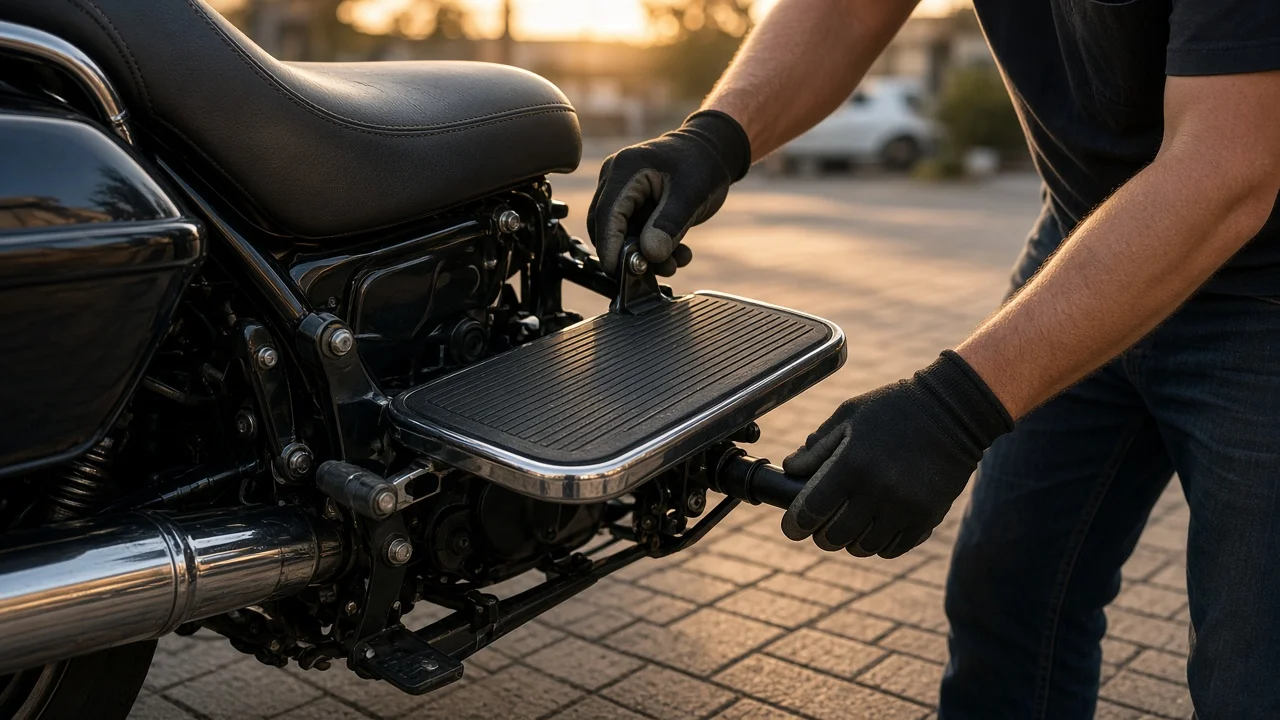
Floorboards are flat platforms that support the whole foot, as opposed to pegs, which support only part of it. They are common on cruisers and touring bikes, where passengers spend long periods in one position. A larger platform lets a passenger shift their feet around on a long ride, but it also takes up more space under the bike and can reduce how far the motorcycle can lean before something touches the road.
Evidence gap: no confirmed prices, measurements, product specifications or model-specific fitment data were available for this guide. The checks below are general principles; confirm every compatibility and dimension claim against the seller's or manufacturer's documentation for your specific bike.
What to check before you buy
Fitment for your exact motorcycle
Fitment is the most common reason a floorboard purchase goes wrong. Mounting points can change between model years, between models that share a family name, and between versions sold in different markets. A listing that says it fits a model family may not fit every year or variant within it.
Confirm the make, model, model year and market the part is listed for, and match them to your bike's documentation. Check whether the boards bolt directly to existing passenger floorboard mounts, replace the passenger pegs using the peg mounts, or require a separate frame-mounted bracket. If a bracket or adapter is needed, confirm whether it is included or sold separately. Note any listed exceptions, such as models with aftermarket exhausts, different saddlebags or modified suspension. If fitment information is vague, ask the seller to confirm compatibility in writing before you pay.
Clearance and cornering
Passenger floorboards sit lower and wider than pegs on many bikes, so they can come into contact with other parts or with the road. Clearance problems may only show up once the boards are installed and a passenger is on board.
Exhaust: check that the passenger's foot and boot will sit away from hot exhaust pipes and heat shields, especially on the side where the exhaust runs. Luggage: make sure saddlebags or their brackets do not block the boards or the passenger's heels. Suspension and swingarm: confirm the boards and mounts do not interfere with moving parts as the suspension compresses. Cornering clearance: wider or lower boards can touch down earlier in a turn. Hinged or folding boards that swing up on contact are designed to reduce the risk of the board catching on the road. Rider's legs: on some bikes, passenger boards can sit close to where the rider's feet or legs need to be. Check that they will not get in the way of the rider's controls.
Passenger comfort and fit
The point of passenger floorboards is a more comfortable and secure position for the passenger, so judge them against the person who will actually ride on the back. The key relationship is the height and position of the boards relative to the passenger seat, which sets how bent the passenger's knees will be.
Adjustability: some designs allow the board's angle or height to be changed. This can help passengers of different heights. Board size and shape: a longer board allows more movement on long rides; a shorter one may suit a bike with limited space. Vibration isolation: rubber pads or rubber-mounted boards can reduce the vibration passed to the passenger's feet. Grip: check the surface for traction when wet, and whether the pads can be replaced when they wear. If possible, have the passenger sit on the bike with the boards in place, or on a similar bike with the same setup, before committing.
Folding and practical use
Boards that fold up when not in use stay out of the way when riding solo, when pushing or parking the bike, and when the rider puts a foot down. Fixed boards may be simpler but can get in the way. Check whether the folding mechanism holds the board firmly in both positions and does not rattle.
Installation and total cost
The price of the boards themselves is only part of the cost. Work out the total before comparing options.
Mounting kit or bracket, if your bike does not have a factory mounting point for passenger boards. Hardware: confirm whether bolts, spacers and other fittings are included. Related parts: some installations may require moving or replacing other components, such as passenger pegs, exhaust heat shields or luggage mounts. Labor: if a shop is installing the boards, ask for a quote that covers all parts and labor. DIY installation: follow the manufacturer's torque specifications and instructions for any thread-locking compound. Footrest mounts carry the passenger's weight, so loose fasteners are a safety concern. Shipping and returns: check return terms in case the boards do not fit.
When comparing quoted prices, confirm which market and currency the price is in, the date it was quoted, and exactly what it includes. An advertised price is what a seller is asking, not necessarily what the part sells for; completed sale prices are a better guide to value, especially for used parts.
Condition, if buying used
Used floorboards can be a reasonable buy, but they carry a passenger's weight, so damage matters.
Look for bent or cracked brackets and mounting tabs, which can be a sign of a crash or of the boards touching the road. Check that hinges and folding mechanisms move freely and lock in position. Inspect rubber pads and isolation mounts for cracking, hardening or tears. Check for missing hardware and stripped or corroded threads. Ask the seller which bike the boards came from, including the model year, so you can check fitment against your own.
Rules and warranty
In the US, rules about passenger footrests vary by state. Many states require footrests for a passenger, so check your state's requirements if you are replacing the existing passenger pegs. Also check whether aftermarket parts affect any warranty terms on your motorcycle, and keep the original pegs and hardware in case you need to return the bike to its stock setup or sell it.
Next step
Start by confirming whether your motorcycle has factory mounting points for passenger floorboards for its specific model year. That answer tells you whether you are looking for direct-fit boards or a board-and-bracket kit, and it narrows the list before you compare comfort features, clearance and total installed cost.