Motorcycle Floorboards for Foot Support: What to Check Before You Buy
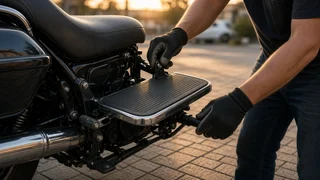
Motorcycle floorboards give your feet a wide, flat platform instead of a narrow peg. That spreads your weight over more of the sole and lets you move your feet around on long rides. For touring and cruiser riding, they usually make a noticeable difference in comfort. The main condition that changes the answer is fit. Floorboards are only a good choice if a kit is made for your exact motorcycle, and if you can accept less cornering clearance and a different feel at the shift and brake controls.
The short answer
Choose floorboards if you ride long distances, prefer an upright or feet-forward posture, or get foot, ankle or knee discomfort on pegs. Stick with pegs, or consider larger pegs instead, if you ride aggressively through corners or your bike already has limited lean angle. Pegs may also be better if no proper mounting kit exists for your model. If you carry a passenger, passenger floorboards are often among the most appreciated comfort upgrades. They still have to suit the bike's passenger mounts and exhaust layout.
How floorboards differ from footpegs
Factor | Floorboards | Footpegs; Foot support | Wide platform supports most of the sole | Narrow bar concentrates pressure under the arch or ball of the foot; Foot movement | Room to shift position on long rides | Little room to reposition; Vibration feel | Often lower when the board uses rubber isolation, though this depends on design | Varies with peg rubber and mounting; Ground clearance | Usually less, and boards can scrape in corners | Usually more, and pegs often fold on contact; Control feel | May require a heel-toe shifter or a repositioned brake pedal | Standard toe-operated controls; Weight and bulk | Heavier and wider | Lighter and more compact; Typical use | Touring, cruising, relaxed riding, passenger comfort | Sport, standard, adventure and general riding
Who benefits most from floorboards
Touring and cruiser riders who spend long stretches at steady highway speeds; Riders who want to change foot position to ease stiffness during a ride; Riders with joint discomfort who find a flat platform easier than a peg; Passengers, who often cannot shift position as freely as the rider; Riders whose bike was offered with floorboards in other trims or model years, which often makes conversion easier
The trade-offs to accept
Ground clearance is the biggest compromise. Floorboards sit wider and often lower than pegs, so they can touch down earlier in a turn. Many boards have a replaceable scrape feeler or a hinged design so a light touch is not violent. A rigid board that contacts the road hard can still lever the tires off the ground, so learn where your new limit is before you ride hard.
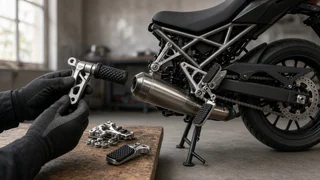
Riding controls change too. A rider floorboard moves your foot position, so the stock shift lever and brake pedal may no longer fall naturally under your boot. Many floorboard setups include a heel-toe shifter, which lets you upshift with your heel and downshift with your toe. Some setups also need a different or adjustable brake pedal. Budget for these parts if the kit doesn't include them, and give yourself time to adapt in a safe place.
Floorboards also add weight and width. Some designs make it harder to put a foot down at a stop or to reach the side stand.
Compatibility: what decides whether a kit fits
Floorboards are not universal parts, even when a listing calls them universal. Fitment depends on how the boards mount to the frame and where the engine, exhaust and drive components sit. Treat every compatibility claim as tied to a specific model, model year, market and trim.
Model identification: confirm the exact model, model year and trim, and check the VIN if the seller lists fitment by frame or chassis code. Manufacturers sometimes change frames, mounts or exhaust routing mid-generation. Existing mounts: bikes that came with floorboards from the factory often accept direct-replacement boards. Bikes with pegs usually need a dedicated mounting kit or bracket set. Engine configuration: the shape and width of the engine affect where boards can sit. V-twins, inline engines and flat or opposed layouts all leave different room near the footrest area, and some can push your legs wider. Drive system: on the drive side, check clearance around the belt, chain or shaft housing and its guard. A board or bracket must not rub or trap debris against moving parts. Exhaust routing: passenger boards in particular can conflict with mufflers or heat shields, and the passenger's heel may end up close to hot pipes. Equipment compatibility: check for conflicts with crash bars, engine guards, saddlebag mounts, aftermarket exhausts, forward controls or lowering kits you already have.
If the seller can't confirm fitment for your exact configuration, treat the listing as unconfirmed. Ask for the specific model years and trims the kit was designed for.
Rider, passenger and highway boards
Rider floorboards replace the front footpegs and affect the controls. Passenger floorboards replace the rear pegs and usually involve no controls, which makes them simpler to fit. They can still be limited by exhaust and bag placement. Highway boards are a third type. They mount forward, often on an engine guard, and give you a stretched-out resting position on open roads. They add an option rather than replacing your main footrests, and you can't operate the controls from them.
Many US states require a footrest for a passenger whenever one is carried. If you remove passenger pegs, or the new boards don't fit, check your state's rules before riding two-up.
Design features worth comparing
Size and shape: longer boards allow more foot movement. Wider or lower boards cost more clearance. Shaped profiles, such as tapered or swept ends, can help in corners. Adjustability: some boards can be angled or moved fore and aft to suit leg length and boot size. Vibration isolation: rubber mounts or rubber pads can soften engine vibration reaching your feet. Surface grip: textured rubber inserts or grooved tops help keep your boots planted in wet weather. Folding or hinged design: lets the board move up on contact or for parking and maneuvering. Material and finish: aluminum is common for its lower weight, and steel tends to be heavier. Choose a finish that matches the rest of the bike and resists corrosion where you ride. Replaceable wear parts: scrape feelers and pads that can be renewed extend the life of the boards.
Installation and setup checks
Floorboards hold your weight and sit next to the brake and shift controls, so install them carefully. Tighten fasteners to the service specification in the kit instructions or your motorcycle's service manual, and use threadlocker where it is specified. Afterward, check that the brake pedal returns fully, has correct free play, and turns on the brake light at the right point. The shifter should move cleanly through every gear. Check for clearance at full lean on the side stand and against exhaust, drive and suspension parts. If you're not comfortable adjusting brake controls, have a qualified technician do the installation.
Buying checklist
Fitment is confirmed for your exact model, model year, trim and market; You know whether your bike needs a mounting kit or accepts direct-replacement boards; The kit includes, or you've budgeted for, any required shifter, brake pedal or bracket changes; There is clearance around the exhaust, drive system and existing accessories; You've accepted the loss of cornering clearance for your riding style; Passenger boards keep feet and heels away from hot exhaust parts; The board size and adjustment range suit your leg length and boots; Scrape feelers and pads are replaceable; The seller's return policy covers parts that turn out not to fit
Next step
Start by confirming whether your motorcycle has factory floorboard mounts or needs a conversion kit. Then narrow your choice to kits listed for your exact model year and trim. With fitment settled, compare board size, adjustability and isolation against how and where you ride, and plan for any control changes before you order.