Choosing motorcycle passenger foot pegs
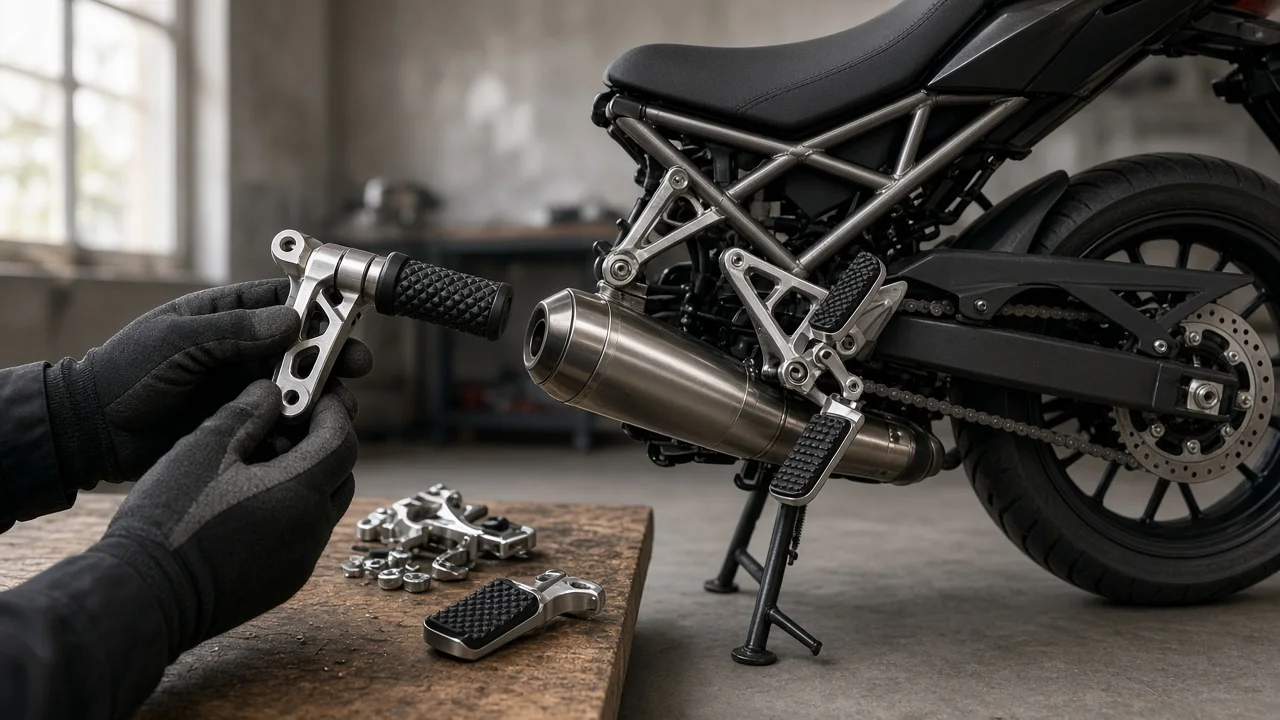
The short answer
The right passenger pegs are the ones confirmed to fit your exact motorcycle and that put your passenger in a stable, comfortable position without hitting the exhaust, luggage or the road in corners. Start with compatibility for your make, model, model year and market, because mounting points and hardware can differ between versions of the same bike. After fit, the main choices are comfort features, such as rubber tops, a wider platform or adjustable height, and practical details, such as how the peg folds and what hardware is included.
One condition changes the answer. If your bike has no passenger peg mounts, or the pegs mount to a removable bracket or subframe section that is missing, you are buying a mounting kit or brackets as well as pegs. That affects cost, installation work and whether the result is as strong as factory-designed mounts.
What passenger pegs do and why fit matters
Passenger pegs, also called passenger footrests, give the rider behind you somewhere to brace their feet. They carry part of the passenger's weight, especially over bumps, under braking and when the passenger shifts position. Their placement also sets the passenger's knee angle, which affects comfort on longer rides and how securely the passenger can hold on.
Many US states require footrests for a passenger when one is carried. Rules vary by state, so check the requirements where you ride and register the bike.
What to check before buying
Exact model compatibility
Confirm the listing names your make, model and model year range, and check for notes about trim levels or market versions. Some motorcycles change mounting brackets, pin sizes or bolt patterns between years or between variants of the same model. If a listing gives only a broad fitment, such as a brand or a model family, ask the seller for the part number and compare it with your bike's original part or the manufacturer's parts diagram.
Mounting type
Passenger pegs usually attach in one of three ways, and the replacement must match yours:
Pin-mounted pegs that hinge on a clevis, which is a U-shaped bracket held together by a pin and clip. Pegs on separate hangers or brackets bolted to the frame or subframe. Pegs that are part of a larger bracket that may also carry the exhaust mount or other parts.
Replacing only the peg on an existing bracket is usually the simpler job. Replacing or adding brackets involves more parts and more checks for alignment and bolt torque.
Passenger position and comfort
Factory peg position is a compromise. Pegs mounted high and far back can cramp a passenger's knees; pegs mounted lower or farther forward give more legroom. Adjustable pegs or relocation kits can change this, but any change can also alter clearance, so check the points below for any peg that moves the foot position. Rubber-topped pegs reduce vibration reaching the passenger's feet and can be more comfortable in ordinary shoes. Bare metal or serrated pegs offer firm grip but transmit more vibration. Wider platforms or floorboards, common on cruisers and touring bikes, spread the load across more of the foot.
Clearance and safety
Exhaust: make sure the passenger's foot and heel cannot rest on or near a hot pipe or muffler, and check whether a heat shield is needed. Luggage and bodywork: confirm the peg and the passenger's foot do not interfere with saddlebags, panniers or side covers. Ground clearance: lower or wider pegs can touch down earlier when the bike leans in corners. Folding action: the peg should fold up out of the way and return firmly to its open position, without flopping or sticking. A detent spring or ball that holds it open or closed is worth checking for. Wheel and chain: make sure the passenger's foot position keeps feet clear of the rear wheel and drive chain or belt.
Condition, if buying used
Look for cracks around mounting holes, bent pegs or brackets, worn pivot pins, missing springs and worn or torn rubber. A peg that has been bent in a crash may still bolt on but sit at the wrong angle or be weakened. Confirm all mounting hardware is included, since missing pins, clips or bolts are a common reason a used part does not install cleanly.
Total installed cost
Compare complete costs rather than the peg price alone. Check whether the price is for a single peg or a pair, whether brackets and hardware are included, and what shipping and sales tax add. If a shop will install the pegs, ask for a labor estimate before ordering, especially if brackets need to be added or the exhaust has to be loosened for access. Treat advertised prices as starting points: confirm the price, currency and date of a quote, and note whether a figure reflects a listing or a completed sale. No verified current prices were available for this guide, so compare current offers from your own sellers and installers.
Seller support
Before buying aftermarket pegs, check the return policy for parts that do not fit, and whether the seller lists installation instructions and torque values. If the pegs replace a structural bracket, look for clear information on what the bracket is designed to carry and how it attaches.
Gaps to resolve before ordering
This guide does not cover specific models, part numbers, measurements or prices, because no verified product data was available. Resolve these points for your own bike: the exact fitment and part number, any differences between your model year or trim and the listed fitment, your state's passenger footrest rules, and the full installed price from your chosen seller or shop.
Next step
Write down your motorcycle's make, model, model year and any trim or market variant. Then check whether your passenger mounts are present and in good condition, and shortlist pegs that list your exact version. Before buying, sit your usual passenger on the bike to judge knee angle and foot clearance with the current pegs. That tells you whether a direct replacement is enough or whether adjustable or relocated pegs are worth the extra cost and installation work.